
 German (DE)
  English (US)
  Spanish (ES)
  French (FR)
  Hindi (IN)
  Italian (IT)
  Russian (RU)
  2 weeks ago
While many people are paying attention to how the 2026 midterm elections might change the balance of power in Washington, D.C., it is also a potentially pivotal election here in Pennsylvania.
Gov. Josh Shapiro is up for reelection, running against Republican challenger Stacy Garrity, the current state treasurer. Who wins that race will certainly shape the state’s policy agenda for the next two years.
In the General Assembly, which is currently split – Republicans control the Senate and Democrats control the House – both chambers are also up for grabs. Democrats have been slowly eroding the Republicans’ hold over the Senate. In the House, Democrats have a three-seat majority, but Republicans could flip it.
Of course, nationally the wind is at the back of Democrats. Commentators are contemplating the possibility of a Democratic trifecta in Pennsylvania for the first time since 1993.
I teach public policy at Penn State Harrisburg and have a particular interest in Pennsylvania state politics. I think voters should understand not just the positions of the individual candidates on the ballot, but what the legislative priorities will be for either party if they gain control of the General Assembly.

If Democrats control the Assembly
For a glimpse at potential Democratic priorities should they keep the House and win the Senate, it is helpful to look at what legislation the current Democrat-controlled House has been sending the Republican-controlled Senate.
1. Election reform
Election reform has been a perennial priority in the commonwealth since the passage of Act 77 of 2019 and the 2020 election. Act 77 authorized no-excuse absentee balloting and eliminated straight-ticket voting, which was a bipartisan compromise but became a political flash point in President Donald Trump’s efforts to question the 2020 election results. No-excuse means that voters do not need to provide a specific qualifying reason to vote by mail.
Democratic election law priorities have included requiring counties to use ballot drop boxes, maintaining no-excuse mail-in voting, setting clear rules for ballot curing, instituting precanvassing to speed the counting of absentee ballots, and allowing independents to vote in open primary elections.
2. Marijuana
Gov. Shapiro has repeatedly included revenue projections from adult-use recreational marijuana legalization in his budget proposals, and the House even passed a legalization bill in 2025. Democrats have said that they will legalize recreational marijuana if they can take the Senate in 2026. But important details of legalization will remain to be worked out, even if Democrats have full control.
Democrats and Republican supporters of legalization disagree as to whether sales should be through private dispensaries or state stores, similar to how alcohol is sold in Pennsylvania.
Social equity measures meant to repair some of the harms of the War on Drugs on communities disproportionately affected by the criminalization of marijuana will also be key to eventual passage. These include things like expungements of past convictions, license set-asides for minority dispensary owners, and community reinvestment of cannabis tax revenues. Even with Democratic control, the devil will be in the details.
3. Same-sex marriage
Same-sex marriage equality may seem like a settled issue with the 2015 Obergefell v. Hodges decision by the U.S. Supreme Court, but the 2022 overturning of Roe v. Wade by today’s more conservative court has sparked concerns of further changes to precedent.
Pennsylvania’s statutory definition of marriage is still between “one man and one woman,” something that a bipartisan majority in the House tried to change in 2026 to “two individuals.” Democrats are very likely to pick this back up if they win a trifecta. They may even attempt a more durable, but also more procedurally difficult, constitutional amendment that enshrines same-sex marriage rights.
4. Data centers and AI
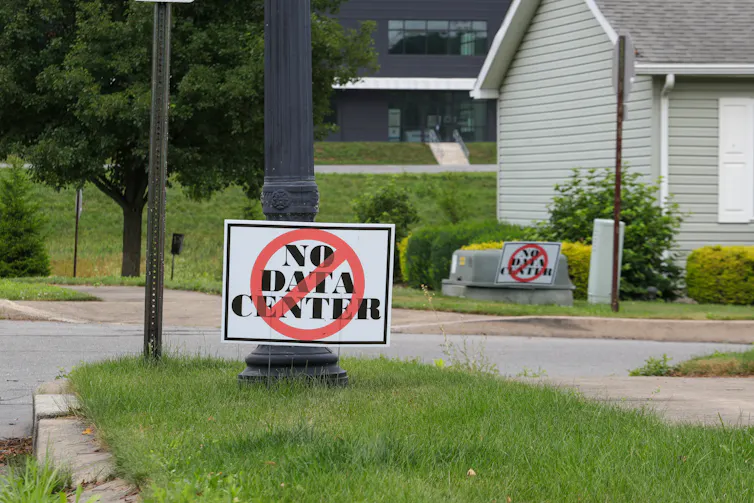
The House has passed several measures to regulate AI and the data center build-out in the commonwealth. This includes a measure that would require warnings on advertisements that were made using AI and several that target energy costs, water use, local government authority and implementing the Governor’s Responsible Infrastructure Development plan. These measures and others are likely to remain on the Democrats’ agenda.
5. Affordability
Given that this election is shaping up to be heavily influenced by voters’ concerns about affordability, both parties have the issue on their agendas but will approach it differently.
The Democrats’ Affordability Action Plan includes measures such as property tax and rent rebates, other housing protections for underserved communities, doubling the income tax credit and increasing food and energy security funding.
Another affordability priority for House Democrats since taking control of the chamber in 2023 has been raising the state’s US$7.25 minimum hourly wage over time. The bill passed by the House in March 2026 would have raised it to $11 in 2027, $13 in 2028 and $15 in 2029, with subsequent annual cost-of-living adjustments, if it had been also passed by the Senate. This is important in Philadelphia, given that state law prohibits the city from setting its own minimum wage.
If Republicans control the Assembly
We can turn to the current Republican-controlled Senate for insight into what will be on the party’s agenda if it resumes full control of the Assembly in 2027.
1. Election reform
Republicans have also been pushing for election law reform since 2020. In contrast to Democrats, their agenda has included repealing no-excuse absentee balloting, banning the use of ballot drop boxes and instituting stronger voter identification requirements.
2. Data centers and AI
Senate Republicans have also been active in proposing and passing AI- and data center-related legislation. A bill banning “nudification” apps, which use AI to remove the clothing from people in pictures and replace them with fake nude images, passed the Senate unanimously in late September.
There has also been bipartisan support for a Republican-proposed ban on the use of nondisclosure agreements in data center development. Republicans in the Senate also proposed designating all of Pennsylvania a Commonwealth Opportunity Zone for AI, which would fast-track data center permits and create a regulatory framework in collaboration with the industry.
While Republican AI legislation is likely to be more enabling of the emergent industry than regulating, Republicans are also concerned about privacy, transparency and costs to their constituents.

3. Energy
Among the costs of data center development are higher energy and water prices. Republicans have already been making energy development a priority, repealing Pennsylvania’s participation in the Regional Greenhouse Gas Initiative and pushing the governor on his promise of an “all of the above” energy strategy.
The stark promise of higher electric prices and poorer grid reliability due to projected data center development in a 2026 Public Utility Commission report is likely to add fuel to Republicans’ push for energy development.
4. Affordability
The affordability plan released by House Republicans in March 2026 points to the types of measures the party will pursue if it takes control of the Assembly. A cornerstone is the reduction of taxes, including lowering the personal income tax rate, a temporary elimination of energy and telecommunications taxes, and suspending the state gas tax, which is $0.576 per gallon for gasoline, $0.741 for diesel. Pennsylvania’s gasoline tax is the fifth-highest and the diesel tax is the third-highest in the United States.
A full plan with 10 bills is to be released in coming weeks, but will also include changes to zoning and construction rules to enable faster housing construction.
Read more of our stories about Philadelphia and Pennsylvania, or sign up for our Philadelphia newsletter on Substack.





















Comments