
 German (DE)
  English (US)
  Spanish (ES)
  French (FR)
  Hindi (IN)
  Italian (IT)
  Russian (RU)
 President Donald Trump’s quest to control Greenland is driving the news — and this time, it’s not a punchline.
Trump has backed off threats of using force to take the island in favor of what he calls a frameworkthat will give the U.S. access to the island. And on Friday, Denmark’s Prime Minister Mette Frederiksen said the situation is still “serious” adding that the Scandinavian nation has “a path that we are in the process of trying with the Americans. We have always said that we are of course willing to make an agreement.”
But whether the deal will work remains vague.
Meanwhile, all of this has resulted in a flood of questions in Washington and abroad about whether Trump’s threats have been strategy, bluster, or something in between — and the long-term consequences for America’s standing with allies. We attempt to answer some of the most asked questions about the issue.
What’s Trump’s interest in Greenland all about?
Trump’s obsession with obtaining Greenland — which for decades has been controlled by U.S. ally Denmark — is ostensibly about keeping Americans safe.
The president and his advisers increasingly describe Greenland as essential to ensuring American – and even European – security against encroaching threats from China and Russia.
Why? Greenland sits astride key Arctic sea lanes that are becoming increasingly navigable as ice melts. It also hosts Pituffik Space Base, a critical U.S. military installation for missile warning, space surveillance and Arctic operations. To Trump, Greenland represents leverage: strategic location, military value and untapped natural resources.
His interest in the island isn’t new. In 2019, Trump publicly floated buying Greenland, later describing it as “a large real estate deal.”
At the time, it was mostly dismissed as a pipe dream from a mercurial president. But six years later, the once frivolous threat has alienated European allies and become one of the administration’s most important goals.
Ian Bremmer, the president of Eurasia Group, a global risk assessment firm in New York, said that Trump having captured Venezuelan President Nicolas Maduro by force has made his assertive “Donroe Doctrine” a “brand” — and emboldened him to take a more hostile posture toward Greenland and European allies.
“He’s all in on having the brand,” said Bremmer, who is in Davos speaking with European allies. “Now he needs to populate it and have more ornaments on the tree. There has to be a next thing for the Donroe Doctrine. And Greenland was that thing.”
Was Trump serious about invading Greenland?
No.
There is no legal or political pathway for the U.S. to seize Greenland without violating the sovereignty of NATO allies. Doing so would essentially end the alliance — not to mention violate international law.
Trump and his aides were never seriously contemplating an invasion but refusing to rule it out publicly was an effort to increase Trump’s negotiating leverage. In the process, he incensed European leaders, who responded more forcefully than they ever had to his pressure, sending troops to Greenland for military exercises and weighing whether to deploy the European Union’s anti-economic coercion “bazooka” in response to increased Trump’s threat to impose U.S. tariffs.
“For his first year, Europe has bit its tongue but worked with Trump to keep him on side,” said Charles Kupchan, a Europe specialist at the Council on Foreign Relations. “When the president of the United States is threatening to invade a NATO ally, it’s time for a different approach.”
The stronger response worked. With global markets starting to plummet over fears of an escalating crisis, Trump finally made clear in his speech to Davos on Wednesday that he would not look to acquire Greenland with military force.
But Trump’s new assurances have not fully allayed European anger or ongoing anxieties about a leader known for changing his mind and who has repeatedly treated force, coercion and brinkmanship as negotiating tools rather than a last resort.
Trump’s governing style thrives on maximalist threats followed by selective walk-backs, leaving allies and adversaries alike unsure which statements are bluster, which are trial balloons and which could harden into policy.
And so with this president, even ideas he claims are off the table, never fully are.
What does Greenland — and Europe — think about all of this?
They’re pissed.
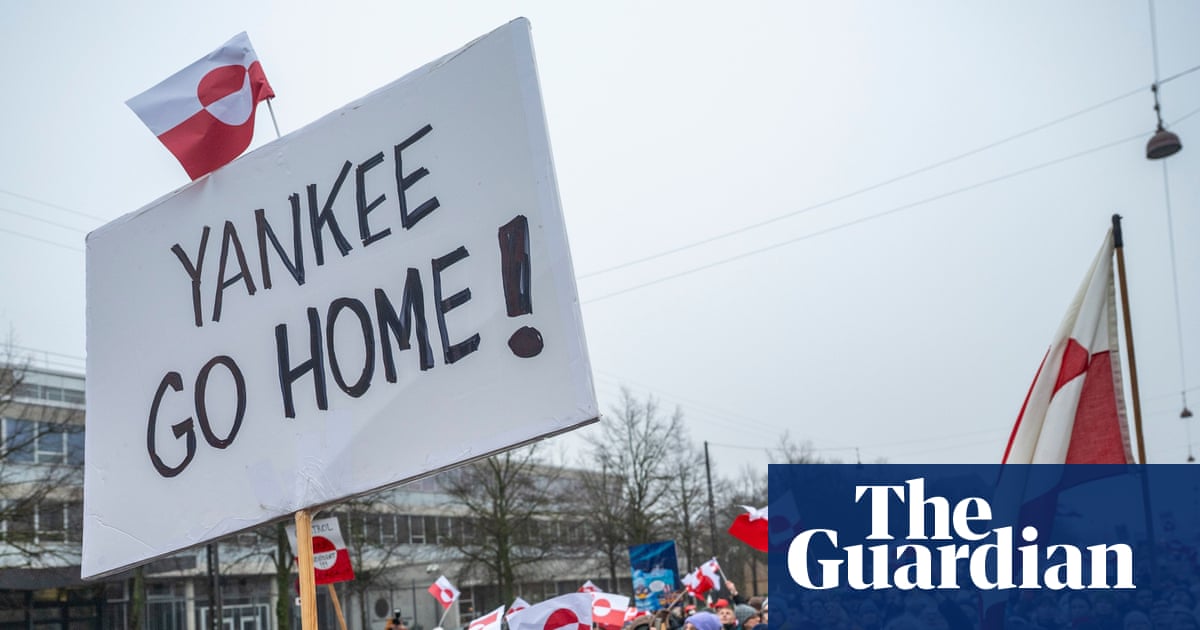
Greenland is a semi-autonomous, self-governing territory within Denmark, and its leaders have repeatedly said the island is not for sale. Local officials have also bristled at rhetoric that treats Greenland as an objectrather than a society of 56,000 people with their own political aspirations, including long-term independence.
“We are not in the situation where we are thinking that a takeover of the country might happen overnight," Greenland’s prime minister, Jens-Frederik Nielsen, said at a press conference earlier this month. "You cannot compare Greenland to Venezuela. We are a democratic country."
At the same time, Greenland’s government welcomes U.S. investment, security cooperation, and diplomatic engagement — so long as it comes with respect for Greenlandic autonomy. The Trumpian approach has strained that balance, fueling local skepticism even as U.S. military and economic ties deepen.
Though Trump has backed off his invasion threats, “the damage was done,” Bremmer said. “They feel completely disrespected. They feel like Trump treats them with contempt.”
How’s this playing in America?
The reaction at home has been equally searing. “If there was any sort of action that looked like the goal was actually landing in Greenland and doing an illegal taking … there’d be sufficient numbers here to pass a war powers resolution and withstand a veto,” Sen. Thom Tillis (R-N.C.), who recently traveled to Copenhagen, said last week.
Rep. Don Bacon (R-Neb.) called Trump’s Greenland quest “the dumbest thing I’ve ever heard.”
According to a recent Reuters/Ipsos poll, only 17 percent of Americans support the effort to acquire Greenland, while 47 percent disapprove and 35 percent remain unsure.
Is the “framework” deal going to put an end to the effort to take Greenland?
Trump announced in a vague post this week that he and NATO Secretary General Mark Rutte had agreed to a “framework of a future Arctic deal” on Greenland, which he described as giving the U.S. significant access to the island.
But Denmark and Greenland have both strongly rejected any notion that sovereignty is negotiable or that a concrete transfer of control is underway.
Though details are sparse, Trump said the U.S. got “everything we wanted,” adding that the deal is "infinite" and will last “forever.” He told reporters he’ll give more clarity on whether Denmark is on board in two weeks.
How does it affect our European alliances?
It reinforces a core anxiety many European allies already have about Trump: U.S. security commitments can blur into coercion when they collide with his personal priorities.
“The European leaders believe it is primarily about ego,” Bremmer said. “When Trump is acting as an individual and not acting on behalf of the country, you can see how this is going to create conflict. It’s set up to create mistrust and conflict and undermine the relationship.”
Even as Trump and his advisers insist his hunger for Greenland aligns with NATO interests, European leaders have warned that questioning a country’s sovereignty — even rhetorically — crosses a red line.
In joint statements and public remarks, officials in NATO countries have stressed that Arctic security cooperation does not confer consent over territory, pushing back on what they see as a dangerous conflation of alliance coordination and unilateral pressure.
“The American leadership of the transatlantic community was based on mutual trust, common values and interests, not on domination and coercion,” Polish Prime Minister Donald Tusk said Friday. “That is why it was accepted by all of us. Let’s not lose it, dear friends,” adding that is what he conveyed to other EU leaders on Thursday.
Trump’s Greenland push has only intensified a clear undercurrent of administration-wide disdain for Europe, articulated over his first year in office via speeches, social media posts and an official national security strategy. In the weeks following his renewed Greenland push, Trump has only further alienated our European allies, claiming NATO has not been in America’s corner in the past.
“We’ve never needed them,” Trump said in an interview with Fox News on Friday. “We have never really asked anything of them. You know, they'll say they sent some troops to Afghanistan or this or that. And they did. They stayed a little back, a little off the front lines.”
More than 40 countries following the Sept. 11, 2001, terrorist attacks deployed troops to Afghanistan when the U.S. invoked NATO Article 5 for the first time ever. At peak years, allied forces made up roughly half of all non-Afghan troops in the country.
More than 1,100 non-U.S. coalition troops were killed in Afghanistan, alongside many thousands wounded. Canada alone lost 158 soldiers and the U.K. lost 457.
U.K. Prime Minister Keir Starmer slammed Trump’s remarks Friday morning.
“I consider President Trump's remarks to be insulting and frankly appalling,” Starmer said. “I am not surprised they have caused such hurt to the loved ones of those who were killed or injured and, in fact, across the country.”












Comments