
 German (DE)
  English (US)
  Spanish (ES)
  French (FR)
  Hindi (IN)
  Italian (IT)
  Russian (RU)
 MADISON, Wis. - As a democratic socialist running for governor in a state Donald Trump won twice, Francesca Hong knew early on that she had doubters.
She knew it before her critics highlighted her past calls to abolish the police. She knew it before Republicans started spending $2 million to get her through the Democratic primary because they viewed her as a weak opponent. And she knew it before Wisconsin's outgoing Democratic governor backed a candidate to try to halt her surge in support.
"It's a huge flex for us when I get to go and talk to people, especially when there's so much skepticism right now around my favorite e-word - electability - and, you know, are we for real?" Hong told two dozen supporters, some in "Hotties for Hong" T-shirts, before they knocked on doors for her on a recent Saturday morning.
Few doubt that her campaign is for real. She's getting clicks like no one else in the field of five primary candidates. She has locked up support from national figures, inspired the base and rattled establishment Democrats. And she's riding high after democratic socialists and progressives won recent primaries in Colorado, New York and Washington.
Hong, 37, wears Air Jordans and friendship bracelets, sings karaoke at campaign events, and talks to voters about her love of the Milwaukee Bucks and the need to wallop millionaires with higher taxes. She initially lagged behind her opponents in fundraising, but she has seen a recent burst of donations, including some that came after she appeared on controversial liberal streamer Hasan Piker's show.
Hong, a third-term state representative from Madison, is betting she can thrive in a state where Sen. Bernie Sanders (I-Vermont), a self-described democratic socialist, won 71 of 72 counties in 2016's Democratic presidential primary. If she wins the Aug. 11 primary, she will next test whether democratic socialists can find support beyond the nation's urban centers and win a general election in one of the most closely divided states in the country.
Her backers don't want her to moderate her call for systemic change if she wins the primary.
"We can't keep settling for crumbs," said Sam Lies, a 61-year-old pharmaceutical representative who is volunteering for Hong's campaign.
On the campaign trail, Hong talks about reimagining what government can do, as well as her experience growing up as the child of South Korean immigrants and the challenges she faces as a single mom trying to pay her bills. She recently settled a $30,000 lawsuit over her credit card debt, and she works occasional shifts as a chef and bartender after closing her ramen restaurant two years ago.
Hong is campaigning on "permanent affordability" and a new way of running the state. She wants to more than double the income tax on millionaires and many businesses, provide free school lunches to all students, subsidize child care, set the minimum wage at $20 an hour, ban police officers from cooperating with U.S. Immigration and Customs Enforcement in many cases, establish a public bank and public grocery stores, put a one-year freeze on building data centers, protect doctors who provide gender transition care, expand union rights, legalize marijuana, and end the state's school voucher program.
"I will not weakly accept the sellout of Wisconsin to trillionaires, billionaires and big tech," she told attendees at the Democratic Party's state convention last month.
Little known at the start of the race, Hong has seen rising support as she runs against four others, including Mandela Barnes, a former lieutenant governor and the Democrats' 2022 Senate nominee.
The primary has been tumultuous. A leading candidate, Lt. Gov. Sara Rodriguez, dropped out last week, pointing to faulty campaign finance reports that she blamed on her fired campaign manager. Milwaukee County Executive David Crowley, who had recently quit the race for governor, revived his campaign with support from the current governor, Tony Evers (D).
Amid the shake-ups, the Republican Governors Association started spending $2 million on ads calling Hong "too liberal for Wisconsin." While ostensibly attack ads, the spots could boost Democratic support for her and are the clearest signal yet that Republicans believe they have the best chance of winning in November if Democrats nominate Hong.
'Brooklyn, Wisconsin, not Brooklyn, New York'
Some who like Hong's ideas worry about how Republicans will portray her in a general election given that she has embraced socialism, used the c-word online and said her ideal world would be one without prisons.
"She's sort of inviting some controversies," said Vivian Venish, 28, who attended Hong's campaign launch party but has been studying other candidates.
The winner of the Democratic primary will face Republican Tom Tiffany, a three-term congressman from northern Wisconsin who has called Hong out of step, saying she "wants to abolish the police and bring socialism to Wisconsin."
Brian Schimming, chairman of the state Republican Party, said he expects a tight race in November no matter whom Democrats select. But he questioned Hong's appeal.
"We're in Brooklyn, Wisconsin, not Brooklyn, New York," he said.
Wisconsin is as politically divided as it gets, with one Democratic senator, one Republican senator, a Democratic governor and a Republican-led legislature. The last three presidential races were decided by less than 1 percentage point, with Trump winning in 2016 and 2024 but losing in 2020.
While narrowly divided today, Wisconsin has a long history of socialism. For much of the first half of the 20th century, Milwaukee was led by socialist mayors who championed "sewer socialism" by focusing on infrastructure and public housing. Wisconsin voters elected a socialist to Congress and sent others to the state legislature.
In her convention speech, Hong cited progressive iconoclasts like Robert "Fighting Bob" LaFollette, a representative, governor and senator more than a century ago who "imagined a better world and fought like hell to realize it."
"These folks were called unreasonable, impractical and unelectable," she said. "Yet today, they're considered visionaries."
She has won the support of Rep. Ro Khanna (D-California), Rep. Ilhan Omar (D-Minnesota) and Nina Turner, a co-chair of Sanders's 2020 campaign for president.
Hong was a prominent supporter of the push to get Wisconsin Democrats to cast "uninstructed" ballots in the 2020 primary to protest President Joe Biden's backing of Israel. She found new progressive allies last month by appearing on streams with Piker and Michael Beyer, who is known as Mike from PA. Piker has said he would "vote for Hamas over Israel every single time," and Beyer has said Jewishness is a "demonic ethnicity, wholly invented."
Hong "is willing to sell out the Jews of Wisconsin for a few bucks," Ann Jacobs, chair of the state Democratic Party's Jewish caucus, said in a post on social media.
Hong doesn't agree with everything the two streamers have said but is willing to talk to anyone to reach more voters, her campaign manager said.
'This is me being myself'
Voters - especially those born after the end of the Cold War - are ready for something different, not candidates the establishment deems electable, said Dillon Sheehan, a Hong supporter who helps lead the Madison-area chapter of the Democratic Socialists of America. Republicans defanged the term by using it so much, he said.
"They have called Joe Biden a socialist," he said.
Hong argues voters are hungry for dramatic change, and her history of fierce rhetoric shows she has consistently pushed the Democratic Party to the left. In 2020, she called for "defunding the police as a first step towards abolishing the police."
Matt Bennett, a co-founder of the center-left Third Way think tank, called the comments "the most toxic thing you could possibly imagine basically anywhere, but especially in a purple place like Wisconsin."
In an interview, Hong said she believes the best way to reduce crime is to provide more services and treatment. She said that as governor she would increase state aid to towns and cities and let local officials decide whether to use the money to boost police spending.
Hong rarely backs down. She has kept in place incendiary posts, including one in 2020 that called tavern lobbyists the c-word. Last year, she used the same word as an acronym in a post encouraging people to vote for liberals in statewide races.
"This is me being myself," she said. "I came up through kitchens and a restaurant industry, and now politics, where swearing is pretty normal."
Her campaign style, she said, allows her to connect with voters who feel left out. She has held hip-hop parties and craft fairs and arranged for volunteers to meet at a Dungeons & Dragons gathering.
On a recent Thursday, members of a Madison club that caters to women and trans bicyclists took their usual ride around the state Capitol. Afterward, more than a dozen of them spread out in a park and decorated postcards encouraging people to vote for Hong.
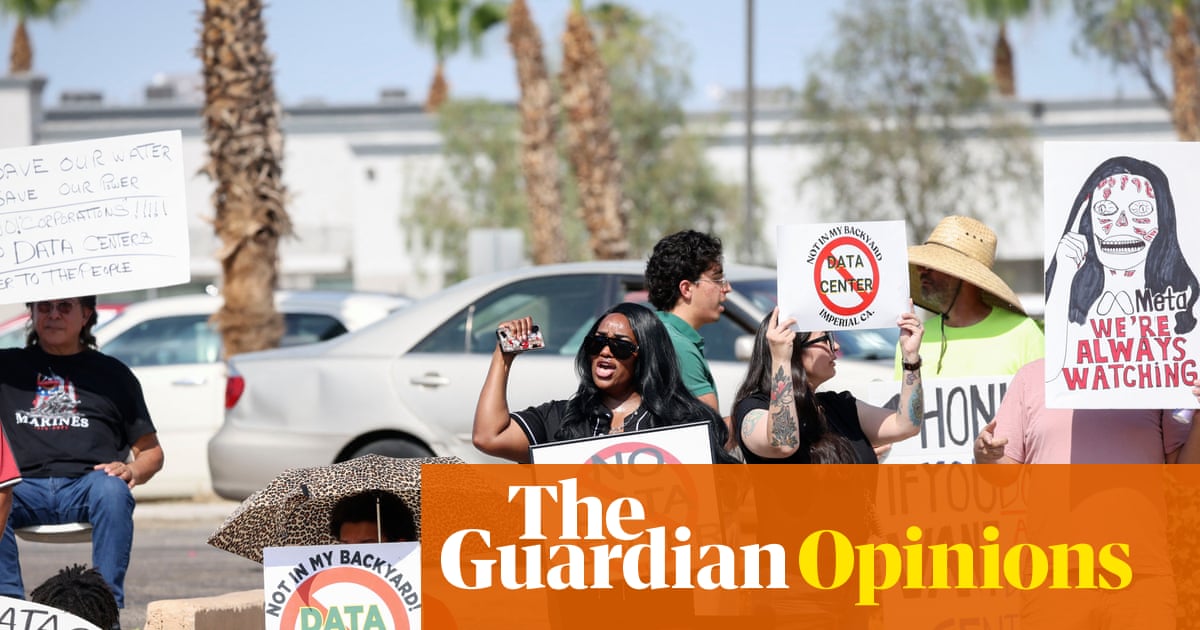
The cyclists said they were drawn to Hong's support for the working class and opposition to data centers. More than anything, they wanted someone ready to shake up the system.
"If there was ever a year for her to win, it would be this year," said hotel worker Aiya Askana, 28. "So I'm going to go for it."
Related Content














Comments