
 German (DE)
 English (US)
 Spanish (ES)
 French (FR)
 Hindi (IN)
 Italian (IT)
 Russian (RU)
 1 hour ago
Scott Tomlinson still owns the 35 acres in Ligonier Township in Westmoreland County, Pennsylvania, that his family has cared for over seven generations. But in July 2026, he sold part of what it means to own them.
For US$139,000, Tomlinson gave the Western Pennsylvania Conservancy the right to enforce restrictions on how the land is used, TribLive reported. The restrictions protect its farmland and woods from future development in perpetuity.
According to the report, the property is about 80% forest, with slopes that drain into a tributary of Loyalhanna Creek. It includes habitat for buffalo nut, a shrub the state lists as a rare species of concern, and farm soils the USDA classifies as “farmland of statewide importance.”
That is how a conservation easement works: The land stays privately owned, but its owners agree to limits on what they can do with it.
Such agreements let today’s landowners make conservation decisions that bind future owners.
In more than two decades of studying private land conservation, I have found that deciding which rights to give up, how to pay for conservation and how to handle future changes can be complicated. My family has also spent roughly two years negotiating an easement on our own family’s ranch in Texas.
Dividing the rights of ownership
Think of land ownership as a bundle of sticks, with each stick representing a different property right. Within the limits of the law, owners can build on the land, farm it, subdivide it and more. An easement separates particular rights from the rest of the bundle.
For example, an access easement gives someone else the right to cross your property. In a conservation easement, the landowner voluntarily gives up the right to use the land in specified ways. A land trust or government agency receives the right to enforce those limits.
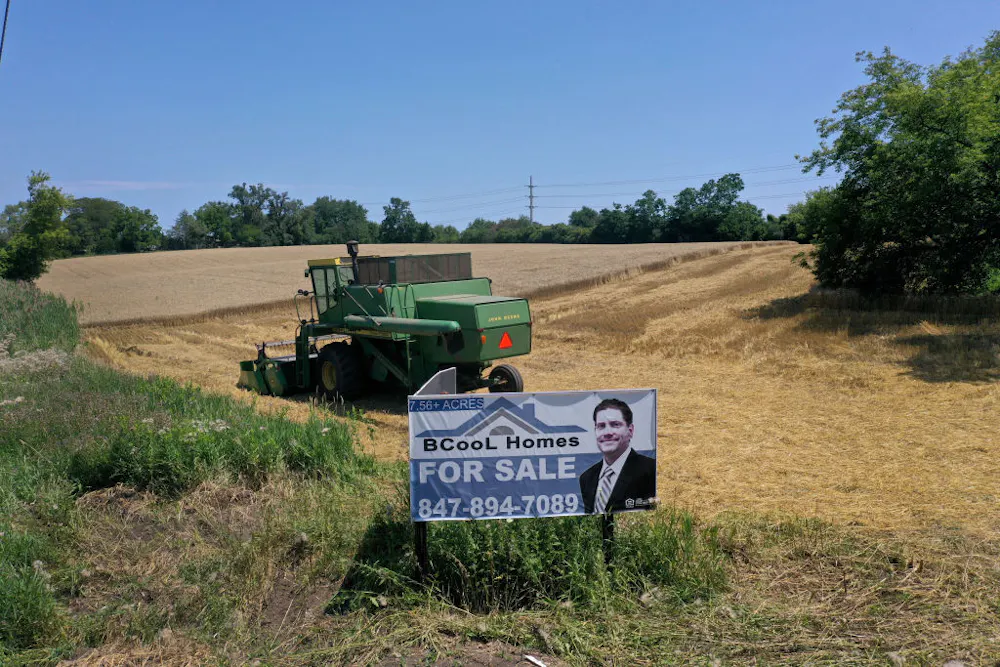
Imagine someone who owns a 1,000-acre farm that has long been in her family. Development is spreading into the surrounding countryside, and neighboring farms are being divided into smaller properties or subdivisions. She wants her land to stay largely intact. One stick in her bundle is the right to subdivide.
A farmer who grants an easement might agree to limit how many parcels future owners can carve out of the farm while still allowing farming. The farmer could still sell the property or pass it on, but whoever owns it next would also be bound by the restrictions, because the farmer can’t sell rights the farmer no longer owns. Those future owners may have no intention of subdividing. But the farmer who signs the easement can’t know what their children, or someone who buys the farm a century from now, will want to do.
Tomlinson’s worry – that land his family has cared for since the 1870s could be sold off for development once he’s gone – plays out against a broader shift in the county’s farm landscape. According to the USDA Census of Agriculture, Westmoreland County experienced a 10% decline in the total number of farms between 2017 and 2022, dropping from 1,099 to 989 farms, even as total farmland fell only about 4%.
Easements like Tomlinson’s are one way landowners have responded. The Western Pennsylvania Conservancy says it has permanently protected more than 30,000 acres in the Ligonier Valley since the 1970s, more than 12,000 of them through easements.
Negotiating which rights to restrict
Easement terms are negotiated property by property. In my family’s negotiations, we have had to work out what we and future owners can still do with the ranch. We have agreed to limit where future buildings can go, to permanently restrict the use of certain pesticides and to prohibit new roads and stream crossings.
Other easements may allow different agricultural, forestry or construction activities, depending on their terms.

Reaching agreement can be expensive. Natural Lands, a Pennsylvania land trust, lists typical transaction costs. These include surveys, appraisals, environmental assessments, legal fees, title work and documentation of the property’s existing condition. The cost to negotiate my family’s easement has run well into six figures.
Once an easement is signed, the holder is responsible for monitoring and enforcing it for as long as it lasts. Land trusts commonly ask landowners for stewardship funding to help pay for that future work.
The land trust that holds our easement will work with whoever owns the land after us, not just with us, so choosing the right partner was an important part of our decision.
How conservation is financed
Beyond transaction costs, granting an easement usually lowers a property’s market value.
To see how this works, imagine the hypothetical farm is worth $4 million with its development rights and $2 million once an easement sharply restricts subdividing it. (These figures are for illustration; how much an easement lowers a property’s value varies widely with its location, development potential and the restrictions involved.) Appraisers often value an easement by comparing a property’s value before and after it’s placed on the land. Here, the easement would be worth $2 million: the amount it cuts from the property’s value.
To encourage landowners to grant easements, U.S. tax law allows a charitable deduction for donated easements that meet detailed requirements. Easements can also be sold.
In Tomlinson’s case, private foundation grants paid for the conservancy’s purchase. Government programs offer another route: The U.S. Department of Agriculture helps eligible organizations, such as land trusts and state and local governments, to buy easements on farmland. These payments and tax benefits can help landowners absorb the drop in property value. For the public, buying or subsidizing easements can protect more land per dollar than buying land outright.
Tax benefits and tax abuse
The tax breaks tied to easements have also invited abuse.
The Internal Revenue Service has identified inflated appraisals and improperly large charitable deductions as recurring problems. A 2019 report by the U.S. Government Accountability Office found that some promoters sold investors stakes in partnerships and similar entities that then donated easements at inflated values. When appraisals exaggerate a property’s development potential, investors can claim deductions based on those inflated values.

Congress later restricted deductions for certain conservation contributions by partnerships and corporations. Courts have also disallowed deductions and imposed penalties in abusive transactions.
What it means to protect land forever
To qualify for the federal charitable deduction, a donated easement must protect the land permanently.
Property scholar Gerald Korngold of New York Law School has argued that the permanence that makes easements attractive also makes them hard to adjust and that changing ecological conditions and competing community needs can create reasons to revisit restrictions.
In one case Korngold describes, a conservation easement in Vermont blocked the federal government from adding the land to a national wildlife refuge – a move every party supported – because federal rules require clear title.
I have taught property law for decades and have written about the challenges of private land conservation for much of that time. These experiences taught me that an easement has to address two things: what to protect and what happens if circumstances change.
Negotiating one for my family’s ranch made that, and the bundle of sticks metaphor, real for me. We had to write language setting the dimensions of the particular sticks my grandchildren will live with, under conditions none of us can predict.
Done properly, a conservation easement leaves room for land use to adapt without undermining its conservation goals. It lets landowners like Tomlinson’s family and mine protect land while keeping it in private hands.
Read more of our stories about Pittsburgh and Pennsylvania.












Comments