
 German (DE)
  English (US)
  Spanish (ES)
  French (FR)
  Hindi (IN)
  Italian (IT)
  Russian (RU)
  3 weeks ago
No man’s land in Turmus Ayya lies where the US flags end and the Israeli flags begin. It is a few hundred metres of soil scorched by molotov cocktails where Israeli settlers have placed a boulder to tell the Palestinian villagers: this is our land now.
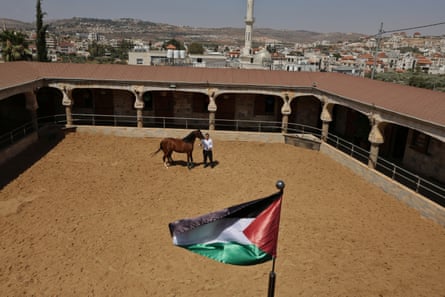
On one side of that boulder are the white-stoned mansions where the Palestinian residents of Turmus Ayya live. About 80% of them are US citizens, members of the diaspora in New York, Chicago and Paterson, New Jersey, who return for the summers and bring their children here to experience Palestinian culture and learn Arabic. Many call themselves proud American patriots and fly the stars and stripes from their balconies.
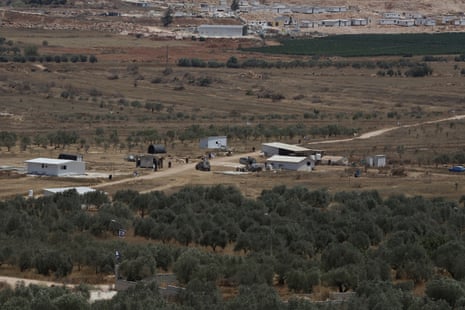
On the other side is an illegal Israeli outpost of corrugated metal trailers and shacks staffed by young men who claim all of the West Bank as Jewish land.
The outposts radiate from Shilo, a hilltop settlement across the valley that has become a destination for Americans seeking Judaism’s first religious and spiritual capital before the first temple was built. Mike Huckabee, the US ambassador to Israel, has visited Shilo, which the UN says is a violation of international law, twice in the last two years.
The irony is not lost on people here that the US has backed settlers claiming the West Bank as theirs, and that US dollars – through Jewish charities and the US budget to support the Israeli military – have helped finance the Israeli land grab. Given Shilo’s close ties to the US, they muse that some of those attacking Turmus Ayya could be fellow Americans.
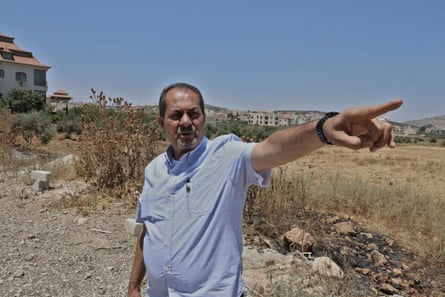
“Only in Palestine will you find American citizens invading American citizens for land,” said Yaser Alkam, a semi-retired family law attorney from Turmus Ayya who for 35 years lived in Anaheim, California. He is now the head of this village’s council. “There is no fight. One side attacks and the other side defends with the limited means that we have.”
The violence is relentless. At night, settlers roam the village in off-road vehicles and intimidate people with gunshots, screaming and shining flashlights through the windows. In a recent attack against a family on the edge of the village, the settlers spray-painted the word “Revenge” on the side of the house.
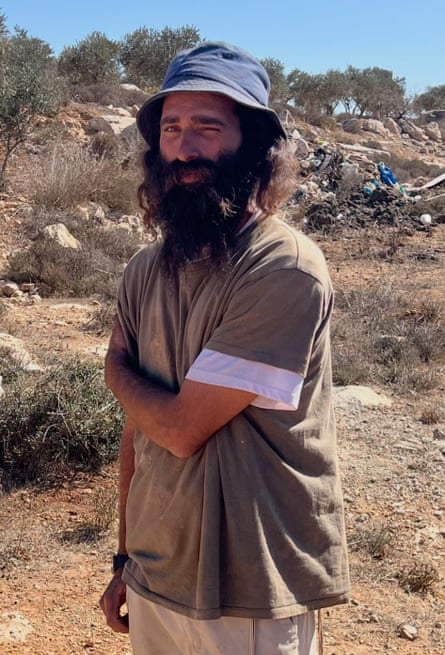
Among those accused of violence and intimidation is Amishav Melet, whose brother was killed in a clash when settlers marched into another Palestinian village last week. He has publicly declared that he believes Jews should retake all of the West Bank. He has denied claims that he is connected to settler violence.
“I have his pictures,” Alkam said of Melet. “And I’m sure he has my pictures and he has my name. He knows me and I know him … And he’s probably waiting for the time to get me.”
While the Trump administration is focused on Iran, Israel’s accelerating land grab in the West Bank has found an enthusiastic supporter in Huckabee. The US ambassador is an evangelical Christian who has supported Jewish claims on the occupied land that settlers call Judea and Samaria.
Huckabee told residents in 2025: “President Trump loves this land. You are not alone. We stand with you, and so do many around the world. Those who do not stand with you do not stand with God.”
When attacks take place, Alkam contacts Huckabee’s embassy for protection. Sometimes, he said, US officials have helped, most recently in late July when the Israeli military occupied a house owned by a doctor from Syracuse, who had hosted the Democratic congressman Ro Khanna during his visit to Turmus Ayya earlier in the month. Alkam credited the US embassy with “playing a big role” in getting the military to leave, he said.
But nine Palestinian Americans have been killed in the West Bank since 2022 by either settlers or the Israeli military, and the US is often unable to help or to restrain the settlers or military during violent attacks. A year after a Palestinian American from Tampa Bay was beaten to death by Israeli settlers in the West Bank, settlers attacked his family members and friends, and even a CNN crew, who had gathered for a vigil.
In response to questions from the Guardian, the state department said all US citizens in the West Bank had access to consular services, condemned violence “by any party in the West Bank” and said it was in “regular dialogue with partners about improving stability and security”.
“As the president has clearly stated, the United States does not support Israel annexing the West Bank,” the spokesperson said. “A stable West Bank keeps Israel secure and is in line with this administration’s goal to achieve peace in the region.”
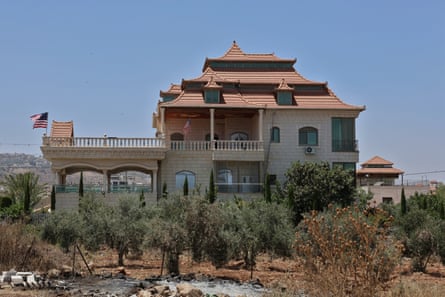
The moments when the US has intervened have only convinced Alkam that Washington could be doing more to restrain the settlers and the Israeli government.
“We thought we would never get to this point,” he said. “We never thought that American citizens in Turmus Ayya are going to be attacked under the eyes and the ears of the current administration.” Many of the residents even voted for Trump, he said, but lost faith when the administration quickly moved to remove violent settlers from sanctions lists drawn up under the Biden administration.
Ghaith Odeh grew up in Queens, New York, and still spends most of his time in Paterson, New Jersey, but his wife and children moved to their family’s land in Turmus Ayya in 2021. They live on the border of the village near the settlers, and like others on the frontlines, they have shutters over their windows (plastic, not metal, he regrets). From there, he can scan the settler outpost below.
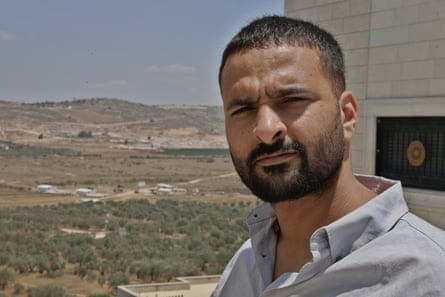
The violence began before the Hamas attacks on 7 October 2023 and the launch of Israel’s war in Gaza, but has grown worse in the past year. “We’ve had multiple times where we were scared for our lives here, where we were actually in danger,” Odeh said, recounting the night that settlers burned down part of his parents’ house, the six Israeli military raids on his house, the regular gunfire near the village, and the time a rifle was pointed at his son, one of six children. He is especially scared when he is out of the house, he said.
When Odeh contacted the US embassy about the attacks, he said he was given canned replies to report them to local law enforcement. Asked what message he felt he had received from the US government, he said: “It’s OK for an Israeli American to live over here, but not for an American Palestinian.”
The violence has changed daily life in the village. Many fear bringing their children here and people have to rely on themselves for protection. The discussions in the village now revolve around security measures: whether to install barbed wire or hang more American flags to emphasise the village’s connection to the US.
Pointing to a neighbour from Chicago who was installing a barbed-wire fence, Odeh said: “I don’t want to live in a prison,” adding that he wanted to set an example for his children of how to live without fear.
“I’m born and raised in America,” he said. “We lived in freedom over there. And I’m not gonna live any other way.”
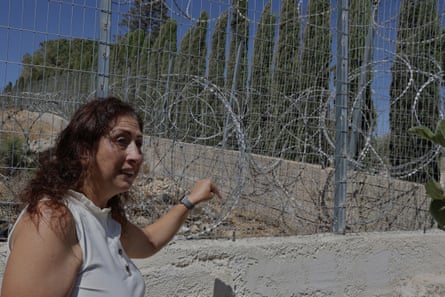
But people are scared for their lives. Last month, Maisoon Ali, a 60-year-old retiree, was at home in nearby Deir Dibwan when she looked up and saw three young men running up the driveway with bottles filled with a flammable liquid. She says it was only luck that she ran into her house, where she pulled down the metal shutters that put a barrier between her and them. After trying to pour the liquid on her, the settlers set fire to furniture and the building’s exterior while Ali sheltered inside.
“Thank God I acted fast,” said Ali, who for decades lived in Vienna, Virginia, and whose children still live in the US.
“If I didn’t do that, I would have been burned alive,” she said.
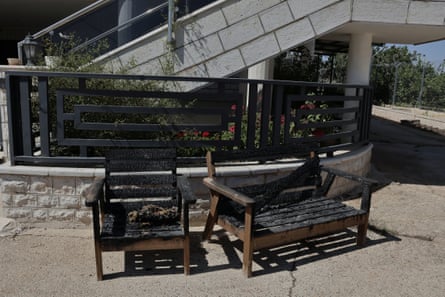
Ali’s father foresaw trouble in the 1970s when he built the house and installed bulletproof glass.
When he died, Ali’s father made her promise that she would not abandon the house. Now, she has turned the home into a “prison”, with fences around the house and the surrounding olive grove. She has abandoned her regular routine of travelling to Ramallah to see friends or swim at the local YMCA.
“It would kill him to see this,” she said, gesturing toward the fortifications. “It makes me emotional because this is our land and I’m 60 years old and I decided to retire in my family home. And I don’t want to live like this, scared, and not doing my routine.”
Meanwhile, the Israeli settlers camped nearby remain a constant threat. Dozens besieged the house again on 18 June, days after the first attack. One of the men has threatened her online, posting a video in which he is seen standing by a fence next to a basketball court behind Ali’s house. “The reality on the ground is shouting out what they already understand on their own: the homeowner has returned,” he says.
The firebomb attack against Ali took place on 14 June, two days after Huckabee made a surprise visit to Shilo to back the settlers.
Alkam, noting Huckabee does not address the Palestinian American community in the West Bank, said: “I’ve reached out at least four times asking for a visit to Turmus Ayya. He does not even consider that we exist.”
Israeli prosecutors say they have charged six settlers with “acts of terrorism, arson, sabotage and violent rioting” in Deir Dibwan, although the cases are reportedly covered by a gag order and it is not clear if they are related to the attack on Ali’s house. After filing an initial report with the US embassy, she said she was told to report the case to local authorities.
“If we were a Jewish Israeli American family who they had tried to burn alive, the American ambassador would have been here in two hours,” she said. “But I haven’t been contacted.”











Comments