
 German (DE)
  English (US)
  Spanish (ES)
  French (FR)
  Hindi (IN)
  Italian (IT)
  Russian (RU)
  2 weeks ago
Like many children of Latino immigrants in Los Angeles, Juan grew up a Dodgers fan. He watched their baseball games from home when he was little – even though his parents, who are Guatemalan, were more interested in soccer and basketball – and has been to Dodger Stadium many times as an adult. He sports a Dodgers logo, among other symbols, on an elaborate tattoo on his left forearm.
These days, though, he’s not sure about his allegiance. Juan – whom the Guardian is only identifying by his first name amid the Trump administration’s immigration crackdown – saw his family ripped apart when his father, who had been in the US for close to 30 years, was plucked off the street last year and deported. From that moment on, a team that many immigrants in LA see as a symbol of integration and belonging became, for him, an organization unwilling to stand up for its large immigrant fanbase.
In the preceding months, as the Trump administration conducted heavy-handed raids in Los Angeles and sent national guard troops and marines to respond to the ensuing protests, two of the city’s soccer teams had put out statements of solidarity with immigrant families – but not the Dodgers.
Juan also knew that Guggenheim Partners, the multibillion-dollar ownership group behind the franchise, had a stake in the Geo Group, a major private operator of immigration detention centers that works under contract with US immigration authorities.
Juan went to one game late last season, at the invitation of a church organization supporting his family, but he couldn’t stop thinking about Geo Group and the hundreds of dollars his family had been forced to pay for items with shockingly high mark-ups while his father was in detention: $50 to open a phone account, $80 for a rudimentary long-sleeve shirt to protect him against frigid temperatures (roughly what the Dodgers charge for a much thicker, high end team hoodie), and more for basic necessities from the commissary.
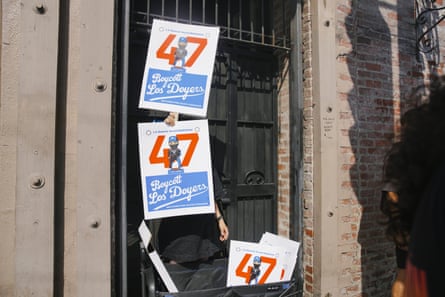
The idea that the Dodgers were part of a corporate structure benefiting from these charges was more than he could stomach. “I don’t think I’ve watched a full Dodger game since,” he said, “and I definitely have not been back. For anyone who has been truly affected [by the administration’s policies], it’s kind of hard. I don’t want to give my money to an ownership that was profiting off me during a terrible time.”
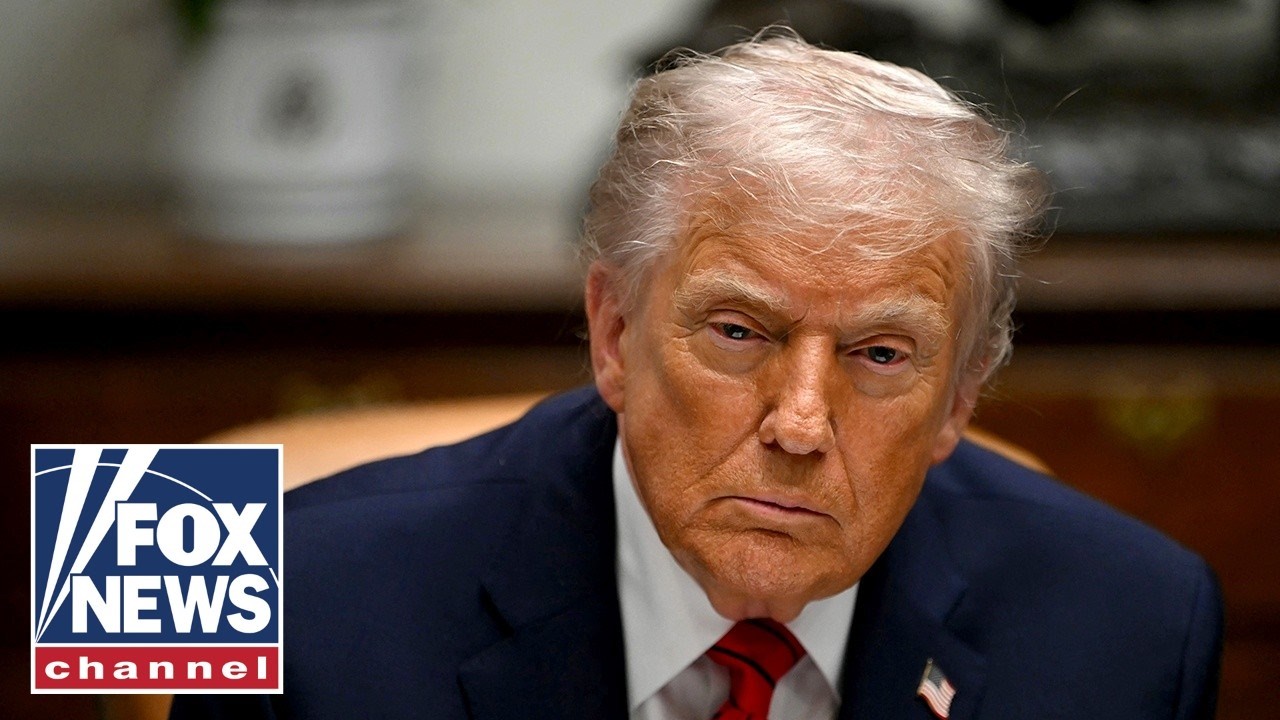
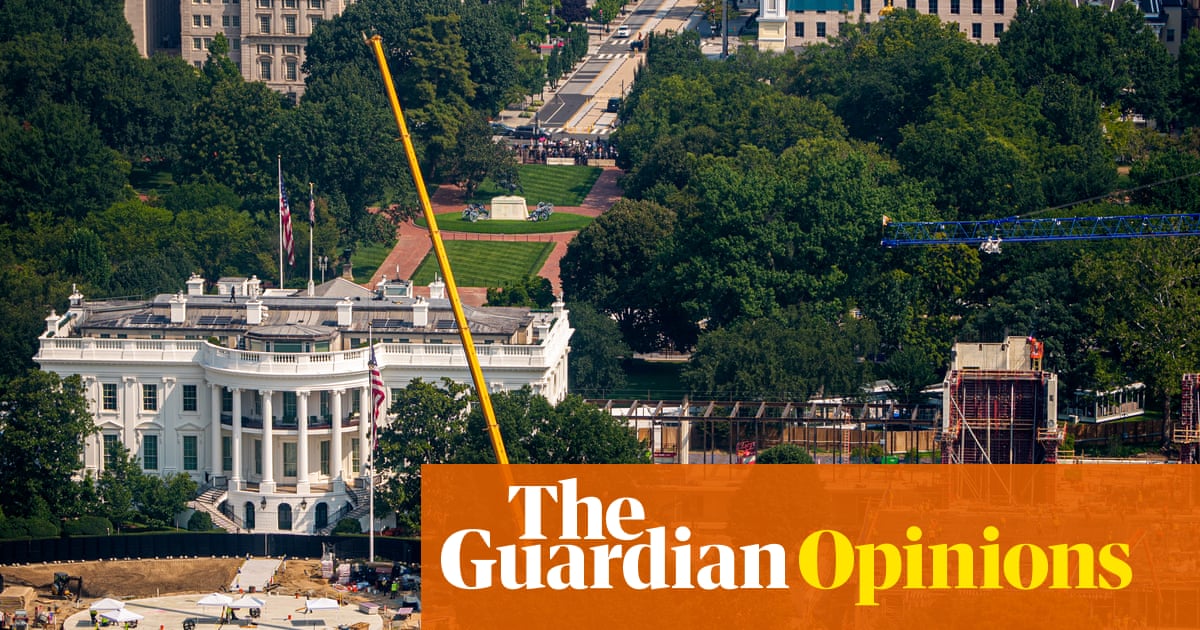
Those complicated feelings have been compounded by the fact that the Dodgers are visiting the White House on Thursday. It’s a rite of passage for any team that wins the World Series, as the Dodgers have in each of the last two years, but it is also shaded by Donald Trump’s depiction of LA as a trash heap controlled by “illegal aliens” and criminals and by aggressive policies that have spread fear and heartbreak in a city that is close to 50% Latino.
It’s not just immigrants questioning the team’s judgment. “The Dodgers do know they play in Los Angeles, right?” the LA Times sports columnist Bill Plaschke wrote. “Then why in the hell do they insist on embracing the person trying to tear this city apart?”
Juan, like many Latino fans, has more mixed feelings, wanting to cheer on the success that the White House invitation betokens while also shuddering at what that entails with this particular president. “It was never controversial to go to the White House until Trump came into office,” he said. “I’m very conflicted.”
“We want our sports to be non-political, but we don’t apply that standard equally,” said Natalia Molina, a professor of American studies and ethnicity at the University of Southern California. Molina sees the team, with its lineup of Japanese superstars, Latinos and Americans of different ethnicities, as a vehicle for getting Americans to think more positively about other peoples and other cultures – something she has also seen happening during the World Cup.
But she can’t imagine how the team would put on a show of unity and hope with Trump in the same room. “At the end of the day, it’s jarring to see players smiling with a person who harbors hatred toward our community,” she said. “How do you reconcile that?”
Asked a similar question, Dave Roberts, the Dodgers manager, told reporters he was a coach, not a politician, and it was up to individual players to decide whether they wanted to participate.
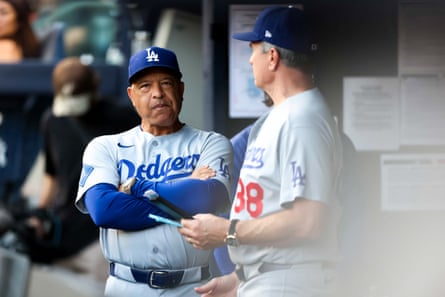
But, he added, going to the White House was something teams have done for decades, and he expected a strong turnout. “My personal line, my company line, is I hope we get this invitation every year because that’s the goal, to win a championship,” he said.
Still, at least two prominent players will be staying away. Kiké Hernández, a Puerto Rican fan favorite who said last summer he could not stand “to see our community being violated, profiled, abused and ripped apart”, was quick to announce he was not going. Since he is rehabbing from an injury, he hasn’t been traveling with the team. But he told the Los Angeles Times: “If I was active, I probably wouldn’t have gone anyways.”
Mookie Betts, another fan favorite who ducked out of a Trump White House visit in 2019 when he played for the previous year’s World Series champions, the Boston Red Sox, said he would use the baseball-free day on the road to spend time with his wife and baby. “I’m not trying to make this a whole big deal,” he told the California Post. “You don’t get many days off. They’re coming, and [I] just want to hang out with the fam.”
Hernández and Betts attended last year’s White House ceremony – and endured criticism for it along with the rest of the team. That, though, was before the surge in immigration raids and an attempt by ICE to use an area outside Dodger Stadium as a staging ground.
Under significant public pressure, the team told ICE to stay away and pledged $1.1m to community groups supporting families like Juan’s who were grieving the arrest and deportation of a loved one. According to Securities and Exchange Commission filings, they also sold their $12m stake in the Geo Group.
Religious, labor and community groups in the city believe the team could be doing a lot more, however. They point to a team video put out in support of Black Lives Matter following the murder of George Floyd in Minneapolis in 2020 – including the Dodgers’ then-star pitcher, Clayton Kershaw, saying “silence is no longer an option” – and wonder why the players can’t do the same to support immigrant families now.
Father Brendan Busse, pastor at the Dolores Mission in downtown Los Angeles, said the owners of the Dodgers face a fundamental choice between serving the city and serving themselves. “Are we here to make money off one another, or as a loving community?” he asked. “Are LA and its people just slaves of the Roman empire thrown into the Coliseum, or can the Dodgers treat people with dignity and respect?”
It’s a question that has kicked around in some form from the day the Dodgers first arrived in Los Angeles. The team has always enjoyed a loyal Latino following and taken great care to emphasize the importance of family and community. But it also built its stadium on land that saw a brutal city-led campaign to evict Latino families, and it has been regarded with some ambivalence ever since.
The modern-day Dodgers declined to comment.

Joseph Tomás McKellar, who runs Pico California, a faith-based community organizing network, said he hoped the team could respond positively to what he termed “loving pressure” and galvanize other sports teams “in ways that express solidarity and transform human suffering”.
Neither he nor Busse thought the Dodgers should boycott the White House. Rather, they saw the visit as an opportunity to send a message – whether by making a statement about the team’s values, or wearing clothes celebrating Latino cultures (as pitcher Joe Kelly did in 2021 when he wore a Mexican mariachi jacket), or some other respectful but firm gesture.
“Bringing Dodger blue into the White House is better than all the gold trinkets that have been brought in recently,” Busse said. “Showing up, as difficult as that can be, can be a way of holding to the truth that it’s not [Trump’s] house, it’s not a castle for a king.”
Molina, by contrast, worried that even a symbolic statement would be taken as a poke in Trump’s eye and questioned whether anyone would feel comfortable making such a stand. “They could all wear Jackie Robinson’s number,” she said, referring to the Black Dodgers legend who first broke the sport’s color barrier in the 1940s and was briefly woke-purged from a Pentagon website last year, “but in the context of this administration even that would seem a radical act.
“There’s a question, even, whether the Spanish-language players can speak Spanish in the halls of the White House,” Molina added. “Can you bring your whole self, or do you need to police even that? Once you are in the zone of self-policing, I don’t know how much the visit is about celebration.”











Comments