
 German (DE)
 English (US)
 Spanish (ES)
 French (FR)
 Hindi (IN)
 Italian (IT)
 Russian (RU)
 1 hour ago
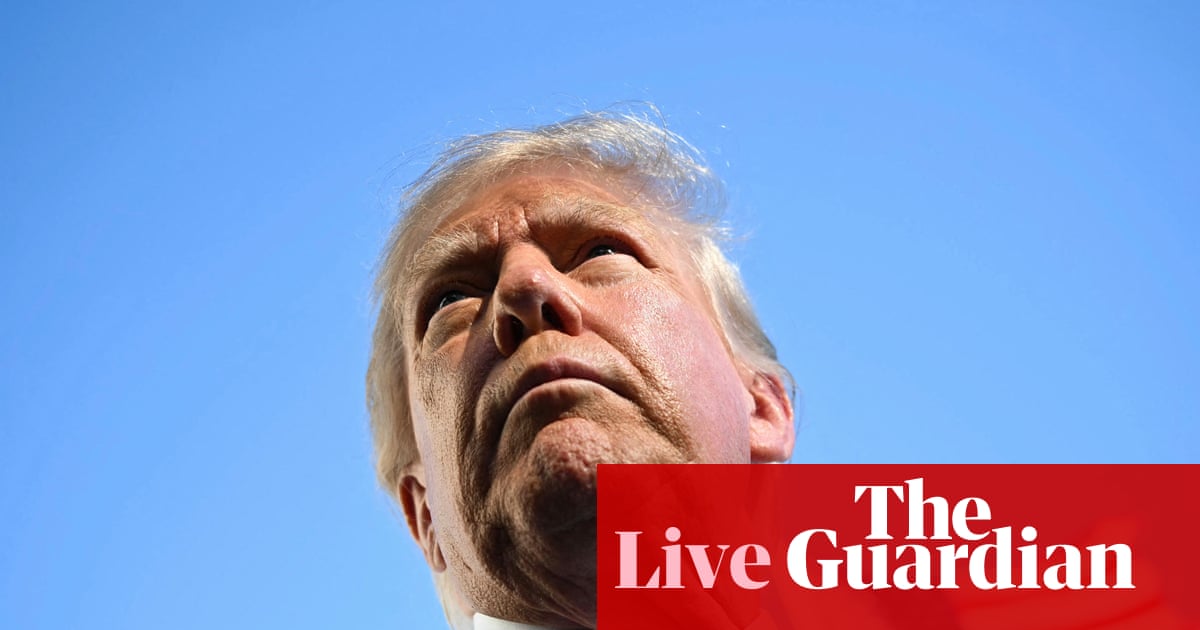
Nothing lasts forever. Jesse Kelly knows his meteoric rise through conservative radio will end one day – just like Donald Trump’s power over the Republican party.
Every day, the 6ft 8in Kelly walks a tightrope between sycophancy and criticism of the US president: the same fine line many rightwing hosts have attempted to tread throughout Trump’s rise, fall, and then resurrection from the political graveyard after his 2020 presidential election defeat.
What Kelly, 45, does next will be telling. Conservative media hosts have achieved untold fame and fortune riding the Trump train. Yet as Trump enters the final two years of his presidency, these hosts must prepare for life after the train pulls into the station. More imminently, they will wrestle with the likely fallout of Republican losses in next month’s US midterm elections – and the question of how much blame to put on an unpopular president.
With a daily show syndicated by radio powerhouse Premiere Networks across more than 200 stations across the country, between 6pm and 9pm, Kelly is one of the most influential players in the medium. His broadcast follows a three-hour block by Fox News host Sean Hannity, long an eminence grise in conservative media.
“When he was the bee’s knees there for a while on the right, honestly, it was easy radio, easy podcasting, easy TV to just sit down and just powder Trump’s butt all day long,” Kelly said over lunch recently at a suburban Red Lobster in Webster, Texas, approximately 20 miles south-east of downtown Houston. “That’s what the audience wanted to hear.
“For a while, that was the case. But like any other politician, same for all of them, you don’t stay hot forever. It’s not possible. No matter what, we’re nearing the end of the Trump era because his last term’s almost over and people are going to start looking around for the next guy.”
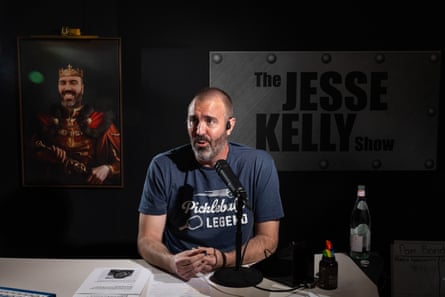
In recent months, Kelly has gained even more attention for his willingness to criticize Trump for starting a war with Iran just months before an election he reckons will be “rough” for Republicans. “I think if you told Donald Trump that he’d still be stuck over there with $4-a-gallon gas a month before the election, I think he probably would’ve made a different call,” he said.
But these days, any criticism of Trump from a conservative media figure leads to questions like the one he got from a Twitter user named @Swanso45003Kyle recently: “Are you anti Trump now?”
Kelly is not anti-Trump. But he is prepared to upset those who are slavishly devoted to praising the president and ignoring his missteps.
“When Trump does something I don’t like, I’ll say it. And I’ll say it when he does stuff I like,” he said. Make no mistake: Kelly still spends most of his time bashing “commie” Democrats, referring to them on a recent show as “sick, evil and demonic”.
While Kelly said “a lot of people” in conservative media care about securing an invite to the White House, he claims to be uninterested in such an offer. Unless he approaches his daily show with candor and honesty, he worries listeners will think he’s a phony and turn the dial.
“I think a huge percentage of Trump’s supporters have always understood that Trump has flaws like any other human being has flaws,” said Kelly. There is “a tiny percentage who worship everything he says and does”, he added. “Those are just generally ridiculous and stupid human beings. But the large percentage of Trump supporters are not sheep.”
Michael Harrison, the founder of the talk radio-focused publication Talkers magazine, said the art of “positioning” is an extremely important skill in the industry – and one that conservative hosts will need to lean on when pondering a post-Trump political world. “Anybody who is in radio and who plans to be in radio for a very long time has got to – or eventually learns – that the carpet is going to be pulled out from you eventually, with switching circumstances and public opinion,” he said in an interview.
Talkshow hosts on the right are “all competing with each other”, added Harrison. “It’s a game of musical chairs, and right now that’s what the conservative element of news talk radio is facing. All of a sudden the game is changing, and it’s changing very rapidly, and they’ve got to figure out what their position is.
“And it’s got to be somewhere between their own deeply held beliefs or what the audience wants. It ultimately comes down to business. It ultimately comes down to what will get ratings, what will get clicks, what will get views and what will get advertising.”
Kelly was an unlikely candidate to host a nationally syndicated radio show. Born in Ohio, he went to high school – and a little bit of college – in Montana before joining the marines in 2000, serving in Iraq before being honorably discharged in 2004.
He lived in Arizona for a time and worked for a family-owned construction company. Then, fully embracing the Tea Party movement, he ran for Congress in Arizona in 2010 and nearly ousted incumbent Democratic representative Gabrielle Giffords.
“I just got out of the Marine Corps and got mad and decided to run for Congress,” he recalled. He tried again in a special election two years later, but lost again to a Democrat – something he says he is now thankful for. “It would suck to be in Congress.”
Not giving up on politics, he moved to Washington DC and worked in development for the conservative advocacy group Citizens United, but hated living there and left the job after a year. He says he then drove around the country looking for work, getting close to running out of money before eventually finding a job through Craigslist selling RVs in Texas.
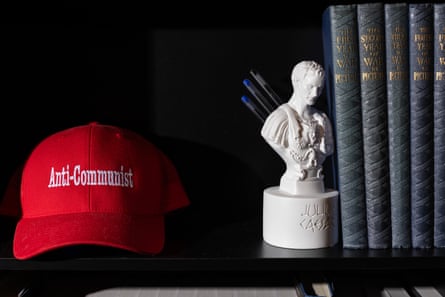
After one of his tweets went viral, Kelly did a guest appearance on Houston-based conservative radio host Michael Berry’s show, and it was Berry who called him up – while he was in a Taco Bell drive-through – to introduce himself before ultimately suggesting he pursue radio as a career.
In 2018, he began hosting a one-hour, late-at-night show on KPRC 950 AM: an entry-level “prove it” gig in the radio business. Only three years later, in 2021, he got “the phone call everybody who does what I do wants” from Premiere Networks president Julie Talbott offering him a job.
“I don’t think it’s supposed to work out that way,” Kelly said of his quick rise in an interview.
Talbott suggested in a statement that Kelly’s non-traditional background “gives him a fresh perspective and an unfiltered style that stands out in today’s media landscape.” She added: “Over the past five years, we’ve had the opportunity to watch his audience and influence grow significantly, and that success is rooted in the trust he’s earned with listeners.”
For several years, he also hosted a nightly streaming show for rightwing online platform the First, though that arrangement recently ended. Kelly said he wants to focus fully on radio moving forward.
On a recent Monday afternoon, Kelly settled into his desk chair and prepared for his show. On the front of his large desk, he placed his car keys and his gun. “Unless I’ve gone through a metal detector, I have a weapon on me,” he said.
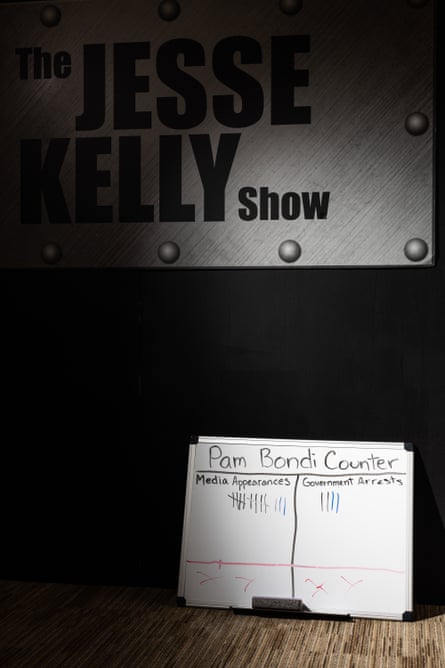
While Kelly has been encouraged to use a “show sheet”, listing segments and topics for the day, he feels better off the cuff, detecting a certain stiffness in his presentation when working from prepared lines. The same was true when campaign consultants told him to script speeches during his two runs for Congress. “I just would rather do it off the top of my head.”
Kelly doesn’t take the current success of his radio show for granted. “I’ll probably never fully understand why people love it the way they love it,” he said. But while he believes “the safest thing you can possibly do is everything Maga, all the time”, at least for the past decade, he has made the calculation that his market value depends on ideological consistency without predictability, as well as a heavy dose of personality and banter.
“In a lot of ways, in a lot of different places in life, you completely eliminate your voice as having any importance if you’re a given on anything,” he said. “You just get dismissed. You’re banked already.”
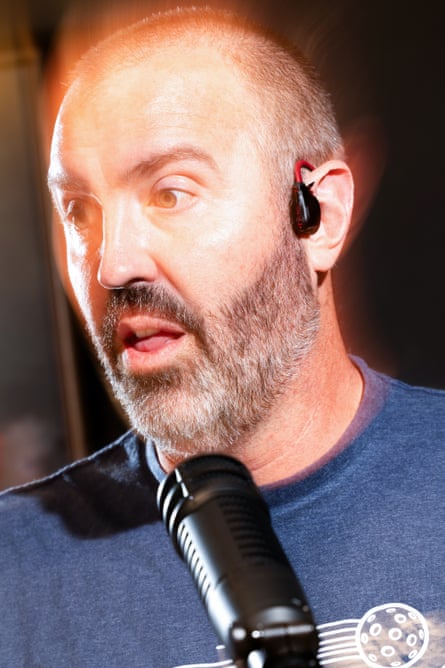
He hopes his audience – at least those who have not dropped him in favor of a more reliably pro-Trump host, or because they dislike one of his food opinions – will keep listening, even when they disagree. “Look, you’re never going to get 100% of a rightwing media audience,” said Kelly. “That’s not possible. But if there are 40%, and you can grab them and keep them, then you can have a long career that way.”
During a late September radio segment comparing Trump to a once-elite baseball player who has lost his home run power, Kelly acknowledged that his day, too, will come – possibly sooner rather than later.
“There will come when I don’t deliver for you when you tune in,” he told his listeners. “And that sucks. And when you think about that, especially when you’re doing OK – right now, the show is growing, doing great – when you think about that, you think, ‘No, it’s going to last forever!’ No, it won’t.”










Comments