
 German (DE)
 English (US)
 Spanish (ES)
 French (FR)
 Hindi (IN)
 Italian (IT)
 Russian (RU)
 47 minutes ago
Stonecrest is resolutely middle class. About six out of 10 of its voters cast ballots in the 2026 election and about 90% of them voted for Democrats, according to election figures. And they have often been overlooked by Georgia’s Republican establishment.
The fundraiser Keisha Lance Bottoms held at the Privi event center and retreat in suburban Atlanta in September didn’t draw a lot of attention. But Stonecrest, by one measure the largest city in the United States with a non-Hispanic Black population above 90%, tends to roll under the radar.
It’s infuriating, said Vaughn Irons, Privi’s founder. “I think she came to speak to a community that often gets driven through and flown over.”
Black voting power helped secure victory for US Senator Jon Ossoff, Bottoms’ run for the governor’s race and a slew of down-ballot candidates. Now, those voters expect to be heard.
Culture war issues come with the change in partisan control of Georgia’s government; on abortion, on guns and on LGBTQ+ rights. But the customary politics of Georgia start and end with business, and that attitude is bipartisan.
Georgia’s Black voters have long wrestled with the Black Mecca paradox. Atlanta has long attracted Black professional talent from across the country and the world who were looking for strong African American political and cultural institutions and an economic environment perceived to give Black people an even shake.
But upward mobility for native-born Black Atlantans has been anemic. Black unemployment rates are lower in Atlanta than the nation overall. Georgia leads the nation for Black executive representation and recent income growth. But Georgia offers the worst chances for wealth of any state for a Black child born into poverty.
Activists have stood on soapboxes to shout at Georgia’s lawmakers about these economic issues for the last 20 years. In January, those voters will expect their government to answer them.
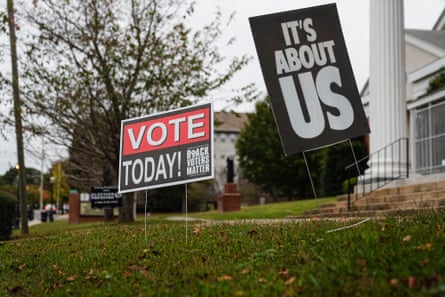
The opinions of Black voters – particularly Black women – have been ignored for years, said Tiffani Stephens, a voter in DeKalb county. “We’ve taken as the pretty person and all we care about is clothes, shoes and makeup,” she said. “Where if you really know a Black woman, you know these are additives. We are of substance. Deep substance.”
Democrats didn’t just win the marquee political contests in Georgia this November. They won every statewide election from the lieutenant governor’s office down to the insurance commissioner. Democrats displaced a Republican majority on the electricity rate-setting public service commission. Almost all the statewide office holders will be Black women, including the incoming speaker of the Georgia house, state representative Carolyn Hugley of Columbus. Democrats are one state senator short of controlling both chambers.
“This was not just a magical thing. This took a long time, building the infrastructure for the south and particularly for Georgia,” said Deborah Scott, executive director of Georgia STAND-UP, a “think and act tank” non-profit advocating for job training and economic development for working families.
It has taken multiple failed election cycles, chipping away at layers of cynicism, to be ready for this moment, Scott said. Stacey Abrams, two-time gubernatorial candidate turned democracy activist, deserves some credit for Georgia’s political results in November. But it is also the product of meticulous relationship-building groundwork, particularly by organizations led by Black women, she added.
“If Stacey is the tree that all of these newly elected officials are sitting in, then the roots of that are community-based organizations and non-profit organizations like Georgia STAND-UP and the People’s Agenda, folks that have been doing the work for a long time.”
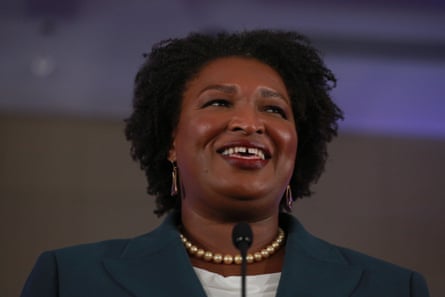
Describing the election results as a referendum on gas prices, or the war, or Donald Trump, is reductive, Scott said. Black voters assess their conditions holistically. “It’s not just about the gas prices are too damn high – which is true – but it’s also about the quality of life for regular Americans.”
The last two years have been radicalizing for some Georgia voters, Scott said. While highly-educated CDC employees found themselves impaled on the spear tips of HHS secretary Robert F Kennedy Jr, nonprofits serving low-income communities like Scott’s have been scrambling to replace federal spending and a dearth of private grants, she said.
Before the election, activists have been squabbling for scarce resources, she said. Today, they are bathing in the afterglow of political unity.
For 20 years, Democrats have been shut out of major decisions about Georgia’s policy direction. The state has restrictive abortion laws and libertine gun laws. It is one of 10 states which did not expand access to Medicaid.
It has also attracted stunning amounts of foreign investment during Kemp’s two-terms in office, with car manufacturers, battery plants and chip makers locating to Georgia. But almost all of that state-directed economic development landed either in the north Georgia foothills or in rural south Georgia, like the Hyundai Motor Group Metaplant America manufacturing hub in Bryan county, rewarding white, Republican voters with jobs and political attention.
Scott speaks about the urgent need to encode voting rights protections in the Georgia constitution with one breath. In the next, she talks about deepening the port of Savannah, or the new Audi car plant being built near Macon.
“If you look at rural Georgia versus urban and suburban Georgia, it really is a tale of two states,” she said. “This is an opportunity for economic development in all of the regions around Georgia … it’s an opportunity to equalize the state. It’s Atlanta and the rest of the state. And of course, even in Atlanta, it’s the tale of two cities. Those that are born poor will not come out of it. There’s an opportunity for really affordable housing and real economic development.”
The city of Stonecrest, a suburb of south-eastern Atlanta, exists as a municipality because its Black, middle-class voters decided 10 years ago that they wanted their community to incorporate to serve them the way white middle-class voters are served 30 miles north in Sandy Springs. They wanted political leadership that matched their aspirations.
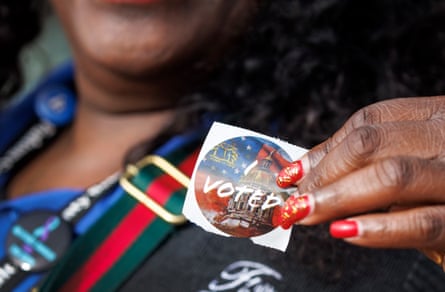
“As a small business owner, which I am, this is an opportunity to have a seat at the table,” said Kazemde Ajamu, who owns Akoma Coffee & Books at Stonecrest.
Ajamu is looking for Georgia to recognize microbusinesses and to better empower entrepreneurship for small business owners. “I feel good about the incoming governor-elect, that this gives us an opportunity to have a voice to speak to it, to create laws that help micro-businesses, mom-and-pops … That’s one example of having a seat at the table, having a voice, and someone that’s listening and can be proactive in that area.”
While Democrats have control over the apparatus of state government, there is no reason to believe that’s a permanent condition. Political competition will force Bottoms and the state legislature to pay attention everywhere, Irons said.
“Everybody’s interest is in growing, and having prosperity and better education,” Irons said. “The success of what’s likely to happen for the next governor is to create an environment where all parties that are serious about the growth and the prosperity of the state of Georgia can have a seat at the table.”
The accession of Bottoms as governor and Democrats in control of government agencies may mean that a place like Stonecrest is less likely to be overlooked, Irons said. But the former HUD official and economic development director for DeKalb county said that doesn’t alone solve problems.
“I think every community has to be ready for the investment that it wants,” Irons said. “And so you have a governor that you can access differently. I think Governor [Brian] Kemp probably was aware of the needs, but a different group of people had access, right? I think now that just because you have access doesn’t mean you don’t have your own responsibility to be ready.”















Comments