
 German (DE)
  English (US)
  Spanish (ES)
  French (FR)
  Hindi (IN)
  Italian (IT)
  Russian (RU)
  3 weeks ago
Top officials from the Trump administration arrived on Capitol Hill this morning to defend one of the most audacious military operations in recent US history: the forcible capture of a sitting head of state from his own capital.
Secretary of state Marco Rubio, defense secretary Pete Hegseth, attorney general Pam Bondi, CIA director John Ratcliffe and Gen Dan Caine, chair of the joint chiefs of staff, briefed all 100 US senators on Operation Absolute Resolve, the lightning raid that plucked the Venezuelan president, Nicolás Maduro, from his Caracas residence and deposited him in a New York City jail cell.
The session marks the first time the full Senate has heard details of the 3 January attack, which involved US special forces from Delta Force swooping into Venezuela before dawn to seize Maduro and his wife, Cilia Flores.
Rubio told reporters that he described a threefold process to lawmakers on Venezuela that revolved around oil: first, stabilization of the country; next, finding access for companies to have access to the Venezuelan market; and the final phase, “one of transition”.
“We are going to take between 30 and 50m barrels of oil,” Rubio said. “We’re going to sell it in the marketplace at market rates, not at the discounts Venezuela was getting.”
Oil aside, the operation has split Washington along predictable lines. Republicans have rallied behind Trump’s characterization of the raid as a straightforward law enforcement action to arrest an indicted drug trafficker. Democrats warn of an illegal act of war that could plunge Venezuela into chaos and set a dangerous precedent for unilateral presidential action.
“What we did is we took out an illegitimate president,” the Republican senator Markwayne Mullin said after the briefing. “He was never duly elected, so there can’t be regime change if he should have never been put in place to begin with.”
On early Saturday morning, special operations forces struck multiple targets across northern Venezuela, captured Maduro and Flores from their home, ferried them to the USS Iwo Jima, flew them to the Stewart air national guard base, then delivered them to New York. Days later, Maduro stood in federal court pleading not guilty to “narco-terrorism” conspiracy, cocaine importation and weapons charges stemming from a 2020 indictment.
Senator Chris Murphy was incredulous coming out of the confidential briefing, telling reporters the Trump administration is “going to take the oil by force, by force”.
“This is an insane plan,” Murphy said. “They are talking about stealing Venezuelan oil at gunpoint for a period of time, undefined as leverage to micromanage the country.” He added that he “heard no detailed plan” on Venezuela’s stability.
The push reflects broader public unease about the operation. More than six in 10 Americans believe it should have required congressional approval, according to a Washington Post poll released on Sunday. A separate Reuters/Ipsos survey found roughly three-quarters express concern the US will become too involved in Venezuela. Overall public opinion mirrors the partisan split on Capitol Hill, with the Reuters poll showing about one-third approving the operation, one-third disapproving and one-third unsure.
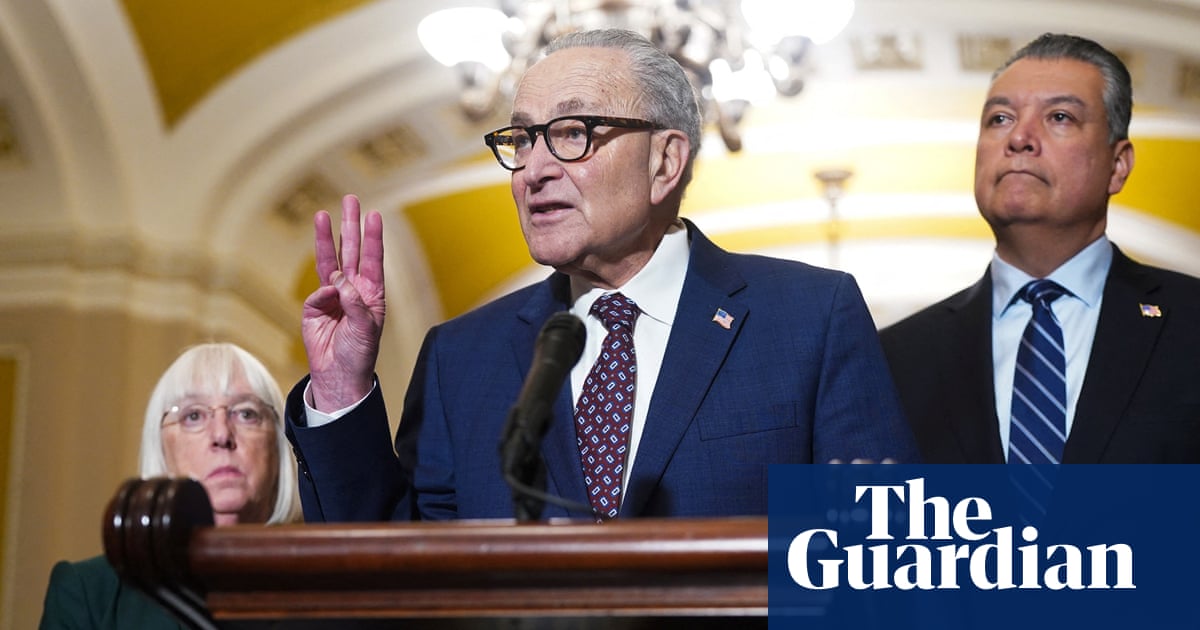
“Across America, people are just saying what the hell is going on?” the Senate minority leader, Chuck Schumer, said. “We need answers as to how long this is going to last. We need answers to how many troops, how much money, are there guardrails, things we don’t do, and a number of things that we had talked about were very troubling.”
But the question on what happens next in Venezuela is still unclear. Trump has said the US would “run” the country for an unspecified period and has allowed the country’s vice-president, Delcy Rodríguez, a handpicked and supposed Maduro loyalist, to remain in a leadership role for now.
“The reality is the entire Maduro apparatus is still intact, and we know every other regime, if nothing else, it’s about self-preservation,” Welch said. “So what you have here is a situation where everyone is in great admiration of the capacity of our military and how they did something that was extraordinarily dangerous and complicated, but there is no answer about what comes next.”
International condemnation has been swift. Brazil, Chile, China, France, Iran, Mexico, Russia and Spain have all denounced the operation. At the UN security council on Sunday, Russian and Chinese representatives demanded Maduro’s immediate release while the US defended the action as targeted law enforcement.
Republican lawmakers and US officials are also narrowing their sights toward Greenland, in the name of national security.
“The other thing I would point out, China and Russia are operating off the coast of Greenland,” the Republican senator Eric Schmitt of Missouri said. “Denmark is not capable of protecting Greenland, and so in my view, we have a very keen interest in Greenland.”
Trump has kept a naval fleet positioned off Venezuela’s coast, and this morning the US Coast Guard seized two Venezuela-linked oil tankers in separate operations, signaling the administration has no plans to ease pressure on the regime.
“Our military is prepared to continue this,” Hegseth told reporters. “The president, when he speaks, he means it. He’s not messing around, we are an administration of action to advance our interests, and that is on full display.”










Comments