
 German (DE)
  English (US)
  Spanish (ES)
  French (FR)
  Hindi (IN)
  Italian (IT)
  Russian (RU)
  2 weeks ago
A senior Senate Democrat accused Pentagon secretary Pete Hegseth of having “hollowed out” the army’s senior ranks after its top civilian leader resigned after months of internal clashes with Hegseth.
No official reason was given for army secretary Daniel Driscoll’s departure after 18 months on the job, while thousands of US soldiers are deployed in the Middle East. In a statement on Monday night, White House spokesperson Anna Kelly said Driscoll had been “highly effective in advancing President Trump’s agenda”, citing his work on “readiness and lethality” and his role in Russia-Ukraine negotiations.
Democrats and Republicans alike praised Driscoll’s leadership, but in a statement, Senator Jack Reed, the ranking member on the Senate armed services committee, said he did “not welcome” it.
“It is far past time for President Trump to recognize the lasting harm that Pete Hegseth is inflicting on the Department of Defense,” Reed said. “In the Army alone, he has fired and blocked the promotions of dozens of senior officers without explanation, including Army Chief of Staff General Randy George and half of all four-star generals.
“Secretary Hegseth is cultivating a culture where dissent is punished and competence is secondary to personal allegiance.”
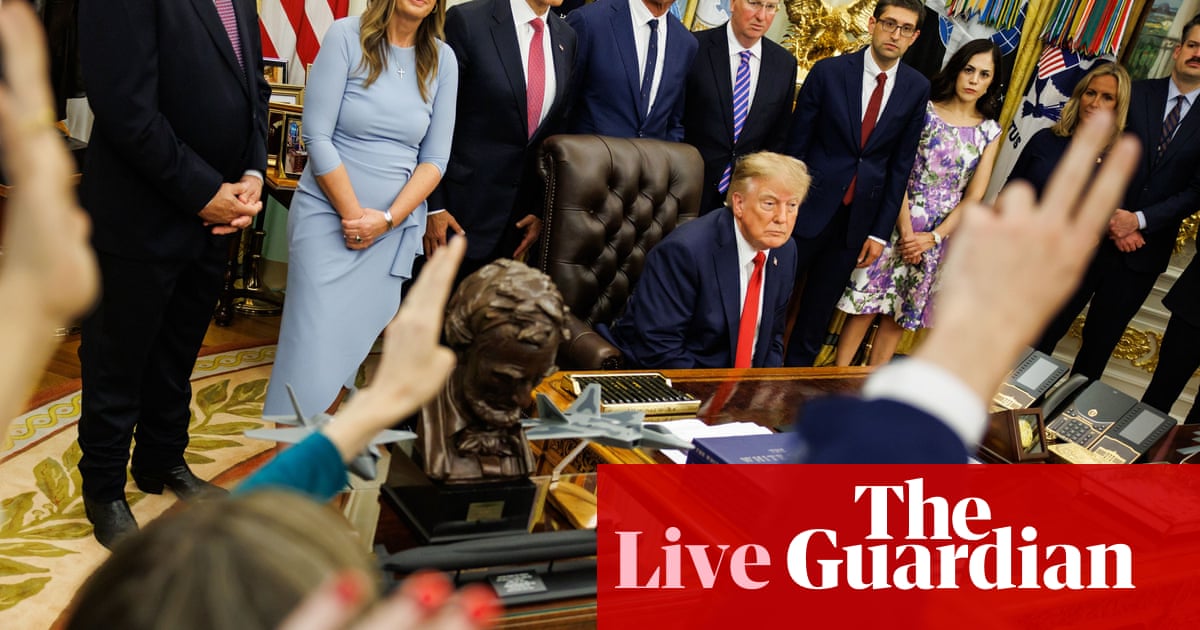
An army official told CBS News that Driscoll spoke with Trump about the “current state” of the army before submitting his resignation.
NBC News, citing a source familiar with the matter, reported that in that conversation Driscoll raised concerns about the army’s transformation and readiness and about Hegseth’s blocking those efforts by firing the generals responsible for them.
The public rupture traces back to April, when Hegseth forced out the army’s chief of staff, Gen Randy George, along with two other senior officers. George had worked with Driscoll on the army transformation initiative, an effort to shift the service toward drones and faster weapons acquisition based on lessons from the war in Ukraine.
Driscoll later told Congress he considered George “a transformational leader” and said he went to George’s house the day he learned of the firing.
Driscoll sought the help of JD Vance, a friend since law school, as tensions with Hegseth deteriorated, the Washington Post reported. Driscoll also told the Post then that he had no plans to leave his post.
“I have no plans to depart or resign as the secretary of the army,” he said.
Since George’s departure, the army has moved to scale back a drone unit he and Driscoll had championed, returning it to a conventional infantry role, CBS has reported. Hegseth also removed four army colonels from consideration for promotion to brigadier general, over objections from Driscoll and George.
Driscoll’s exit adds to a string of senior departures under Hegseth, including navy secretary John Phelan, Southern Command chief Adm Alvin Holsey, and Gen Chris Donahue, who commanded US army forces in Europe and Africa. Sean Parnell, Hegseth’s chief spokesperson, had privately expressed interest in the army secretary post before it became vacant, the Hill has reported, and is among those reportedly under consideration to succeed Driscoll.
“The Pentagon right now is in some cases rudderless, without leadership at the senior rungs of the uniform offices and even in the civilian offices,” Representative Jason Crow, a Democrat and former army ranger who serves on the House armed services committee, told reporters. “I’m gravely concerned about it.”
Driscoll, an Iraq war veteran who worked in finance and technology before joining the administration, also served as a Trump-appointed negotiator in talks to end the Russian war on Ukraine.
Neither the White House nor the Pentagon has said what Driscoll told Trump in their final conversation or how the president responded.










Comments