
 German (DE)
 English (US)
 Spanish (ES)
 French (FR)
 Hindi (IN)
 Italian (IT)
 Russian (RU)
 50 minutes ago
Rather than regurgitate the particular wins and losses that occurred on Tuesday, I thought it more useful, at this point, to look at the big picture and identify the largest overall winners and losers for the country as a whole.
Biggest winner: a diverse, equitable and inclusive America. It’s Donald Trump’s DEI nightmare. Georgia voters elected Keisha Lance Bottoms, the first Black female governor in the country. Texas chose Gina Hinojosa, the state’s first Latina governor and first Democratic governor in more than 30 years. California elected Xavier Becerra, the state’s first Latino governor. New Mexico chose Deb Haaland, the country’s first female Native American governor. Florida elected Byron Donalds, the first Black governor in Florida’s history (a Republican).
For the US Senate, New Hampshire chose Chris Pappas, that chamber’s first out gay member. Minnesotans picked Peggy Flanagan, the first Native American woman elected to the Senate. Michiganders chose Abdul El-Sayed, the first Muslim elected to the Senate.
These are remarkable wins. Some are attributable to a surge in voting by Black people, many of whom were understandably incensed at efforts to push Black representatives out of Congress through overt racial gerrymandering. And by Latinos, enraged at ICE’s wanton arrests and detentions. Women upset by Republican efforts to outlaw abortion in their states. And LGBTQ+ people, angry about the blatant bigotry of Trump and his Republican enablers.
But many straight white men and women also disagree with Trump’s narrow definition of America. It turns out that the nation is far more diverse, equitable and inclusive than Trump or his Republican enablers want (or believe) it to be. They tried to make us fear and hate one another over our many differences. They indubitably failed.
Another winner: the new south. For as long as anyone can remember, the states that comprised the Old Confederacy have been regressive, conservative, intolerant and, at least since the Civil Rights Act of 1964, Republican.
No longer. On Tuesday, three of the four most populous southern states (Texas, North Carolina and Georgia) voted for Democrats up and down their tickets. Texas Democrats carried every statewide office from governor through lieutenant governor, attorney general, and even railroad commissioner. North Carolina and Georgia Democrats also scored stunning victories.
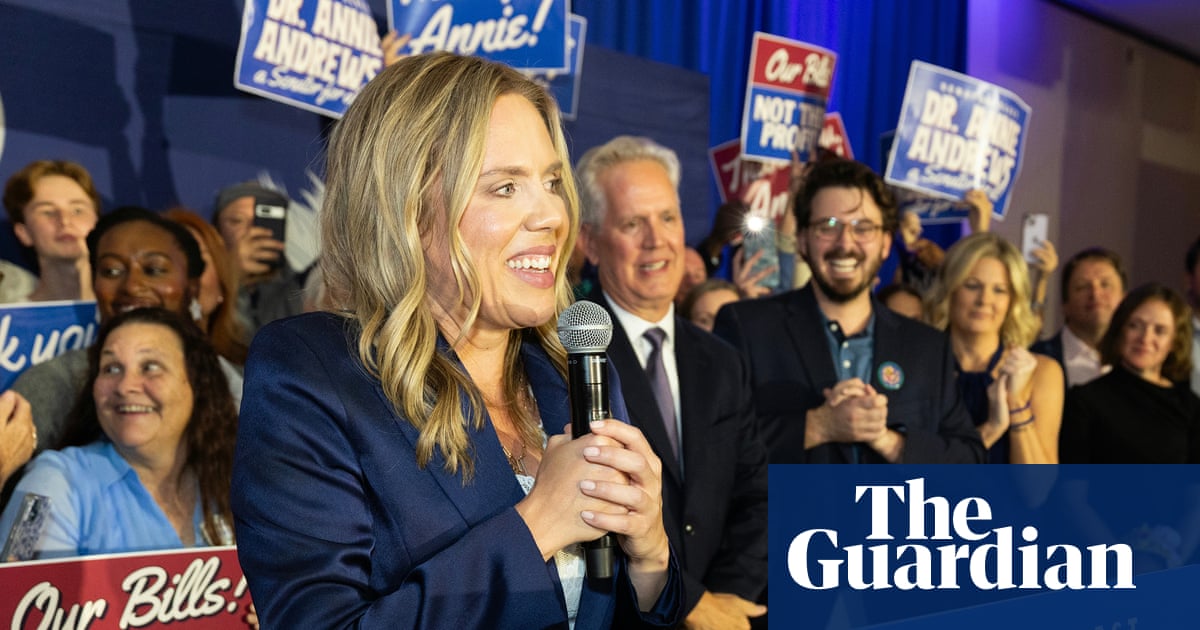
The biggest surprise was Annie Andrews’ win over Darline Graham in South Carolina’s Senate contest. As I write this, another possible gobsmacker: the Democrat Scott Colom may actually win the Mississippi Senate seat held by the Republican Cindy Hyde-Smith.
Even Democratic losers in the south came remarkably close to winning: the Democratic Senate candidate Jamie Davis was within a hair’s breadth of victory in Louisiana. Florida’s Angie Nixon almost won the Senate seat there.
What accounts for this new south? Partly a large and growing professional class (in metro Atlanta, North Carolina’s “research triangle”, and Houston, Dallas, Fort Worth and Austin) combined with an increasing flow of young workers and their families from other states, seeking more affordable housing. Add to this, an abundance of Latino and Asian immigrants. All told, the new south is more tolerant than the old. Much of it is also more more educated.
A third winner: decency. During the run-up to the 2026 midterms, American voters were inundated with Republican attack ads, inflamed rhetoric, and personal smears against Democratic rivals. Those efforts backfired. Americans soundly rejected the politics of hate and fear, and embraced common decency.
Trump, JD Vance and RFK Jr did their worst to fuel Islamophobia against Michigan’s Dr El-Sayed. Trump claimed if El-Sayed won, he’d “invite hordes of jihadis to our shores”. RFK Jr baselessly linked El-Sayed to the Muslim Brotherhood. Their fear-mongering obviously didn’t work.
Vance suggested that the Texas Democratic senatorial candidate James Talarico is gay. Another backfire.
Ohioans were so turned off by the Trump-endorsed billionaire Vivek Ramaswamy’s attack ad against his Democratic opponent Dr Amy Acton – using Acton’s mother, whom Acton hadn’t seen since she was 12, when her stepfather was accused of raping her – that the ad may have helped fuel Acton’s win, making her the first Democrat to win Ohio’s governorship since 2006. (Trump thought the ad was just fine, and Vance even blasted fellow Republicans who spoke out against the ad, calling their criticism “disgusting” and telling them to “stop whining” because “politics is a tough business.”)
Since Trump came on the scene, many Republicans have eagerly imitated his scurrilous character assaults. Such smears have become so common that we tend to forget that most Americans don’t particularly like this form of politics. They prefer Barack Obama’s tempered rhetoric and the late John McCain’s dignified and respectful way of disagreeing. Now, after the 2026 midterms, perhaps decency is back.
So who were the biggest losers? Besides Trump and his Republican sycophants, the biggest losers are the mega donors and Super Pacs that poured record amounts of money into failed Republican candidacies.
Top awards for strategic stupidity go to the crypto industry (which tried unsuccessfully to derail Democrat Sherrod Brown in Ohio); Aipac (which did everything it could to block El-Sayed and prevent any mention of Israel’s genocide in Gaza); the AI industry, which spent loads of cash trying but failing to allay voter’s concerns about datacenters; and Elon Musk, who sought, singlehandedly, to save Ken Paxton’s doomed Senate campaign in Texas.
Musk deserves his own special place in the loser’s circle. The richest person in the world became the poster child in the 2026 midterms for billionaire greed, legalized bribery, and corporate welfare. He sunk almost a half billion dollars into failed Republican campaigns, the most that any single human being has ever spent on elections – and for naught. After Tuesday’s blowout, shares in Musk’s SpaceX and Tesla dropped off a cliff.
Once they’re in control of Congress, Democrats will want to know what personal data and information Musk might have obtained when he ran his ill-fated “department of government efficiency”; what, exactly, happened with Ukraine’s Starlink access; and why the US government should continue to grant him an effective monopoly on satellites anyway rather than nationalize Starlink. To say Musk will be on the hot seat understates the temperature where he’ll be sitting.
In sum, considering the overall winners and losers from the 2026 midterms, I’d say America came out way ahead.
-
Robert Reich, a former US secretary of labor, is a professor of public policy emeritus at the University of California, Berkeley. He is a Guardian US columnist and his newsletter is at robertreich.substack.com. His new book, Coming Up Short: A Memoir of My America, is out now in the US and in the UK














Comments