
 German (DE)
  English (US)
  Spanish (ES)
  French (FR)
  Hindi (IN)
  Italian (IT)
  Russian (RU)
  3 weeks ago
Donald Trump’s attempted Greenland grab has driven a wedge between the US president and some of his ideological allies in Europe, as previously unstinting enthusiasm and admiration collides with one of the far right’s key tenets: national sovereignty.
Trump’s subsequent disparaging remark that Nato allies’ troops “stayed a little off the frontlines” while fighting with US forces in Afghanistan has only deepened the divide, piquing far-right patriotic sentiments and prompting an avalanche of criticism.
The US president last week stepped away from his drive to seize Greenland, pledging he would not take it by force or slap tariffs on nations opposing him. Faced with a fierce backlash, he also appeared to walk back his swipe at non-US Nato troops.
But for radical right populists – who lead or support governments in a third of the EU’s member states, are vying for power in others, and who saw in Trump a powerful ally for their nation-first, anti-immigration, EU-critical cause – he is increasingly a liability.
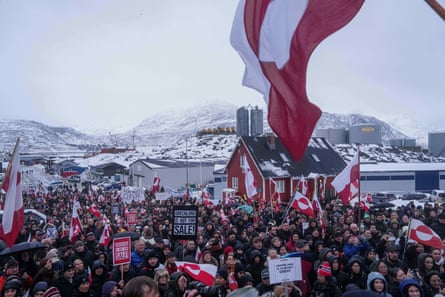
The divide could jeopardise the goals of his administration’s national security strategy, which set a US policy objective of “cultivating resistance” to Europe’s “current trajectory” by working with “patriotic allies” to avert “civilisational erasure”.
Just over a year ago, Europe’s far-right leaders were effusively welcoming Trump’s return to the White House. A few months later, they gathered in Madrid to applaud his America First agenda under the banner “Make Europe Great Again”.
More recently, some have been having second thoughts. Polling consistently shows Trump is hugely unpopular in Europe. Most Europeans, including many far-right voters, see the US president as a danger to the EU and want a stronger bloc.
Polling published on Tuesday by the Paris-based European affairs debate platform Le Grand Continent suggested that between 18% and 25% of far-right voters in France, Germany, Italy and Spain consider Trump as an “enemy of Europe”.
Asked to define his foreign policy, between 29% and 40% of supporters of the National Rally (RN), Alternative für Deutschland (AfD), Brothers of Italy (FdI) and Vox parties chose “recolonisation and the predation of global resources”.
Perhaps most remarkably, between 30% and 49% of voters for far-right parties in the four countries said that if tensions with the US over Greenland were to increase further, they would support the deployment of European troops to the territory.
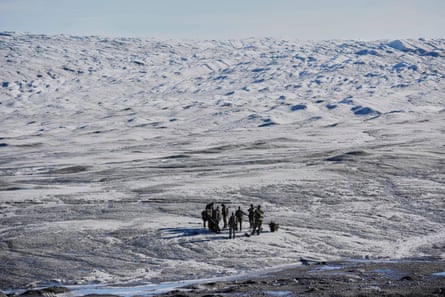
Trump’s expansionism, and willingness to use economic clout to achieve it, puts Europe’s far right in a tough position. Leaders in France, Germany and Italy have all criticised his plans, some sounding very like the mainstream politicians they despise.
In a European parliamentary debate last week, typically pro-Trump, far-right MEPs overwhelmingly backed freezing ratification of an EU-US trade deal because they were so uneasy at his approach, calling it “coercion” and “threats to sovereignty.”
Jordan Bardella, Marine Le Pen’s protege and president of France’s RN, who only weeks ago described Trump as “a wind of freedom”, called the US president’s pledge to seize Greenland “a direct challenge to the sovereignty of a European country”.
He told the debate: “When a US president threatens a European territory using trade pressure, it’s not dialogue – it is coercion.” Greenland was “a strategic pivot in a world returning to imperial logic,” he said. “Yielding would set a dangerous precedent.”
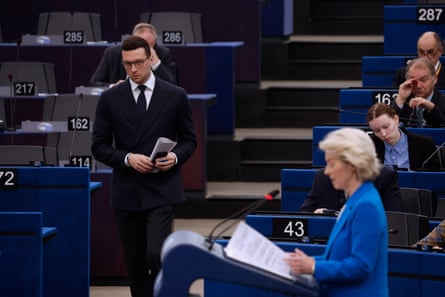
Normally a fierce critic of alleged EU over-reach, Bardella instead urged the bloc to unite and fight back with the toughest weapons in its arsenal. “This isn’t escalation, it’s self-defence,” he said. “The choice is simple: submission or sovereignty.”
Alice Weidel, co-leader of Germany’s AfD, which hailed Trump’s national security strategy as the dawn of a “conservative renaissance” in Europe, said in Berlin that he had “violated a fundamental campaign promise – not to interfere in other countries”.
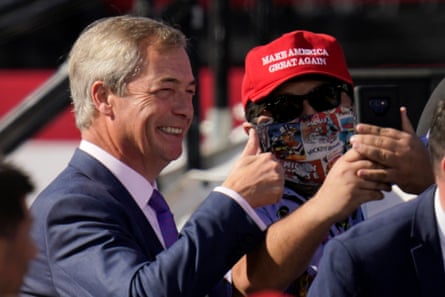
Even Nigel Farage, the leader of Britain’s Reform UK and a Trump loyalist, described as “a very hostile act” a US president “threatening tariffs unless we agree he can take over Greenland … without even getting the consent of the people of Greenland”.
Wary of retaliation, far-right and populist leaders who are in office rather than bidding for it were not quite so outspoken.
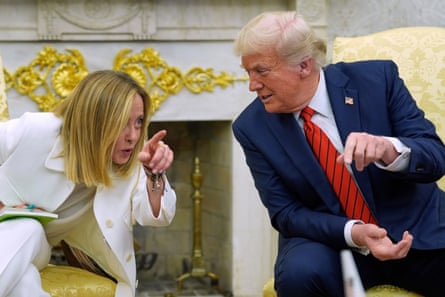
Italy’s “Trump-whispering” premier, Giorgia Meloni, criticised the deployment of European troops to Greenland. But even she eventually said she had told the US president in a call that his Greenland threats were “a mistake.”
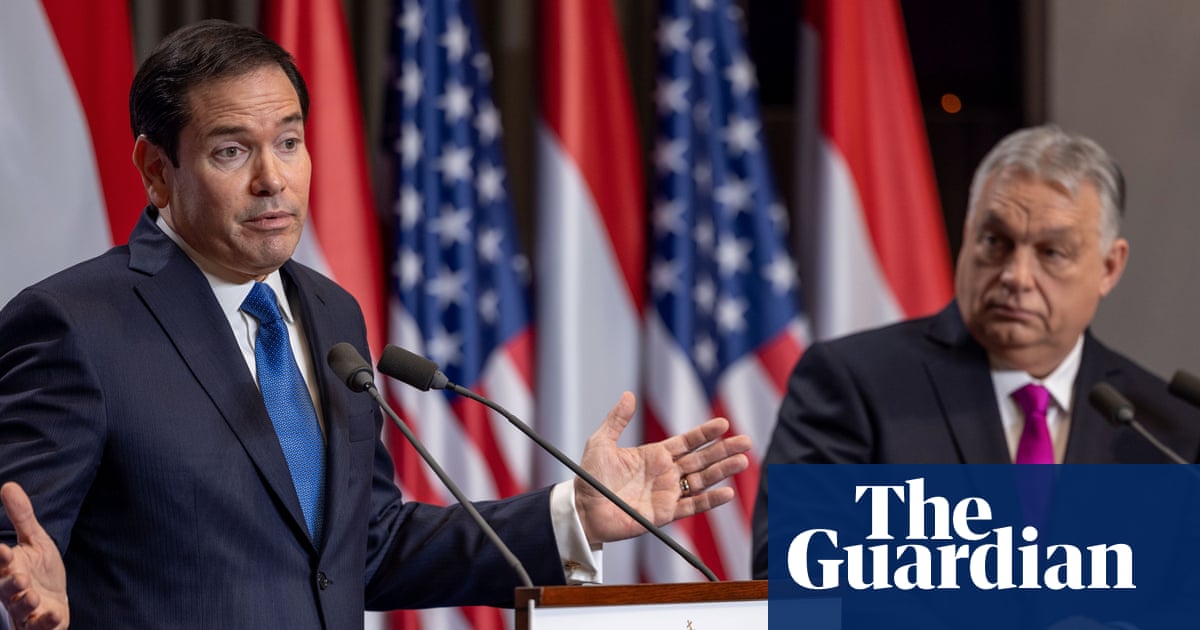
Viktor Orbán, Hungary’s illiberal prime minister and perhaps Europe’s leading Trump fan, dodged the question. “It’s an in-house issue … It’s a Nato issue,” Orbán, who has long vaunted his friendship with the US president, said of Trump’s Greenland plans.
Likewise, Poland’s nationalist, Trump-aligned president, Karol Nawrocki, said last week that Greenland tensions should be solved “in a diplomatic way” between Washington and Copenhagen, without recourse to a broader Europe-wide debate.
Nawrocki stressed the US was still his country’s “very important ally”, and called on western European leaders to tone down their objections to Trump’s conduct. In the Czech Republic, too, the prime minister, Andrej Babiš, warned against a transatlantic row.
But if some leaders were wary of openly criticising Trump over Greenland, there was near-universal outrage at the US president’s comments on Nato allies’ troops in Afghanistan, which Meloni described on social media as “unacceptable”.
The Italian prime minister said her country had borne “a cost that cannot be called into question: 53 Italian soldiers killed and more than 700 wounded”. She added that Italy and the US were “bound by a solid friendship” but that “friendship requires respect”.
Nawrocki said there was “no doubt” that his country’s soldiers – more than 40 of whom lost their lives in Afghanistan – were “heroes”. “They deserve respect and words of gratitude for their service,” he said.
Babiš was equally critical. Fourteen Czech soldiers had died in Afghanistan, the Czech prime minister said, adding that he knew Trump “likes to provoke and doesn’t mince words, but what he said about the mission in Afghanistan was way off the mark”.
Analysts said it was too soon to say if the divide would last. Domestic electoral considerations would mean many far-right parties would be forced to respond to any continued threats to sovereignty, said Daniel Hegedüs of the German Marshall Fund.
But Trump and his European ideological allies “can always unite forces again, around issues where they can cooperate”, such as immigration, he said.
Pawel Zerka of the European Council on Foreign Affairs (ECFR) said far-right leaders would not lose out. “Far-right leaders in France, Germany and Britain are unlikely to lose points,” Zerka noted. They “demonstrated timely criticism” of Trump’s excesses, while mainstream leaders and the EU “generally failed to display strength, unity and assertiveness”.







Comments