
 German (DE)
  English (US)
  Spanish (ES)
  French (FR)
  Hindi (IN)
  Italian (IT)
  Russian (RU)
  3 weeks ago
Cuts to US aid funding have directly led to the closure of more than 1,000 family planning clinics, new figures shared with the Guardian reveal.
Millions of people have been left without access to contraceptives or care, including those who have suffered sexual assault, as part of a “radical shift towards conservative ideologies that deliberately block human rights”, according to the International Planned Parenthood Federation (IPPF).
A survey of its member associations found that approximately 1,394 service delivery points, or clinics, have been shut down, including 1,175 in Africa, and that 34 had laid off staff as a result of the Trump administration’s cuts, representing at least 969 job losses.
Campaigners say the cuts have emboldened anti-rights groups, reporting a rise in rhetoric opposing abortion and access to contraception for teenagers.
Africa and the Middle East were most affected by the clinic closures, often in areas where they were people’s only option, IPPF said. It estimates that 9 million people worldwide are affected.
“These funding cuts have clear and immediate consequences […] women giving birth without skilled care, people living with HIV unable to access testing and treatment to stay alive, and survivors of violence being turned away from the only clinic in their area,” said Alvaro Bermejo, director general of IPPF, the world’s largest network for sexual and reproductive health.
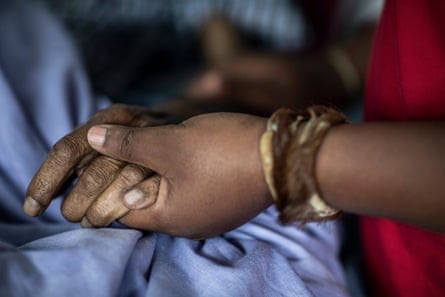
Nelly Munyasia, director of Reproductive Health Network Kenya, said “serious stockouts” caused by the cuts mean women are unable to get their contraceptives.
“We’ll start to see unsafe abortions, we’ll start to see reports of foetuses being found at the riverbanks,” she said.
Anti-rights groups had opposed the provision of contraception to teenagers in Kenya, she said, “so we know that this is a moment, a ground that is really fertile for them to then progress the agenda within the country”.
Martha Clara Nakato, a public health and reproductive rights advocate from Uganda, said: “For the longest time we’ve had a fight over autonomy for women to own their bodies, so we clearly know that that deliberate attack on service provision is really to close it, to ensure that women are not able to get the services.”
The survey was conducted in July and polled 151 IPPF member associations across the world about the impact of US funding withdrawals on their work. Eighty-six responded, 46 of whom said they had lost at least $43m (£32m) from 2025-2029 from contracts cancelled or reduced in budget and scope, of which $26m was cut from organisations in IPPF’s African region, and $9.4m from organisations in the Arab world.
IPPF identified 106 affected projects, most funded by UNFPA or USAID, 64 of which were cancelled and 42 of which were greatly reduced.
Stock levels of implants, coils and condoms have declined in many countries, IPPF said. It contrasted an urgent combined $13m funding gap across Uganda, Mozambique, Nigeria, Tanzania and Bangladesh for contraceptives with the $9.7m of US-funded contraceptives still languishing in a warehouse in Belgium rather than being distributed.
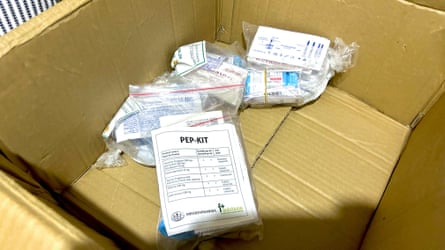
Stocks of tests and treatments for sexually transmitted infections, gynaecology supplies, and clinical support resources for rape and sexual assault survivors have also been affected.
Sarah Shaw, associate director of advocacy at MSI Reproductive Choices, said the dismantling of USAID had caused devastation across Africa.
“The US government is now indicating that faith-based organisations will be their partner of choice and we’re seeing some of these organisations ramp up their anti-abortion rhetoric across Africa,” she added. “Decades of progress on gender equality are now at risk.”
In Bangladesh, the Population Services and Training Center (PSTC), said it had lost $500,000, or 30% of its 2025 budget.
It has been forced to stop advocacy meetings with police, and PSTC said it is immediately seeing new officials increasingly regarding harm reduction tools such as condoms and sterile needles as illegal or immoral.
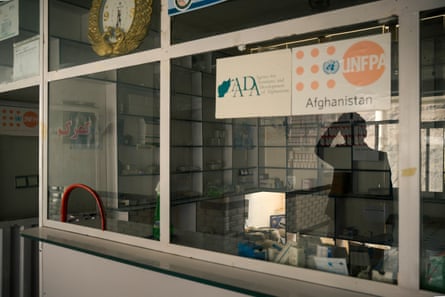
The Family Guidance Association of Ethiopia lost $2.5m from its 2025 budget, half its income, and had to lay off 162 staff. Gashaw Kebede, director of programmes, said cuts meant an end to free services. “We couldn’t even give the service with subsidised products,” he said. “This affected the most vulnerable communities.”
Bermejo said IPPF was providing emergency support where possible through a mitigation fund, determined not to “allow these radical macho-political agendas to determine who can and cannot access healthcare”.













Comments