
 German (DE)
  English (US)
  Spanish (ES)
  French (FR)
  Hindi (IN)
  Italian (IT)
  Russian (RU)
  3 weeks ago
Shortly after 1pm on 4 March, in a crowded hearing room on Capitol Hill, Mildred Danis-Taylor and two of her daughters stood up from their seats so that Kristi Noem could see them.
As they looked across the chamber at the homeland security secretary, the Georgia representative Lucy McBath took the mic to describe the neglectful and dangerous conditions Danis-Taylor’s husband said he had experienced during 14 months of being locked up at ICE’s Stewart detention center in south Georgia.
“Rodney must crawl through that muck and squalor of feces and bodily fluids to enter and exit the shower,” McBath said. “Secretary Noem, can you honestly tell Rodney’s wife and family and the American people that are watching that these cruel and unusual conditions are acceptable under your watch?”
Rodney Taylor is a green-card applicant and double amputee with prosthetic legs that have not worked properly since he was detained in January 2025. ICE detained him due to a burglary conviction when he was a teenager that he was pardoned for in 2010, according to his attorney, Sarah Owings, who shared paperwork from his case with the Guardian. He lacks three fingers on his right hand and suffers high blood pressure. His health has deteriorated significantly in ICE detention, including the development of painful bone spurs in his back.
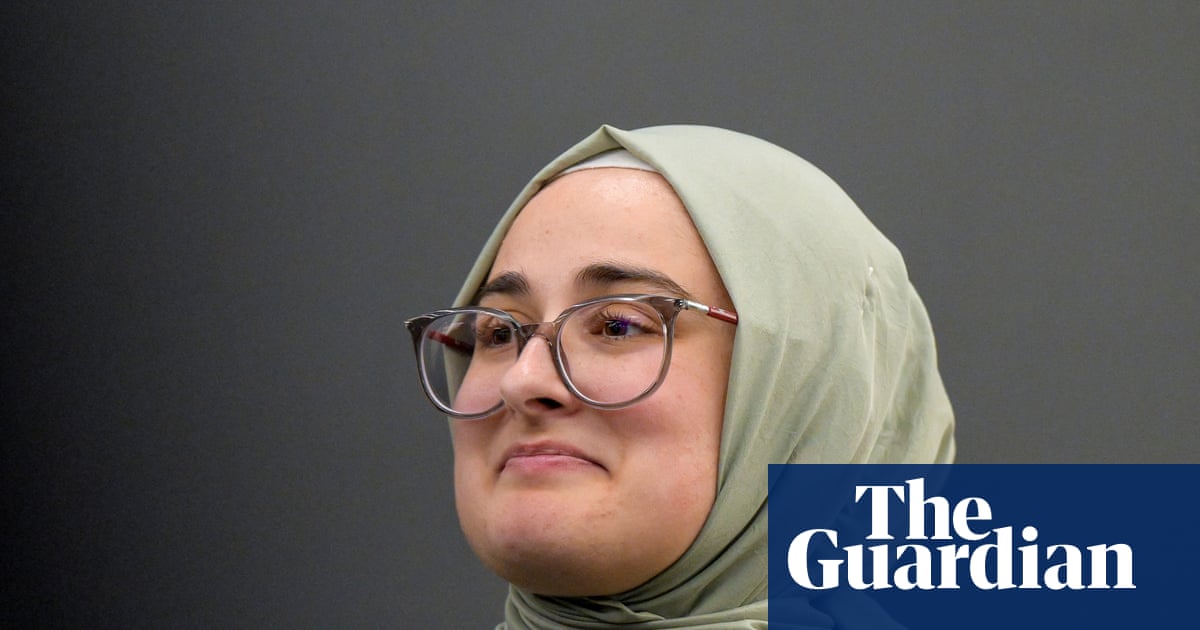
“When I stood up, I was angry,” Danis-Taylor said. “I wanted [Noem] to understand, this is an angry Black woman … I wanted her to look me in the eye.”
Noem had been called to the hearing after public outcry over Alex Pretti and Renee Good’s killings by ICE agents in Minneapolis – another ugly chapter in a mass deportation push that has sent tens of thousands, including disabled people such as Danis-Taylor’s husband, to detention centers across the country. Members of Congress, particularly Democrats, wanted answers from Noem about issues ranging from ICE’s violations of constitutional rights to the federal government detaining and even deporting citizens.
And McBath wanted an answer to the letter she and 20 of her fellow lawmakers had sent to Noem weeks earlier, seeking Rodney’s release while his immigration status is resolved. The letter cited the Guardian’s reporting on Rodney’s experience, which McBath called “truly a miscarriage of justice”. She extracted a promise from Noem to read the letter and review Rodney’s case.
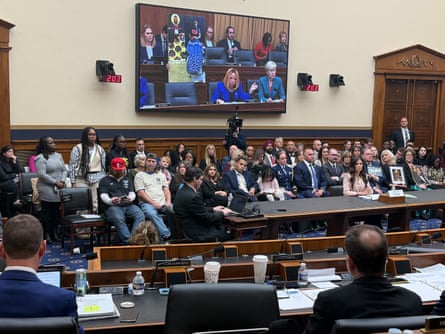
It would be Noem’s last hearing; Donald Trump fired her the next day. But for Danis-Taylor, 41, a Miami-born daughter of Haitian immigrants, it was another step forward on an at-times stressful but determined journey that has transformed her from a healthcare worker into an immigration activist on behalf of her husband, as well as other US families and individuals with loved ones detained by ICE.
Rodney, 47, was brought by his mother to the US from Liberia on a medical visa when he was a child. He has a pending application for US residence but has not been released on bond, despite filing a habeas corpus petition with a federal judge in September. He is a barber by trade in Snellville, a town outside Atlanta. Danis-Taylor met him in 2020 when she brought her son Ethan in for a haircut. She remembers being impressed that Rodney ran his business through an app – but their first time meeting was just a haircut, nothing more. Months later though, Rodney texted her to ask if she was in a relationship. She said she wasn’t but also wasn’t interested in getting to know him, having gone through a difficult relationship several years earlier.
But, she said, “he was persistent, which I liked. It let me realize he has patience and wanted to know who I am. I come with the whole package: five kids.”
They started speaking on the phone. When Danis-Taylor, then a community health worker for a Walmart clinic, told Rodney she was frustrated by having to spend so much time in an office instead of working directly with patients, he encouraged her to find another job. “Other people are gonna get blessed by your talents,” he told her.
Their first date was at the Crab Hut – “lemon pepper wings and a drink, who can say no to that?” – and that was where Rodney told Danis-Taylor about his disability. She told him it didn’t matter to her. They moved into a rental house in the suburbs with Danis-Taylor’s five children; Rodney’s two children from a previous marriage occasionally visit. Rodney cooked, went to school performances and read to the younger kids. Inspired by Danis-Taylor’s work, he started holding events at his barber shop to inform people in the Black community about cancer screening.
On 15 January 2025, 11 days after the couple got engaged, ICE agents took Rodney into custody outside the couple’s suburban home.
Mildred’s children Aby and Antoinette, both under 10, were in the backseat of the family’s car when armed agents banged on a back window and tried to open the door before pulling Rodney out of the front passenger seat. “The kids were like, ‘Did Daddy do something bad? When is he coming back?’ They were crying and screaming,” Danis-Taylor recalled.
“And then, in the flash of an eye, he was gone.”
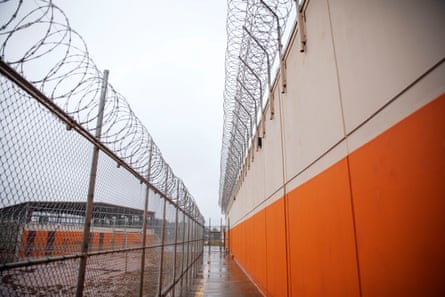
In the aftermath, Danis-Taylor felt powerless. “It was hard, going back to being a single mom again,” she said. “My dream – a man who loves me and my kids – now it’s gone.” She experienced heart palpitations and insomnia; the stress worsened her existing health issues.
Trump’s second term had barely begun, but high-profile cases of ICE agents grabbing people such as Mahmoud Khalil, recently graduated from Columbia University, and Kilmar Ábrego García captured national headlines within two months of Taylor’s detention.
Although she had little knowledge of the US immigration system, Danis-Taylor felt she had to do something. “I took on activism because of the grace of God,” she said. “I didn’t have the physical strength, but I knew how Rodney was suffering. I asked the Lord for strength.”
One of the first things she did was gather paperwork to better understand her husband’s decades-old case. A Christian, she also prayed and “fasted for clarity”. And she hired a new lawyer, Sarah Owings.
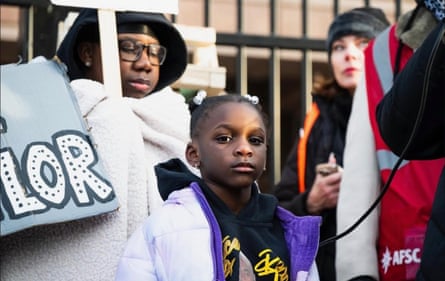
In May, a rally in the Atlanta area on behalf of a North Georgia college student who was detained caught Danis-Taylor’s attention. “Maybe we should do a protest,” she thought, before Googling “how to do a protest”. At Hobby Lobby she made “Free Rodney Taylor” T-shirts, and that summer, after tapping support from organizations that advocate for immigrants and people with disabilities, held two rallies outside ICE’s office in Atlanta.
“I felt like, ‘Now what’s next?’” she recalled. “I was waiting to see if the rallies had any effect. I learned, it’s not as simple as all that.”
For one, ICE would not release Rodney, even on bond, after the Trump administration adopted a “mandatory detention” policy mid-year. And Danis-Taylor still had to advocate for her husband’s health while he was locked up – including, at one point, driving to Stewart to drop off a battery to charge his prosthetic legs. During one visit, Danis-Taylor, who is not quite 5ft tall, stood face to face with the warden, and seeing a ring on his finger, asked him: “Aren’t you married? Wouldn’t you do the same for your spouse?”
CoreCivic, the company that runs Stewart, said it could not comment on Rodney’s care due to medical privacy laws. A spokesperson, Ryan Gustin, said it is “committed to providing safe, humane and respectful care for everyone entrusted to us, and we take seriously our obligation to adhere to all applicable federal detention standards”.
As Rodney’s detention dragged on, he and Danis-Taylor spoke almost daily, spending on average $500 a month on calls from Stewart. When Danis-Taylor told Rodney about her rally idea, he asked her: “Isn’t that a lot of work? Why?” She responded: “To help get you home.” It took him months to reveal to Danis-Taylor that he was suffering through the very conditions McBath alleged in Noem’s hearing – the feces, the squalor. “Each of us doesn’t want to stress the other one out,” she said.
There was at least one moment of joy. Danis-Taylor discovered that unlike Georgia, Alabama does not require both partners to be present in front of a notary public for them to get married. This allowed Rodney to sign the paperwork on a video call. On a Monday morning in November, Danis-Taylor visited him at Stewart wearing a white dress, bearing the notarized marriage certificate. “You look nice,” Rodney told her. “I have a surprise,” she said. “We finally got it done. We’re married!”
“You’re lying!” he responded. He began crying. “Are you serious?”
Now that she was Rodney’s wife, Danis-Taylor felt more emboldened. She had seen Jennifer Vasquez Sura many times on TV, urging the release of her husband, Ábrego García, who was deported to El Salvador and eventually allowed to return. “I felt like, if she could do that, so could I,” Danis-Taylor said.
She became more comfortable speaking to reporters and in front of microphones at anti-ICE rallies. And she expanded her concerns beyond Rodney, demanding support for detainees with disabilities and Black immigrants.
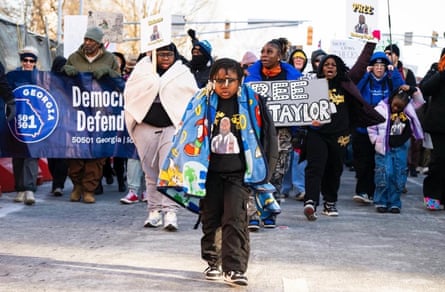
On visits to Stewart, a six-hour round-trip drive that she and her children take on weekends, Danis-Taylor developed relationships with other families, advising them on steps like contacting elected officials. One weekend, she met a Haitian woman trying to help her uncle who was partially blind. “I asked her: ‘Do you have a lawyer? Are you talking to organizations?’ I told her: ‘You can’t do immigration by yourself.’”
Allyson Batista, program director at American Families United, an advocacy organization that supports mixed-immigration status families, said she’s seeing more family and friends of loved ones caught up in Trump’s deportation push become motivated to pursue activism.
“US citizen spouses are confronted with impossible circumstances. They’re doctors, lawyers, cashiers … and there’s no boundaries to what they could be facing,” she said.
The immigration detention system was already a precarious, unsafe place, even more so for detainees with disabilities, according to experts. The dangers only increase with record-setting detainee populations, now about 70,000 nationwide. Thirteen people have died in detention this year already, putting ICE on track to double the highest number of deaths during a 12-month period in the agency’s history.
In addition, the current administration has also greatly reduced the capabilities of civil rights and ombudsman offices, leaving less oversight than before.
“It’s driving people to say: ‘This cannot continue,’” Batista said. “They’re writing to Congress, reaching out to local elected representatives and joining organizations.”
Last fall, Danis-Taylor began contacting Georgia politicians about her husband’s case. She got their attention: Georgia senator Raphael Warnock wrote the first letter to Noem about Rodney, while state legislator Ruwa Romman, the first Palestinian American elected to statewide office in Georgia, invited Danis-Taylor to join her at news conferences. In January, as Georgia’s legislative session began, Danis-Taylor made regular treks to its gold-domed capitol building to lobby for immigration reform – including against a bill being considered by state lawmakers that would require collecting the DNA of ICE detainees.
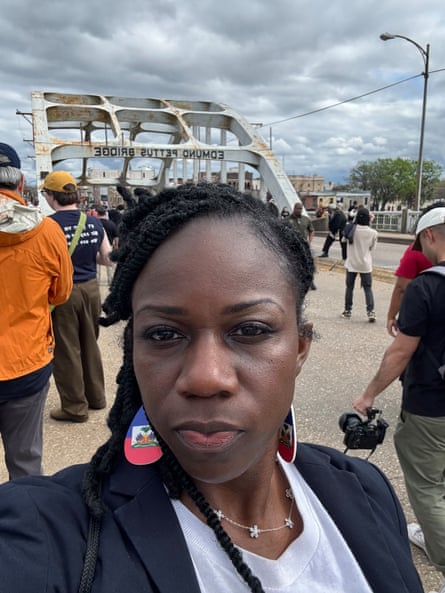
On a cloudy day in Selma just days after the hearing, Danis-Taylor marched across Edmund Pettus Bridge carrying signs of Rodney’s face in commemoration of Bloody Sunday, the voting rights march on Alabama that was violently interrupted by police who assaulted demonstrators 61 years ago. Later, she addressed a room of about 75 people that included members of civil rights organizations such as the NAACP and Rev Al Sharpton’s National Action Network.
“I’ve been knocking on your doors, but you haven’t answered,” she told the group. “I need y’all to support my husband, but not just him. There are Black detainees who don’t speak English and need help, and Hispanic detainees who don’t speak English and need help.”
Danis-Taylor had included multiple Black-led organizations in her months of outreach on Rodney’s behalf – and most of them did not respond. She took their silence to mean they were not concerned enough about the impacts of Trump’s deportation push on Black immigrants.
“After I finished speaking, you could hear a pin drop,” she said. She has since been contacted by some of the organizations present – including the New National Christian Leadership Movement, which has asked her to speak about Rodney’s case at a national convention in New Orleans in June.
Danis-Taylor has also won small victories when it comes to Rodney’s care – Stewart recently located an extension cord to make it easier to charge his prosthetic legs, for example – but he remains detained and in worsening health. His immigration case is pending, after Owings appealed an immigration judge’s earlier order to deport him, while the habeas corpus petition aimed to get him released has gone nowhere. And he recently caught what appears to be a flu.
Meanwhile, some of the high-profile immigrants who were detained around the same time as Taylor have been released – Khalil, Ábrego García, Rümeysa Öztürk – but are struggling to resolve their immigration statuses and their futures.
Danis-Taylor is feeling the toll too. She left her job in January and is taking on her new reality full-time. The family is surviving in part through a GoFundMe, which has helped pay for past-due legal fees, phone bills, Rodney’s commissary and electric bills at the house. The kids keep asking her when Rodney will come back.
Still, after Noem’s hearing thrust Danis-Taylor and Rodney into the brightest spotlight yet, she felt a sense of accomplishment. “I got a chance to get the head of DHS to address me, to say Rodney Taylor’s name,” she said, noting that Noem doesn’t leave office until 31 March. She hopes the secretary keeps her promise. “All this advocacy brought us to the place where a person with power could release my husband.”
When reached for comment by the Guardian, an ICE spokesperson said: “Any claims that detainees in ICE custody are dealing with subprime conditions at Stewart Detention Center are FALSE [caps in original].” The agency went on to call Rodney a “criminal illegal alien” and said he was “consistently uncooperative with detention and medical staff regarding all accommodations”. It did not provide evidence to support these claims and would not give an update on Noem’s promise to read the letter or review Rodney’s case.
Danis-Taylor had a vision during her visit to Congress: “I see myself in one of these offices. I have a fire inside me.” She laughed, recalling that her husband sometimes calls her Michelle, after Michelle Obama.
But Rodney’s case may have entered its most challenging phase yet. Several weeks ago, an ICE officer visited his cell at Stewart to tell him they had obtained travel documents necessary for deporting him to Liberia. Danis-Taylor fears for his health, feeling that the healthcare he needs will be hard to find outside the US. Owings, his attorney, told the Guardian that ICE cannot deport Rodney while his case is on appeal.
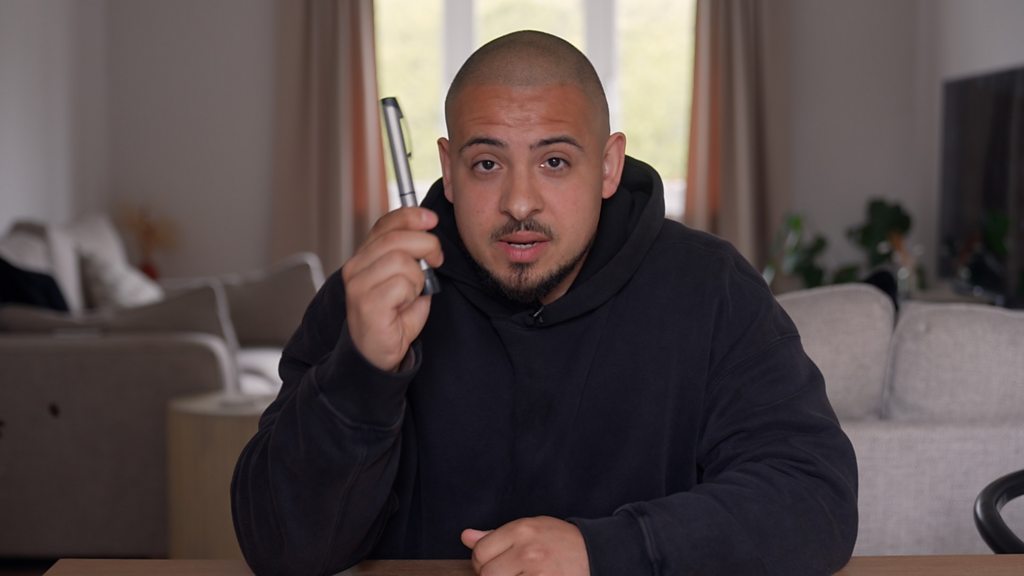
“I’m trying to be hopeful,” Rodney said. “Without Mildred, I don’t think I would have made it this far. I would have given up.”













Comments