
 German (DE)
  English (US)
  Spanish (ES)
  French (FR)
  Hindi (IN)
  Italian (IT)
  Russian (RU)
  3 weeks ago
The red carpet is being used increasingly as a platform for protest – and one accessory in particular has become key: the pin badge.
At Sunday night’s Grammy awards, stars including Hailey and Justin Bieber and Billie Eilish wore black and white pins that read “ICE out”, a condemnation of the recent actions of the US Immigration and Customs Enforcement.
It follows the wearing of “Be Good” pins by celebrities such as Mark Ruffalo and Natasha Lyonne at last month’s Golden Globes, a tribute to Renee Good, a 37-year-old unarmed US citizen who was shot dead by an ICE agent on 7 January, and Keith Porter Jr, a Los Angeles citizen killed by an off-duty ICE officer on New Year’s Eve.
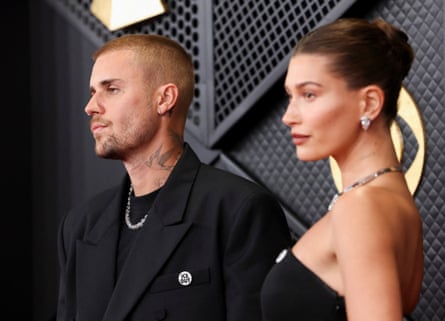
The pins are part of a campaign backed by organisations such as the American Civil Liberties Union. In an interview, Nelini Stamp, one of the organisers, said: “We need every part of civil society to speak up. We need our artists. We need our entertainers. We need the folks who reflect society.”
TikTok is awash with tutorials on how to make button badges, while sellers on marketplaces such as Etsy have been quick to offer their own takes. The pins aren’t just restricted to US-based wearers. In the past week, the UK seller Rad Badges has sold more than 30 packets of a set of four pins that read “Abolish ICE” and “Nobody is illegal”.
Komina Guevara, a beadwork artist based in Missouri who makes “ICE out” and “FCK ICE” charms that can be attached to a pin, worn on a chain or on a phone strap, describes the act of wearing one as “a small, intimate protest. They offer a confidence that a lot of people are afraid of.”
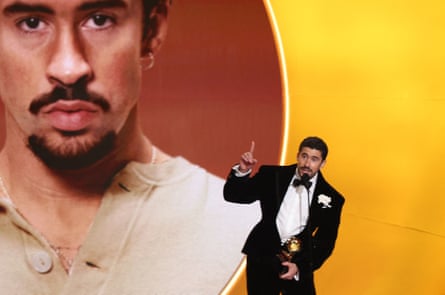
T-shirts rebuking ICE are also gaining traction. Just hours after Bad Bunny collected his Grammy for album of the year, tees featuring text from his speech – “ICE out. We’re not savage, we’re not animals, we’re not aliens. We are humans and we are Americans” – appeared online. The Puerto Rican pop star and fans are expected to use his half-time Super Bowl performance on Sunday to amplify his message.
The term ICE is ripe for riffing, with tops and sweaters featuring graphics of cocktails captioned with “I like my ICE crushed” and “Remember ICE melts”. Other slogans include “Stay salty, melt ICE” and “ABCDEFUCKICE”, while some feature a graphic of a single giant melting ice cube.
Last week during Copenhagen fashion week, Ella Emhoff, an artist, model and the stepdaughter of the former US vice-president Kamala Harris, wore a T-shirt from the online brand Chnge, featuring an illustration of a polar bear standing on a glacier with the slogan “The wrong ICE is melting”.

In a post on Instagram, Emhoff wrote: “Fuck ice and anyone who thinks anything they are doing is OK,” adding a list of immigrant resource centres.
Elsewhere, nail artists are championing anti-ICE manicures that include tiny nail art designs such as ice cubes and lettering such as “FCK ICE”.
The trend taps into a wider “craftivism” movement. Donald Trump may have updated his signature red baseball cap to read “America is back!” in a shouty white font, but it’s a knitted, red tasseled hat opposing ICE that is dominating the attention of “rage knitters”. Known as “Melt the ICE” hats, they are inspired by the red nisselue (woolen caps) worn in the 1940s by Norwegians to signify their resistance to Nazi occupiers. Needle and Skein, a yarn store in Minneapolis, has so far raised more than $650,000 (£478,000) for local immigrant organisations by selling the pattern and through protest stitch-alongs.
While pin badges and slogan T-shirts have a long history in resistance dressing, critics say much of this new wave of celebrity activism is performative. Unlike, advocating for Palestine or Iran, decrying ICE is seen as a widely accepted liberal mainstream idea. Similar to 2017’s pink pussyhats, there are concerns that anti-ICE badges and clothing is virtue signalling.
However, Betsy Greer, the author of Craftivism: The Art of Craft and Activism, argues that projects such as the Melt the ICE caps offer a sense of connection that can lead to action. “Speaking out can be scary,” Greer says. “But once you start talking to and learning from others also doing communal projects, it can become easier to take other steps that feel right for you.”
Greer describes knitting and making badges as a “step toward action” and believes it can encourage people to attend a protest, call politicians or volunteer in their local community. “It can be a galvanising thing. We need more galvanising things that help people take action toward the good.”






















Comments