
 German (DE)
  English (US)
  Spanish (ES)
  French (FR)
  Hindi (IN)
  Italian (IT)
  Russian (RU)
  3 weeks ago

 BBC
BBC
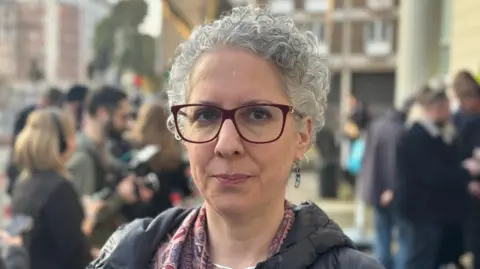
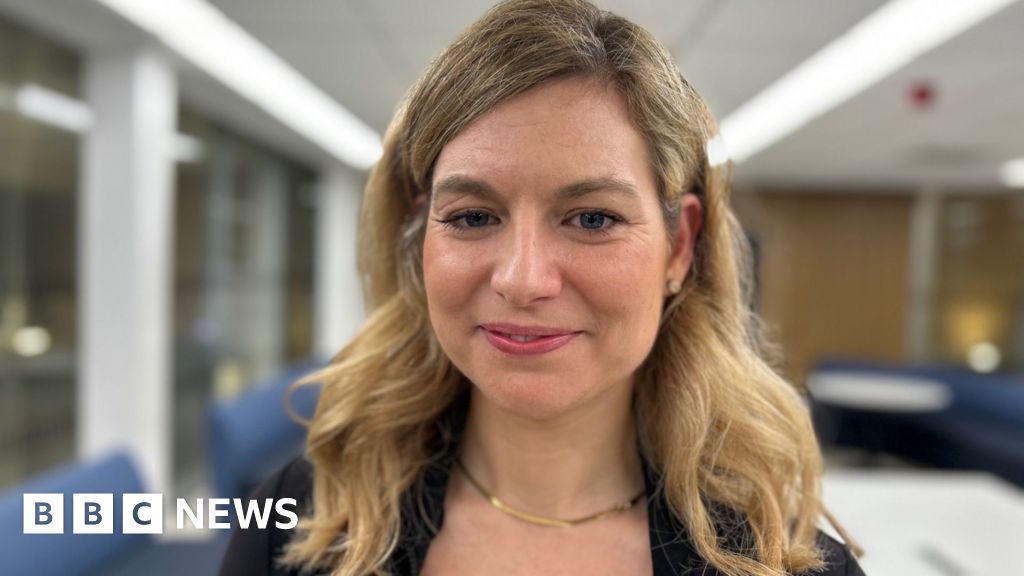
Rivka Gottlieb gave evidence on the last day of witness hearings at the Covid inquiry in west London
Rivka Gottlieb said she still felt "haunted" by the fact that her father, Michael, died alone.
He was a fit and active 73-year-old, she said, working part-time in a golf shop and teaching children at his local synagogue.
Her story was one of the last to be told at the Covid inquiry, which heard its final evidence this week.
In March 2020, Michael and Rivka's mother, Milli, were admitted to different wards of the Royal Free hospital, in north London, with Covid symptoms - just as the first lockdown was announced.
It was the last time Rivka would see her father.
"We were just expecting him to be given a bit of oxygen and then he'd be sent home," she said.
Michael deteriorated in hospital. His cough became so severe he had to send a WhatsApp message to tell her he was being put on a ventilator.
Two weeks later, the family was told he would never recover and that doctors were going to reduce his life support.
"It was a dark and terrifying time and difficult to get updates from the hospital. I feared the worst every time the phone rang," recalled Rivka.
Her mother was discharged after a week, but now rarely leaves the house after suffering from long-term effects, including breathlessness, confusion and stomach pains.
 Rivka Gottlieb
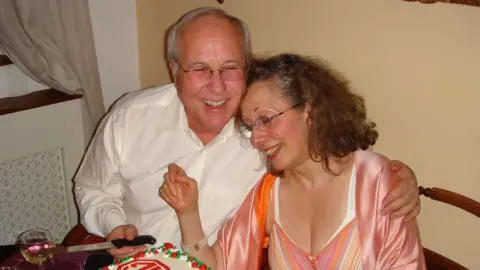
Michael Gottlieb, who died from Covid in April 2020 aged 73, with his wife Milli on their 40th wedding anniversary
In the last week, the inquiry has heard more than eight hours of emotional testimony from bereaved relatives.
Since public hearings began in June 2023, the inquiry has taken oral evidence from 381 witnesses in London, Edinburgh, Cardiff and Belfast, and reviewed 600,000 documents from WhatsApp chats to private diary entries.
As well as questioning prime ministers, senior officials and scientists, it has heard from individuals directly affected including porters, cleaners, care workers and nurses in Covid wards.
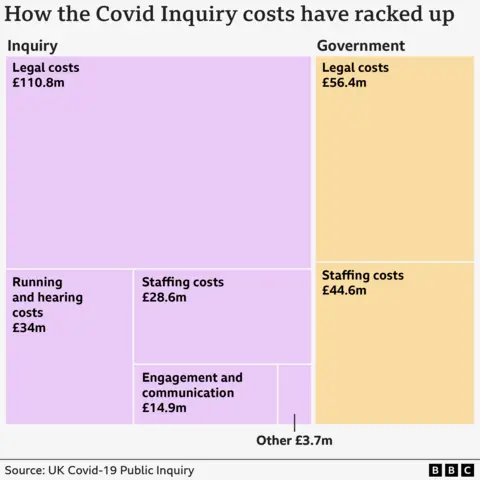
The inquiry is already one of the most expensive in UK history.
The total cost has risen to £204m so far, with the government spending another £111m on its own legal and staffing bills.
A final set of hearings this winter looked at the impact of the pandemic on society, including the closure of sporting, cultural and religious facilities, the treatment of vulnerable groups and the mental health of the wider population.
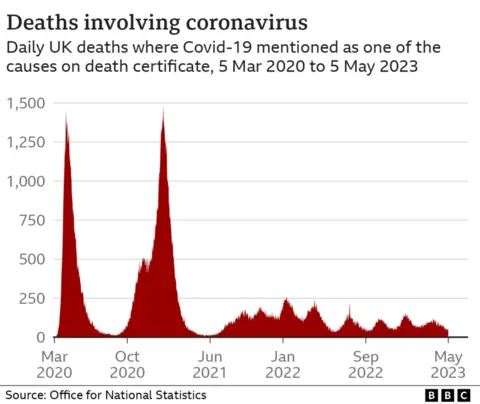
More than 227,000 people died with Covid as a cause on their death certificate between March 2020 and May 2023, when the World Health Organization declared an end to the health emergency.
In total, 42 relatives of those who lost their lives have given evidence since June 2023, with 12 chosen to testify over the final two days of hearings.
The inquiry heard how families were "torn apart" by social distancing rules, which prevented them from being with their loved ones at the end of their lives.
"My mum left in an ambulance and I never saw her again. The doors shut and that was it," said Glen Grundle from Coleraine in Northern Ireland, whose mother Milda, 73, died in April 2020.
"I have no closure and no peace over it."
Others spoke about huge difficulties accessing information from care homes and hospitals. Families said they were often unable to ask questions about their relatives or felt the true situation was not properly explained to them.
They were asked about bereavement support and restrictions on funerals in the pandemic.
At different times, the number of mourners was limited and social distancing rules meant relatives could not always comfort their loved ones.
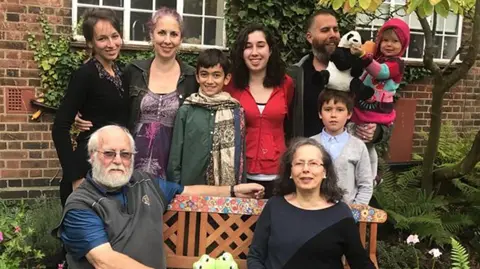
Only nine people, including the rabbi, were allowed to attend Michael Gottlieb's funeral in April 2020. The rest had to watch memorial prayers over a video link.
Rivka said she could not hug her mother or throw earth to cover her father's coffin, an important ritual in Judaism.
"I remember how unreal it all felt, and that we were still in a state of shock," she says.
"My mother was completely isolated, and the impact of her grief has been profound, complex and far-reaching."
 Gottlieb Family/PA Wire
Michael pictured with his family in happier times. Only nine people were allowed to attend his funeral in April 2020
Families from Northern Ireland and Scotland said they could not hold wakes, while other relatives described how Covid rules meant they had to return to an empty house alone.
"I remember sitting on the sofa, the TV was on, but no one was home with me," said Sharon Boswell, whose husband George died from Covid in February 2021, aged 52.
"And I thought: I'm sitting here by myself, I've just had a funeral for my husband. I felt very isolated, I felt alone, I felt unhappy, just everything you possibly could feel."
The Covid inquiry, chaired by the former judge Baroness Hallett, was announced by then prime minister Boris Johnson in 2021.
It has been split into 10 separate topics, or modules, covering subjects from political decision-making to the vaccine rollout and the impact on children.
While the hearings may have finished, the inquiry chair will continue writing up her findings and recommendations for ministers.
Two final reports have been published to date – into pandemic planning and the major political decisions made during Covid – with the remaining eight sets of findings due by summer 2027.
The scale and cost of the inquiry have long been questioned by some.
Johnson is among those critical of the whole process, saying last year that it had not brought "a single new or interesting fact into the public domain". The TaxPayers' Alliance has branded it a waste of money.
On the final day of hearings, Baroness Hallett said she hoped that all 10 of her reports would "prove the value of this inquiry and justify the costs".
"I said at the outset that this would cost a lot of money and take time. It has done. But I genuinely believe it has been worth it," she added.
 Wiktor Szymanowicz/Future Publishing via Getty Images
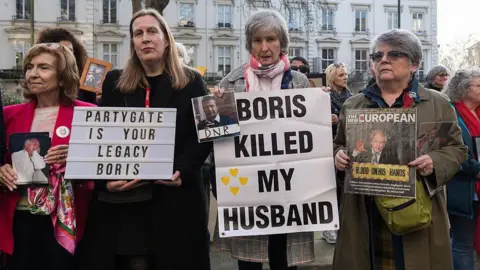
Members of the Covid-19 Bereaved Families for Justice UK hold placards and pictures of loved ones during the final hearings of the Covid inquiry in London
Covid-19 Bereaved Families for Justice UK said while the work being done was vital, public inquiries generally needed to become more efficient and less adversarial.
But the group, which has around 7,000 members, has described the reports published so far as damning and said it will continue to push the government to implement the recommendations made by Baroness Hallett.
"Six years on and people have forgotten what happened," Rivka told the BBC. "And I want to forget what's happened as well, so I can understand that.
"But there will be crises in the future and I'm worried that the lessons of the pandemic will just not be learnt."
In Scotland, a separate public inquiry into the pandemic has been taking evidence and is expected to publish its first findings this year.
Bereaved families in Wales also say they will continue to press for an independent inquiry, a call now supported by opposition parties in the Senedd.
Watch: "Did you know you are the last witness", chair finishes last day of evidence
Katherine Poole was the very last person to give evidence at the UK inquiry.
Her father John, 62, who had been diagnosed with schizophrenia, was admitted to a mental health hospital in early March 2020.
As Covid spread, the family were told that all visitors would be banned.
Later that month, her father became very unwell and was transferred to a general hospital with low oxygen levels.
He died four days later from Covid.
"The last thing my dad said to me was, 'You won't leave me, will you?'" she said.
"That will stay with me forever because, ultimately, I did leave him. Not through my own choice, but through what happened."
After 238 days, or more than 1,000 hours of hearings, the story of Katherine's father was the last to be told.
"Mrs Poole, did you know you are the last witness… very last witness of the inquiry?" the chairwoman asked as she stepped down from the stand.
Katherine smiled and said she had been told that morning.
Baroness Hallett took a brief pause and said: "Very well… and that completes the evidence."







Comments