
 German (DE)
  English (US)
  Spanish (ES)
  French (FR)
  Hindi (IN)
  Italian (IT)
  Russian (RU)
  3 weeks ago
The bombs fell in our name before any of us knew. Then the president saw fit to inform us.
Legal scholars and politicians alike began debating whether they were constitutional. Markets responded within hours. Cities across the United States moved to heightened alert amid fears of retaliation.
The sequence matters.
In a constitutional system built on checks and balances, that system is supposed to constrain the use of military force before it unfolds. Instead, constraint is arriving afterward – if at all.
Lawmakers in the US are now invoking the war powers resolution. Constitutional scholars argue the strikes stretch or violate its limits. In private briefings, Pentagon officials reportedly told members of Congress there was no intelligence showing Iran was about to attack US forces first. That directly contradicts the urgency Donald Trump offered the public as justification.
When Congress and the rest of us dispute the justification for emergency action, the system should slow down. Instead, the president, in tandem with Israel, deployed force and the debate followed.
This is not only a question about Iran. The regression there is obvious: from a historic nuclear agreement reached under Barack Obama to acts of war (and possible war crimes). We must also consider whether the guardrails around presidential power still function as anything more than decoration.
In theory, they do. Congress declares war. The war powers resolution attempts to limit unilateral hostilities. Impeachment exists as a check against abuse. And even the possibility of criminal liability for egregious official acts has historically operated as a distant but real constraint. These mechanisms are designed to prevent escalation, not merely to criticize it after the fact.
Those guardrails have weakened in practice, however. We see war powers invoked reactively. Impeachment has become structurally partisan; it is now more admonishment than accountability. The US supreme court’s absurd decision to expand presidential immunity for official acts narrowed one of the last theoretical avenues of post-office liability. Before he even became president again, Trump didn’t even spend a day in jail after being convicted on 34 felony counts.
In plain terms: stopping him now would require extraordinary political will. That is true now, and it will be true next time. The guardrails haven’t simply weakened due to atrophy or age. Whether by intent or by consequence, people removed them. What remains are institutions that can object, debate and react, but cannot compel. A president who understands that faces a different calculus than one who does not. This one seems to understand it all too well.
Deterrence, mind you, does not equal constant punishment. It does require the credible possibility of meaningful consequences. When that possibility disappears, the institutional cost of unilateral escalation falls with it.
Is it possible the US and Israeli strikes will achieve their objectives? Sure. Iran’s nuclear infrastructure may be degraded. Escalation may stall. I certainly can’t rule out “success”, however Trump defines it.
Constitutional design is not built for best-case outcomes, though. It exists for moments of uncertainty and miscalculation – and those moments are already here, less than a week into this.
Hezbollah’s involvement threatens broader conflict. Friendly fire has already killed people, a reminder of how quickly complex operations lose clarity. Miscalculation in a nuclear-adjacent environment does not offer second chances. And several days in, the administration has yet to agree on why we are fighting – regime change, pre-emption and nuclear elimination have all been offered as justifications by different officials at different moments. When the people running a war cannot settle on its purpose, how can those fighting in it understand what they’re trying to achieve, perhaps outside of wanton violence? How are the rest of us supposed to know?
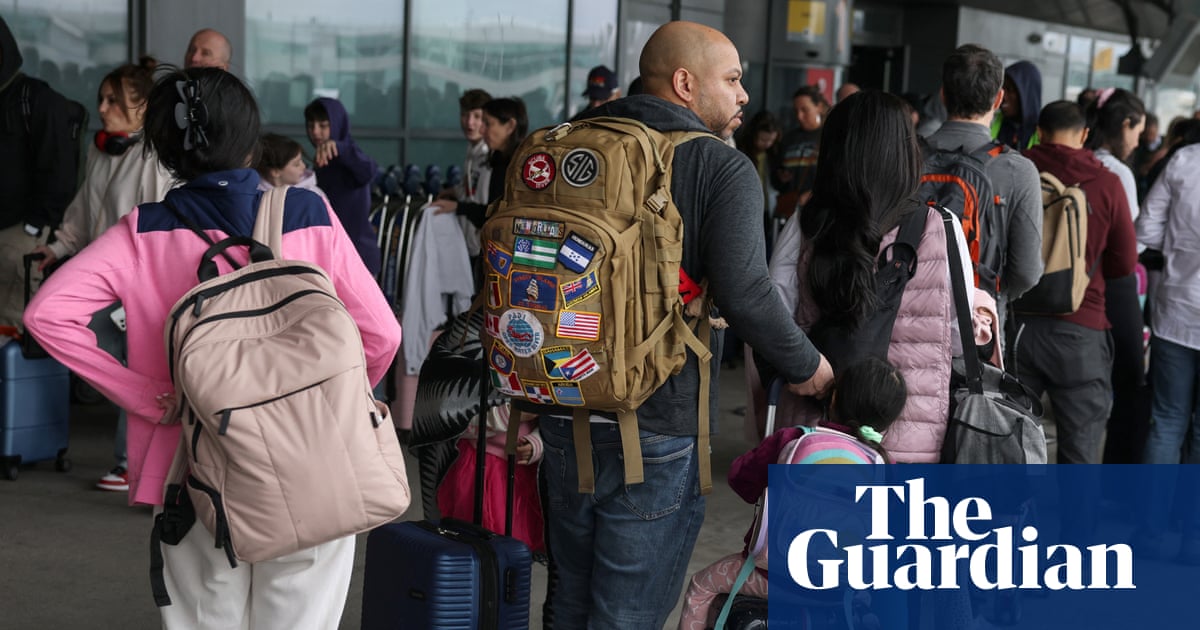
The human costs are not waiting to materialize. They are already landing. The state department urged thousands of Americans across the Middle East to leave even as airlines cancel flights and embassies warn they cannot guarantee evacuation. Americans calling the state department have been told travel assistance is not yet available. Asked why there was no evacuation plan, Trump said events had unfolded “very quickly” and that officials believed an attack was imminent. That answer is its own indictment.
Responsibility in matters of war is not rhetorical. It is anticipatory. It means weighing consequences before force is used – not explaining them afterward.
Not all wars carry the same civic burden. When a nation responds to an attack already under way, urgency shapes the moment. Wars of choice are different. They demand an even higher standard of proof, defined aims and candor before the first strike – not press conferences after the bombs have fallen.
The US keeps living through this. In Vietnam and in Iraq, the justifications shifted, the aims blurred and the consequences were borne by people who had no seat at the table when the decision was made.
My father was a sergeant in the air force who served in Vietnam, and he carried the visible and invisible scars for the rest of his life. Dad died last October, and his memorial certificate bears his name and the signature of the president who has now launched another war of choice. It sickens me to even look at it.
When presidents ask the country to support a war, honesty is not optional. It is owed, in part because the people who bear the true costs are almost never the people who made the choice.
Congress can object and impede. So can the courts. Markets will do what they do. None of that changes the sequence. Trump and this administration have already acted.
Those disfiguring decisions outlast the headlines. They survive the presidents who made them. What remains are the people who are left to carry the consequences.
-
Jamil Smith is a Guardian US columnist






Comments