
 German (DE)
  English (US)
  Spanish (ES)
  French (FR)
  Hindi (IN)
  Italian (IT)
  Russian (RU)
  2 weeks ago
The Trump administration’s proposed cuts in federal funding for law enforcement and public health agencies could have a devastating impact on Alaska, which a Guardian analysis found has struggled to curtail overdose deaths even amid a general decline in national overdose fatalities.
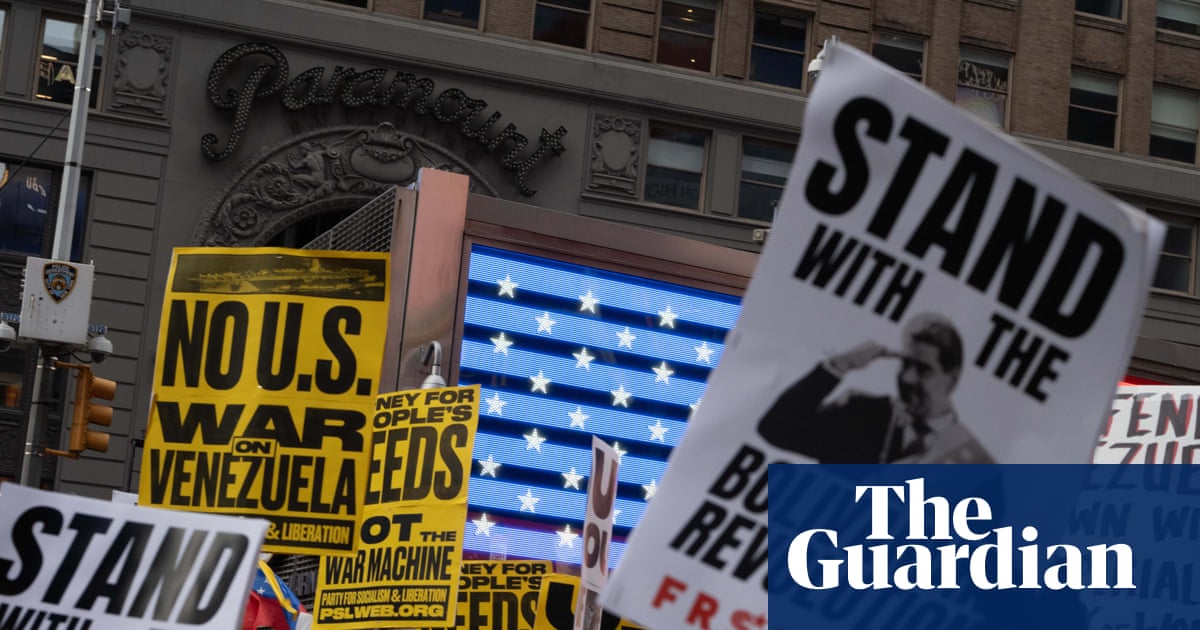
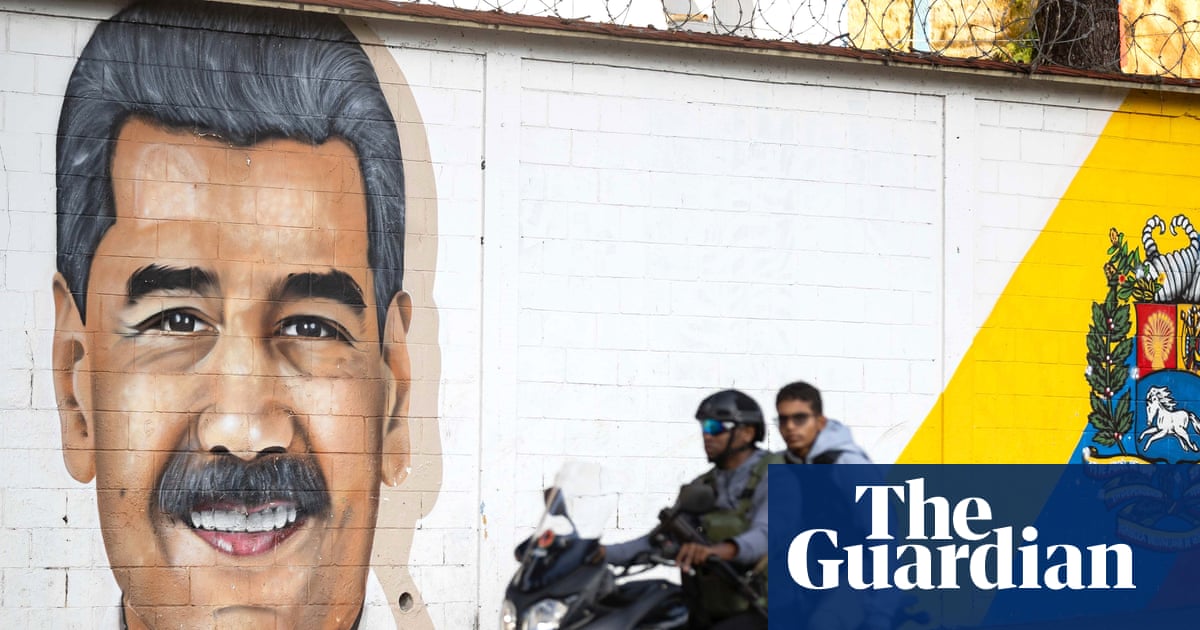
Law enforcement and public health experts are sounding the alarm as the Trump administration has prioritized waging its “war on drugs” outside US shores, including with a controversial bombing campaign of fishing boats off the coast of Venezuela.
For Sean Case, the police chief in Anchorage, the real battle is at home. Alaska has yet to see a sustained decline or even plateau in overdose fatalities – and now he worries about looming cuts to the resources that save lives and stop the flow of drugs into the state.
“I think the stakes are a lot higher right now just because of the high number of overdoses that we’re having,” Case said, “I would advocate that we actually increase the funding.”
His main concern relates to the expected 35% cut – or over $100m – to Alaska’s High Intensity Drug Trafficking Area (HIDTA) funding, a federal program that was established in 1988 and designed to provide US government assistance to local and tribal law enforcement agencies operating in areas deemed to be key drug trafficking regions.
Case worries that the cuts could ultimately increase the flow of fentanyl into Alaska, and thus increase Alaskans’ risk of overdose death.
Richard Frank, a senior fellow at the Brookings Institution who helped shape opioid policy during the Obama administration, said changes to Medicaid under the “big, beautiful bill” could also put more people at risk for overdose by taking away their access to substance use treatment.
“The work requirements seem likely to knock off a lot of people with substance use problems off the rolls,” meaning they will no longer receive federally subsidized funding for addiction treatment. The Trump administration’s proposed 2026 fiscal year budget would substantially shrink agencies that help track and prevent addiction and overdoses.

Meanwhile, the administration’s war on cartels, which it referred to as a formal armed conflict in a notice to Congress, has focused on Venezuela, which primarily exports cocaine, not fentanyl or other opioids. Fentanyl was involved in roughly 66% of US overdose deaths from 2023-2024, while cocaine was involved in 28%. There is no direct evidence that the boats targeted in the attacks even contained drugs.
Thin police powers
Alaska faces many challenges that other states don’t when it comes to keeping fentanyl out of the state. Cornelius Sims, commander of the drug unit for the Alaska state troopers, said he has only 27 “boots on the ground” devoted to drug interdiction for an area more than twice the size of Texas. Some areas of Alaska don’t have any police coverage, according to Ed Mercer, director of Alaska’s HIDTA initiative.
Case, the Anchorage police chief, explained that Alaska’s size, and its lack of a central freeway system that connects the state, also make drug interdiction an uphill battle. “When you’re talking about taking planes to get to some of the rural or remote areas, that becomes just a higher level of challenge.”
Most illicit drugs come into Alaska through the mail, where Anchorage is the first point of entry. This is especially the case for fentanyl and other highly potent synthetic drugs that come in the form of powders that take up minimal space. Alaska was designated a HIDTA region relatively recently, in 2018, and Case said HIDTA’s resources and coordination have had a huge impact, in part because it gives police the ability to coordinate with other law enforcement agencies.

“Over the last two years, we’ve had the highest success rate of drug interdiction than we’ve ever had before. And that’s all our HIDTA teams,” Case said. HIDTA funding allows Alaska regions to coordinate with one another as well as other state and federal partners to investigate cartels, where in the past they only had the resources to track down low level offenders. “Using an old school vice team, you’re not going to have the federal connection to be able to take a detective to travel outside of the country to track these cases and, and we do that on a pretty regular basis,” Case said.
Mercer said: “It costs a lot of money to investigate drug cases. We are very fortunate for our state, that HIDTA is here and helps assist when it comes to providing training to our partners, helps with some overtime expenses when it comes to drug investigations, and it provides equipment as needed for them to go out and do their job.”
Every HIDTA agency in Alaska meets each summer to compare notes on drug-related crimes and coordinate their investigations, according to Case. This year’s summer operation led to 27 arrests. Case said the benefits of these operations last “throughout the year”, because they help build relationships and communications.
If HIDTA cuts proposed in the White House’s 2026 budget are enacted, Case said, there are portions of Alaska that “have the potential to be pretty greatly impacted”.
“I’ll even probably go so far as to say devastated, because it doesn’t take a lot of drugs to enter villages to have a devastating impact. The ruralness of Alaska budget cuts are more significant to those areas,” he said.

The potential cuts would also affect activists like Sandy Snodgrass, whose son Bruce died of a fentanyl overdose in 2021, and who has received funding from HIDTA to promote fentanyl awareness. Snodgrass also thinks Alaska needs more HIDTA coverage, not less. “It’s just going to take a lot of work from law enforcement,” she said, adding that fentanyl fatalities are “not getting any better yet”.
Case and other Alaska police chiefs sent letters to Alaska senators Lisa Murkowski and Dan Sullivan, urging them to fight the cuts. “The level of interdiction is the highest it’s ever been,” Case said, adding, “We’re just scratching the surface.” Instead of cuts to HIDTA funding, Case said Alaska needs more of it.
In a statement, Senator Sullivan’s office said that, in response to these letters, Sullivan “fought hard to keep [HIDTA] running with its current structure and normal budget increases”. The fate of HIDTA funding is still unknown.
Medicaid cuts
Stemming the flow of fentanyl and other dangerous drugs into Alaska can help prevent overdoses by curtailing the lethality of the drug supply. Medicaid, which provides healthcare to 211,000 Alaskans – over a quarter of the state’s population – helps prevent overdoses by getting people into substance use treatment.
Frank, of the Brookings Institution, said the plight of addiction is “still largely a problem of lower income people ”. Expansion of Medicaid assistance ultimately allowed more lower income people with substance use disorders to get treatment.
The “big, beautiful bill” – which cuts Medicaid by a projected $911bn over the next decade – passed in part due to a tie breaking vote from Senator Murkowski, who after voting in favor told reporters: “Do I like this bill? No. But I tried to take care of Alaska’s interests.”
The benefits Murkowski and Sullivan, who also voted in favor of the bill, helped secure for Alaska will likely have limited impact for people in substance use treatment, according to Frank. The Rural Health Transformation Fund, which allocates $50bn to rural health programs, will largely go towards bolstering failing rural hospitals, according to Frank. That $50bn is only a fraction of the Medicaid spending that will be lost.
Murkowski’s office did not reply to a request for comment.
In its statement, Sullivan’s office said that the Rural Health Transformation Fund “will likely allocate hundreds of millions of dollars a year to the State of Alaska over the next five years to modernize clinics, hospitals, telemedicine, and workforce training across the state”.
The “big, beautiful bill” will require Medicaid recipients to work 80 hours a month, which could mean many people with substance use disorders lose access to treatment, according to Frank. While the bill technically includes exemptions for people struggling with addiction, “there are all sorts of wrinkles in that,” according to Frank. “There’s no clear definition of who would qualify and who wouldn’t.”

Substance use patients might also have to submit paperwork to prove that they qualify for exemptions, Frank said, adding that these “hassle factors” are especially hard for people with addictions. “They’re really not good at navigating bureaucracies and navigating complex administrative procedures, and I anticipate you’ll lose a lot of people from that.” Frank explained.
These cuts could also threaten Alaska’s rapidly expanding availability of inpatient treatment beds for people with substance use disorders. Frank said that inpatient facilities are especially important in Alaska, where cold weather and long distances from health facilities can make outpatient treatment harder to access.
Sam Garcia, senior clinical outreach coordinator with the Anchorage Recovery Center, described building a “full recovery campus”, that, when finished, will have nearly 200 recovery beds as well as a mobile crisis team, outpatient sober living, detox facilities and supportive housing. The facility and its services are partly supported through Medicaid reimbursement.
True North Recovery, a similarly comprehensive network based in Matanuska-Susitna borough, which has one of the largest increases in overdose fatalities since the national peak of the crisis, also has large expansions underway.
Frank worries that changes to Medicaid will threaten this progress, because cuts to Medicaid reimbursements will mean “revenues will start to shrink. That makes it tougher for new enterprises to survive.”
Karl Soderstrom, founder and CEO of True North Recovery, which is rapidly expanding throughout Alaska, said that 90% of True North’s revenue comes from Medicaid. He is already preparing to help clients with paperwork and even work requirements through a workforce development program within True North – made up of small businesses that provide services they already need, like snow ploughing and screen printing T-shirts.

“You can’t really go to McDonald’s and say, hey, I want a full time job, but I can’t work on Wednesdays from 12-2 and Fridays from 1-3, because I have group therapy. The world doesn’t really work like that. And so in our workforce development program, we will be able to say yes to those things,” Soderstrom explained. He predicts this program will create jobs for about 50 clients, and that there will be “more people who want jobs than available positions.
“I’m trying not to over catastrophize some of these changes, but rather be prepared for adjustments as they come,” Soderstrom added.
Frank said “that’s a very smart thing to be doing”, but that it will only help with one of the additional hurdles people who receive Medicaid subsidized substance use treatment will face under the “big, beautiful bill”.
For bereaved parents like Snodgrass, the only way forward is to continue to hope and to fight. While Snodgrass expressed ambivalence about some of Trump’s policies, she also trusts his conviction to fight fentanyl. This month, Trump signed Bruce’s Law, which Snodgrass authored and named for her son, as part of a larger bill. The law includes provisions to increase awareness about the dangers of fentanyl and to establish a federal working group on fentanyl contamination.
“We’ve got a long road to go, so I’ll keep going,” Snodgrass said.
-
This article was produced as a project for the USC Annenberg Center for Health Journalism’s 2025 Impact Fund for Reporting on Health Equity and Health Systems














Comments