
 German (DE)
  English (US)
  Spanish (ES)
  French (FR)
  Hindi (IN)
  Italian (IT)
  Russian (RU)
 Sen. Mitch McConnell's three-week hospitalization and uncertain health status is threatening to upend the defense budget process at a critical moment ahead of the midterm elections.
The 84-year-old Kentucky Republican was admitted to a Washington hospital June 14 for undisclosed medical issues. His staff maintain that McConnell remains engaged in Senate work but have not offered any information on when he will return to Capitol Hill.
His absence, and a lack of details around what caused his hospitalization, has prompted speculation on social media about the severity of his condition and his ability to serve out the rest of his term. And it comes at a pivotal moment for President Donald Trump and defense hawks' often conflicting visions for building up the military.
McConnell — who chairs the Senate Appropriations panel that controls Pentagon spending — has been a powerful critic of the administration's approach to securing a $1.5 trillion boost for the military. His support will be key in moving any funding plan forward, and his absence could stall or kill those hopes.
In an email to reporters Tuesday, McConnell spokespeople pointed back to a statement released Thursday that said the senator was still in the hospital but "continues to improve and is working closely with his staff."
After finishing 18 years as top Republican leader, McConnell announced in February 2025 that he would step down from his seat in January 2027, ending his four-decade career in the chamber.
GOP colleagues have largely said they are in the dark about his health. But the top two Senate Republicans — Majority Leader John Thune and Majority Whip John Barrasso — said Tuesday that they had spoken with McConnell this week after initially speaking with the Kentucky Republican a day after his hospitalization. Neither spokespeople for Thune or Barrasso, nor McConnell's staff, indicated Tuesday when McConnell would return. They "discussed the Senate's July work period, including the need to pass the NDAA," said Kate Noyes, a spokesperson for Barrasso.
This is not his first major medical scare. McConnell spent several weeks in the hospital after a fall in March 2023. Later that year, he froze during a news conference, prompting questions about his mental acuity and overall health. Since then, he has frequently relied on a wheelchair and his Capitol Police detail to get around given his mobility issues.
"Our prayers are with him," Sen. Ron Johnson (R-Wis.) told reporters late last week when asked if he had heard from McConnell. "Again, it's sad. I will say, there's nothing good about getting old. It's been hard to watch, you know, kind of what happened after his fall and stuff."
Sen. Mike Lee (R-Utah), responding to the online speculation, said in an X post Tuesday, "Many of us aren't speaking about Mitch McConnell's condition because we know nothing about his condition."
His hospitalization coincides with the administration's latest push for a third party-line budget reconciliation measure, one that would supply about $350 billion in extra funding for the Defense Department. Lawmakers are already moving a fiscal 2027 spending bill that would provide a record $1.15 trillion budget for the military.
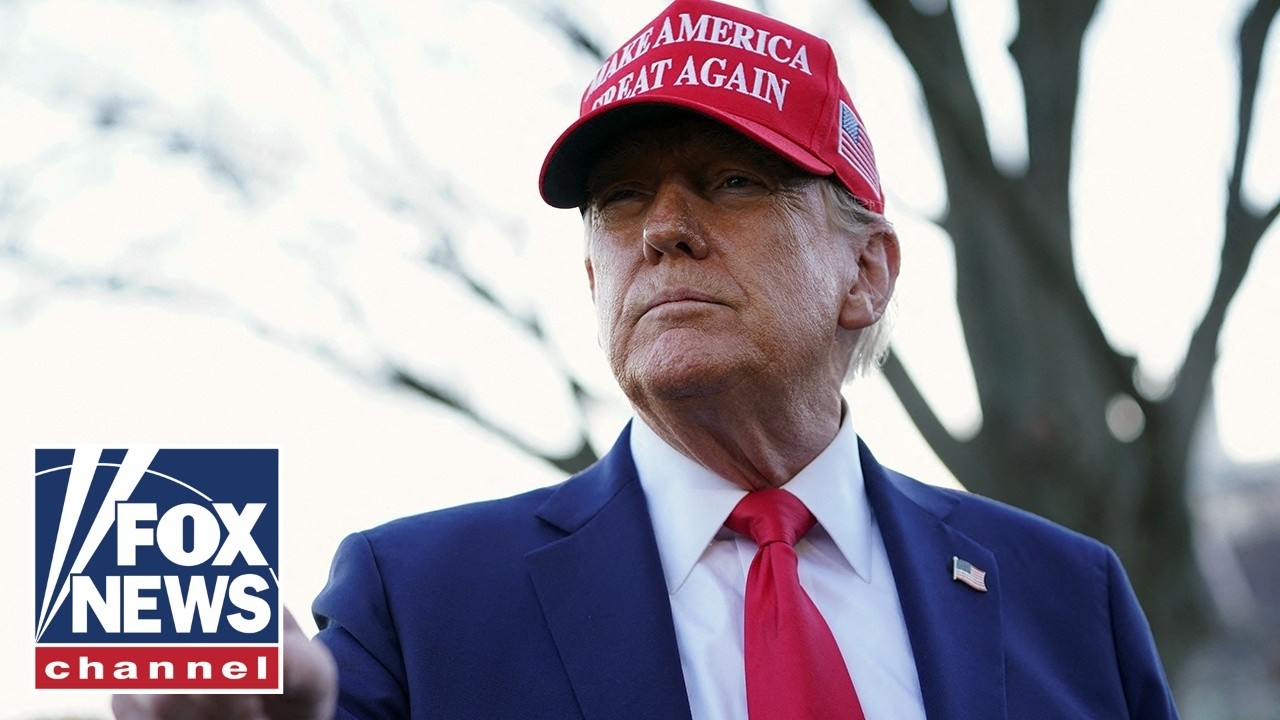
Trump wrote on social media Tuesday that he is "calling on House and Senate Leadership to make this their Number One Priority, and ensure that 350 Billion Dollars in Recon 3.0 moves out of the Budget Committee as soon as Congress is back in session."
But McConnell has downplayed the idea, saying at an Air Force budget hearing just days before his hospitalization that "it's safe to conclude there will not be another reconciliation bill."
Since stepping down from GOP leadership last year, McConnell has frequently advocated for increased defense spending. But that approach has focused on growing the Defense Department's base budget, not using reconciliation or other nontraditional funding gambits to boost military funding.
Over a series of budget hearings, McConnell has highlighted concerns about several major priorities — including the development of advanced fighter jets and missile production — that administration officials have proposed funding through the complex budget reconciliation process.
The senior senator has argued that taking those out of the traditional bipartisan appropriations process risks forgoing proper oversight and prioritization of those critical items, given the political uncertainty associated with a GOP-only path.
"The reliance of this budget request on one-time reconciliation spending is really quite a risky approach," he warned Army leaders during a May hearing on their funding requests.
Trump lashed out at McConnell during a June 11 Oval Office meeting with reporters, calling him an "angry man" who is "disloyal" to the Republican Party.
The White House doesn't necessarily need McConnell's vote to advance a third reconciliation bill. But his absence is another complication for GOP leaders, who are already facing a tough path to convincing 50 of their 53 members to rally behind a plan. With McConnell absent, Thune can only lose two senators.
While Thune hasn't ruled out a third bill, he's also been clear that he doesn't yet see a plan that can pass — and most Senate Republicans want to see what can first get through the House.
McConnell has aggressively advocated for an internationalist approach to national security, particularly defending U.S. involvement in NATO, as Trump pursues more isolationist policies. He has backed efforts to arm Ukraine and criticized the president's efforts to negotiate an end to the war with Russia.
McConnell's hospitalization coincides with a partisan standoff over defense spending that has ground the appropriations process to a halt in the Senate.
Senate Appropriations Chair Susan Collins (R-Maine) delayed a markup scheduled for late June because McConnell's absence meant Republicans could not advance their proposals on party lines with Collins and Sen. Patty Murray (D-Wash.), the top Appropriations Democrat, at loggerheads over spending levels.
The setback came after Collins initially delayed an early June markup for the measures, which cover the departments of Agriculture, Veterans Affairs, Commerce and Justice, among other agencies, because of the standoff with Democrats over defense and nondefense spending levels.
Asked Tuesday about the status of the defense bill, a McConnell aide, who was granted anonymity to speak candidly, pointed back to the larger appropriations stalemate, not the Kentucky Republican's absence, as the holdup.
His absence has impacted other chamber business. The Senate last month approved a resolution to cut off military operations against Iran, a major, if symbolic, rebuke that could have been defeated with full GOP attendance. McConnell was one of two Republicans to miss that vote.
He, too, could be a key Republican vote in favor of the administration's proposed $88 billion supplemental funding package, which would help cover the costs of the Iran war, as well as aid for farmers and Ebola virus prevention.
Though he was already hospitalized when the White House made that funding request, McConnell had previously voiced his support for the Iran war and the necessity of paying for military expenditures associated with it.
"With more funding, there's spare production capacity to be tapped this year, in FY26. We can build more munitions, produce more spare parts for airplanes, repair ships, invest in dilapidated military infrastructure, and deepen our cooperation and co-production with allies. We shouldn't wait another year to seize these opportunities," McConnell said March 4 during one of only five floor speeches he has given this year.
Mark Satter contributed to this report.














Comments