
 German (DE)
  English (US)
  Spanish (ES)
  French (FR)
  Hindi (IN)
  Italian (IT)
  Russian (RU)
  2 weeks ago
The law was clear: Donald Trump’s Department of Justice was required to disclose all investigative files on Jeffrey Epstein by 19 December 2025, with rare exceptions.
One month after this deadline mandated by Congress’s Epstein Files Transparency Act, however, Trump’s justice department has not complied with this law, prompting questions about when – and whether – authorities will ever release investigative documents about the late sex offender.
Justice department attorneys said in a 5 January Manhattan court filing that they had posted approximately 12,285 to DoJ’s website, equating to some 125,575 pages, under this legislation’s requirements. They said in this same letter that justice department staff had identified “more than 2 million documents potentially responsive to the Act that are in various phases of review”.
That these DoJ’s disclosures apparently comprise a drop in the bucket – and have done little to shed light on how Epstein operated with apparent impunity for years – has roiled survivors’ advocates and lawmakers. They include attorney Spencer Kuvin, who has represented dozens of Epstein’s survivors.
“Congress did not create a discretionary timeline – it created a legal obligation. Every day these records remain withheld sends a message to victims that transparency is optional when powerful interests are involved,” Kuvin said. “For survivors of Epstein’s abuse, this delay is not procedural – it is personal.
“These files are not abstract government records; they are evidence of how institutions failed children. Continued secrecy retraumatises victims and undermines public confidence in the justice system,” he said.
Some are now calling for judicial intervention, asking a judge to implement a special master who could facilitate the release of these documents.
Democrat Ro Khanna and Republican Thomas Massie, the congressmen who co-sponsored the act, asked Manhattan federal court judge Paul Engelmayer to appoint a special master and independent monitor “to compel the Department of Justice (DOJ) to make mandatory production under the Act”.
“We have urgent and grave concerns about DOJ’s failure to comply with the Act as well as the Department’s violations of this Court’s order,” they said in an 8 January letter to Engelmayer. “On December 19, 2025, the Department of Justice released only a portion of responsive materials. That release, however, did not comply with the statute as written.
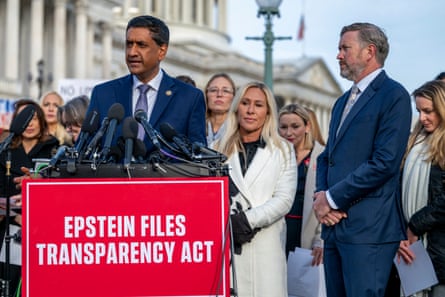
“The Department failed to meet the Act’s requirements in multiple respects, including missing the statutory deadline, asserting common-law privileges that the Act does not permit, and applying extensive redactions that appear inconsistent with the Act’s expressed prohibition on withholding or redacting records to protect politically exposed persons.”
They note that the Department of Justice has also flouted another requirement of this act, which requires that the attorney general provide a report identifying “categories of records released and withheld and summarizing all redactions and their legal bases” within 15 days of their disclosure deadline.
“To date, no such report has been provided. Without it, there is no authoritative accounting of what records exist, what has been withheld, or why, making effective oversight and judicial review far more difficult,” they wrote. “Put simply, the DOJ cannot be trusted with making mandatory disclosures under the Act.”
The congressmen said that they think “criminal violations have taken place and must be addressed, the most urgent need now is for the DOJ to produce all the documents and electronically stored information required by the Act”. They are asking Engelmayer to appoint a special master or independent monitor “for the purpose of ensuring all the documents and electronically stored information are immediately made public to be in accordance with the Epstein Files Transparency Act”.
They also suggested that this monitor have the authority to make reports “about the true nature and extent of the document production and if improper redactions or other improper conduct is taking place”. The DoJ in a court filing last week asked Engelmayer to reject Khanna and Massie’s bid for a special master.
Others believe that a special master could help release these files. News website Radar Online, which filed a civil suit more than eight years ago after the FBI failed to release Epstein files under the website’s April 2017 public records request, said: “We agree a Special Master is needed to ensure transparency.”
“That is something we will push for in our own case, which remains the best chance the public has to get the Epstein files,” a Radar spokesperson said. “A special master is not a DOJ employee and therefore will not make political decisions about what to release and when, and can report to the court on compliance issues.”
Roy Gutterman, director of the Newhouse School’s Tully Center for Free Speech at Syracuse University, also said a special master could potentially foster the release of these files.
“A special master might help relieve the court and the DOJ from sifting through thousands upon thousands of documents,” he said. “Special masters tend to be appointed in serious complex litigation, cases with many parties involving massive amounts data or potential damages.”
Kuvin voiced similar sentiments. “A special master could help impose structure and accountability on a process that has clearly stalled. While a special master cannot invent authority that doesn’t exist, they can force clarity – what is being withheld, why it’s being withheld and whether those justifications actually withstand legal scrutiny,” he said.
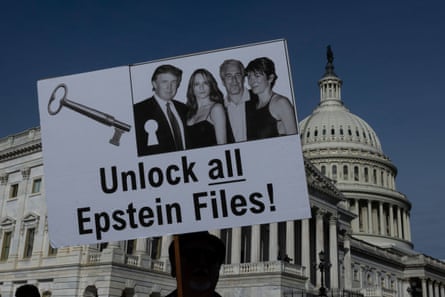
Even if a special master were appointed, however, that doesn’t mean this would result in expedient release of these documents. David Weinstein, a partner at Jones Walker, explained there are multiple legal steps between possible appointment of a special master and the release of files, potentially involving multiple courts.
Engelmayer’s involvement in the disclosure of documents relates to Epstein accomplice Ghislaine Maxwell’s criminal case, so it’s unclear how much authority he would have related to the filings overall.
While Khanna and Massie’s request could spur the release of files “if the judge finds that he has the ability to enforce what they’re asking them to do as it relates to the motion that they filed”, Weinstein said, Engelmayer is clearly considering this specific issue.
Indeed, in asking for the government’s response to Khanna and Massie’s request, Engelmayer asked justice department lawyers to explain their view on whether “he has the authority to rule upon (or take action to bring about) DOJ’s compliance with the Act”. Should Engelmayer decide he doesn’t have authority to act on this issue, that sets the stage for more litigation.
“If it doesn’t work out the way they want in New York, then they’ll file it in DC as a standalone lawsuit on their behalf, where they’re the plaintiffs and the Department of Justice is the defendant,” Weinstein said.
As for Khanna and Massie’s mention of potential criminal violations, Weinstein pointed out the difficulty of pursuing such allegations. If they made a referral to the justice department for prosecution, this referral would involve allegations of criminality about the DoJ’s actions.
“They’d have to have a special prosecutor appointed who has no connection to the DOJ.”
For Kuvin, a special master could help but would not be a “cure-all” – and pointed to what he said were needed changes to the law.
“If the government is intent on delay or over-redaction, meaningful disclosure will ultimately require judicial enforcement. Congress should amend the law to provide for enforcement mechanisms by either the victims,” he said. “Congress can escalate oversight and enforcement. What cannot happen – legally or ethically – is indefinite delay under the guise of ‘review’. The law already exists. What’s missing is enforcement.
“Transparency doesn’t fail because statutes are unclear – it fails when institutions choose protection over accountability,” he said.
















Comments