
 German (DE)
  English (US)
  Spanish (ES)
  French (FR)
  Hindi (IN)
  Italian (IT)
  Russian (RU)
  3 weeks ago
Nicolás Maduro, a former bus driver and union activist, rose from humble origins to rule Venezuela for 13 years and eight months before being unceremoniously ousted on Saturday by US special forces who seized the 63-year-old leader and flew him out of the country.
For years Maduro had accused the US government of seeking to undermine the supposed socialist revolution that his late mentor and predecessor, Hugo Chávez, ushered in in 1999. Now in the custody of US authorities, he will face indictment on narcotics charges and a potentially long prison sentence.
Venezuelans will judge him too. Maduro’s rule shattered Venezuela’s economy, leading millions of his countrymen and women to flee overseas to escape an incompetent, corrupt, repressive and often brutal government.
Born on 23 November 1962, Maduro began his political career as president of the student union at José Ávalos high school in El Valle, a working-class neighbourhood on the outskirts of the capital, Caracas.
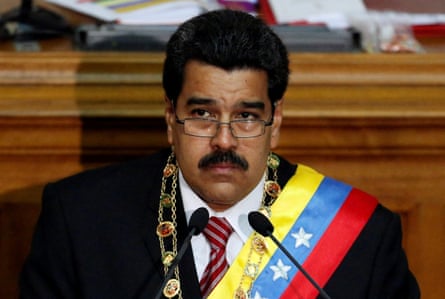
Records show he never graduated, but he was remembered as an imposing and conciliatory figure. In 1986 he traveled to Cuba where he received his only formal education after high school. He worked as a bus driver for the Caracas subway system on his return and quickly became a union leader, like his father before him, and an enthusiastic follower of Chávez.
In the mid-1990s, he joined the political movement that Chávez organised after receiving a presidential pardon for leading a failed and bloody military coup. When Chávez eventually took office in 1998, the younger man’s loyalty, political skill and ideological commitment led to a rapid rise through the ranks of Venezuela’s ruling party. After six years in the National Assembly, Maduro was made foreign minister, before being appointed vice-president six years later.
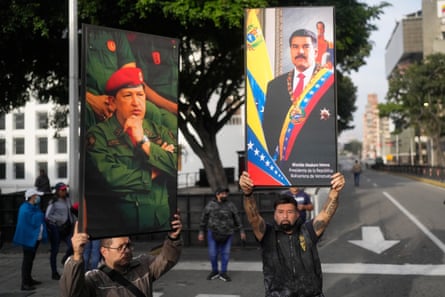
When Chávez died of cancer in 2013, he named the burly, moustachioed Maduro as his successor. Many mocked Maduro’s working-class roots and portrayed him as a loud-mouthed clown who did little more than slavishly repeat Chávez’s bombastic rhetoric. It was true that Maduro had little of his mentor’s charisma, but he won a narrow victory that year and his first six-year term.
Almost immediately, Maduro’s presidency was plunged into crisis. The political opposition, including the now-Nobel Peace prizewinner María Corina Machado, called for street protests in Caracas and other cities. Security forces did not hold back as they crushed the demonstrations, which ended with 43 deaths and dozens of arrests.
The ruling United Socialist party of Venezuela would go on to lose control of the National Assembly for the first time in 16 years in the 2015 election. This prompted Maduro to neutralise the opposition-controlled legislature by establishing a pro-government Constituent Assembly in 2017, leading to new rounds of protest that were also violently suppressed.
Hundreds were arrested, causing the international criminal court to open an investigation against Maduro and members of his government for crimes against humanity. More than 100 people were killed and thousands injured in the demonstrations.
Then, in 2018, Maduro survived an assassination attempt when drones rigged with explosives detonated near him as he delivered a speech during a nationally televised military parade in Caracas.
By now, the economy was in freefall, racked by hyperinflation and shortages of basic essentials. Oil production dropped to less than 400,000 barrels a day, a figure once unthinkable.
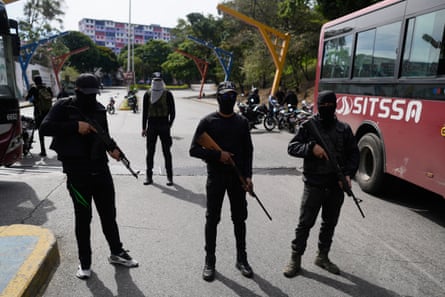
In the 2018 presidential election, Maduro ran virtually unopposed and was declared winner, but dozens of countries did not recognise him. Opposition parties were blocked from the ballot. Some opposition politicians were imprisoned; others fled into exile.
Washington was watching closely. The first Trump administration imposed economic sanctions on Maduro, his allies and state-owned companies to try to force a government change but this had a limited effect on the powerful complex of military, paramilitary and party backers which increasingly made up Maduro’s support base. It did underline the increasing likelihood of a serious confrontation, however.
With his back to the wall, Maduro implemented economic reforms and offered concessions to the US-backed political opposition, boosting hopes of a free and democratic presidential election in 2024.
These would soon be disappointed. In 2023, the government banned Machado, Maduro’s strongest opponent, from running for office. In early 2024 came new crackdowns on opposition leaders and human rights defenders.
Hours after polls closed in the 2024 election, the National Electoral Council declared Maduro the winner, but provided no detailed vote counts. Tally sheets collected by the opposition from more than 80% of electronic voting machines used in the election showed a massive defeat for the incumbent. Protests were crushed and the National Assembly swore in Maduro for a third term in January 2025.
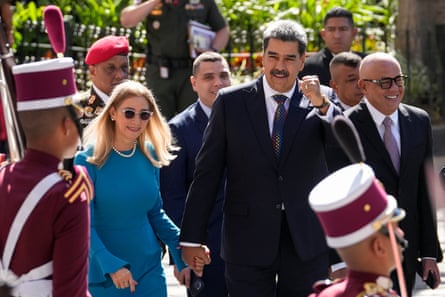
Trump’s return to the White House that same month led to rapid escalation. By the summer, the US had built up a military force in the Caribbean that put Venezuela’s government on high alert and started taking drastic steps to address what it called narco-terrorism, blowing boats suspected of carrying drugs out of the water and killing more than 100 people.
Throughout his career, Maduro was often flanked by his wife, Cilia Flores, who held numerous high-ranking positions, including attorney general and chief of parliament, and was often seen as a powerbroker with as much influence as her spouse. She is also thought to have been seized by the US.
Maduro’s tenacity and tactical skill often surprised opponents who wrote him off too early. This time it looks like there will be no comeback.







Comments