
 German (DE)
  English (US)
  Spanish (ES)
  French (FR)
  Hindi (IN)
  Italian (IT)
  Russian (RU)
  2 weeks ago
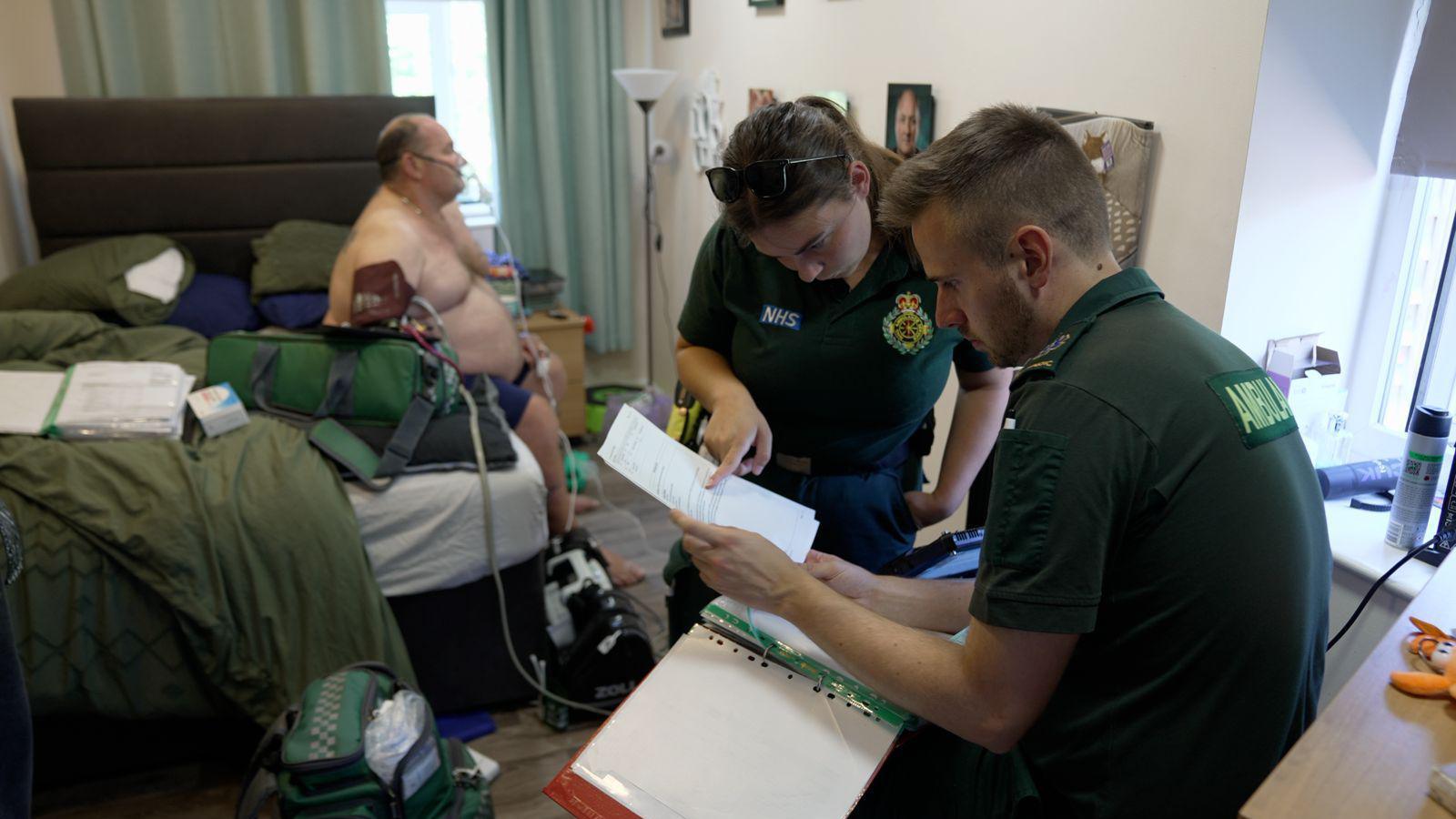
Fifty-five-year-old Andrew was the crew's first call-out of the day
ByChloe HaywardHealth reporter and Hugh PymHealth editor
Suffering from asthma and a chronic lung condition, 55-year-old Andrew is distressed, overheating and struggling to breathe or talk. Exeter paramedics Connor Gilronan and Charlotte Sherston give him medication and oxygen, and remind him to stay cool and hydrated.
This is a typical callout for the ambulance crew in South West England, who in one of Britain's longest-lasting heatwaves, are tending to cases from heat exhaustion to stroke patients. The BBC joined them on one of their shifts.
Once Andrew's medication kicks in, his breathing eases and the paramedics decide he is safe to stay at home.
Major emergencies are rare for ambulance services, whose visits are largely spent caring for the elderly or those with chronic health conditions, the paramedics told the BBC.
Both Charlotte and Connor were also on shift in the record-breaking heat last month and say the health risks of heatwaves are often misunderstood.
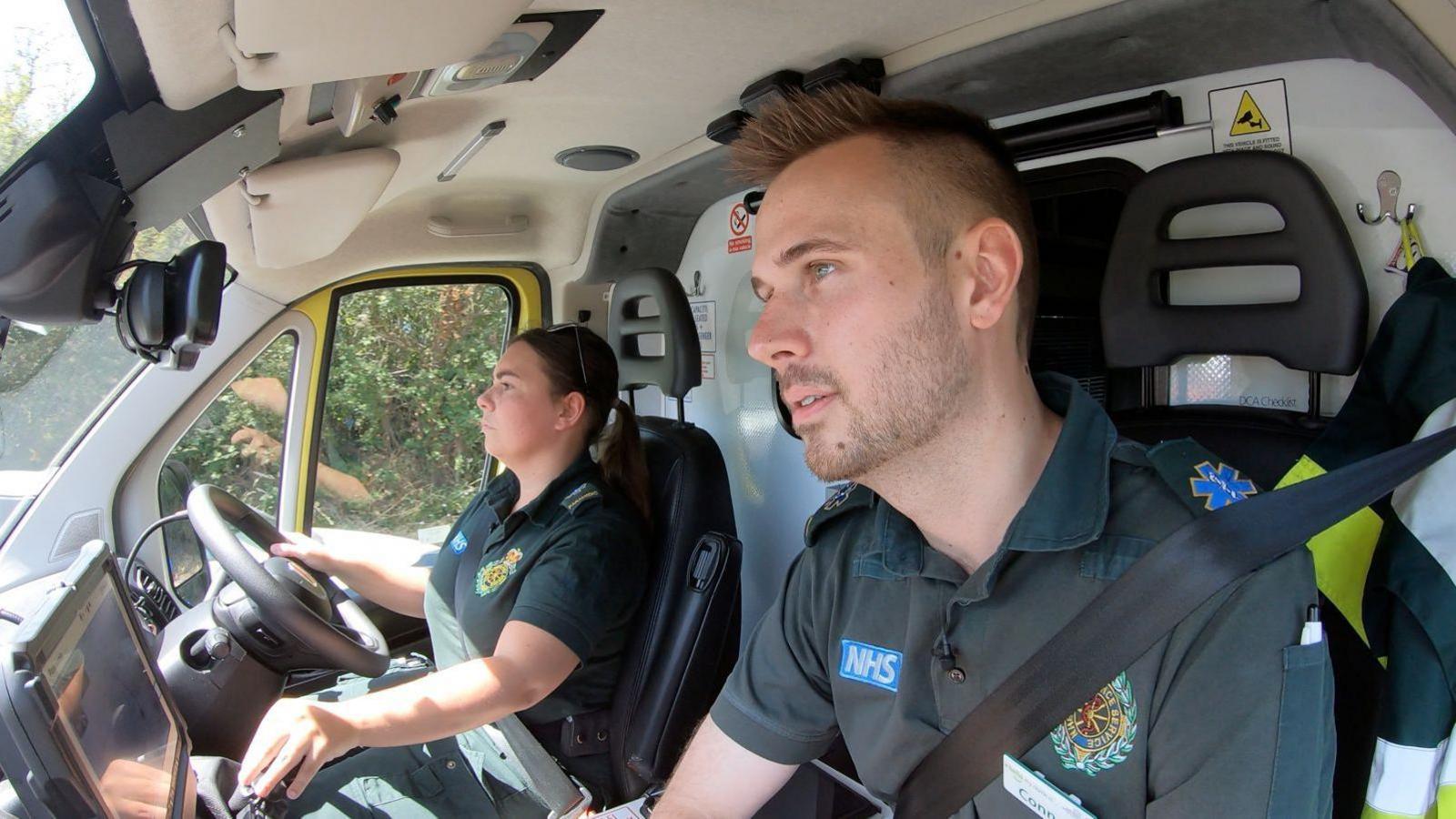
Exeter paramedics Connor Gilronan and Charlotte Sherston on their shift during one of Britain's longest-lasting heatwaves
"Winter pressures are nothing compared to heatwave pressures," says Charlotte, who is working alongside colleague.
Connor agrees. "People die in heatwaves. Not because they were out running around or taking risks, but because they're elderly and don't realise how at risk they are," he says.
As they finish paperwork between callouts they tell the BBC of visiting houses where people were wearing jumpers or even had the heating on because they didn't know how to turn it off.
Top tips from paramedics as temperatures soar
The very young as well as the elderly are less able to thermoregulate their bodies, meaning complications from getting too hot can be very serious.
Those with chronic conditions are also at elevated risk, as symptoms from existing conditions are intensified.
These health risks pile pressure on an already stretched service.
In the June heatwave the South Western Ambulance services received a record number of emergency 999 calls: about 3,000 incidents a day are typically reported in the peak of winter, a number rising to over 4,000 in the heatwave.
"Our number of calls tracks the temperature - it's a very correlated trend," says Dr John Martin, chief executive of the South West Ambulance Service.
The trust covers 10,000 square miles – from Cornwall to Swindon – and expects further pressure this week, not only from heat‑related illness but also from water‑related injuries and drownings, which spike during hot weather.
Further north, the South Western Ambulance Service (SWASFT) in North Somerset said it had dealt with its busiest ever day in June, "completely beyond anything it has ever experienced".
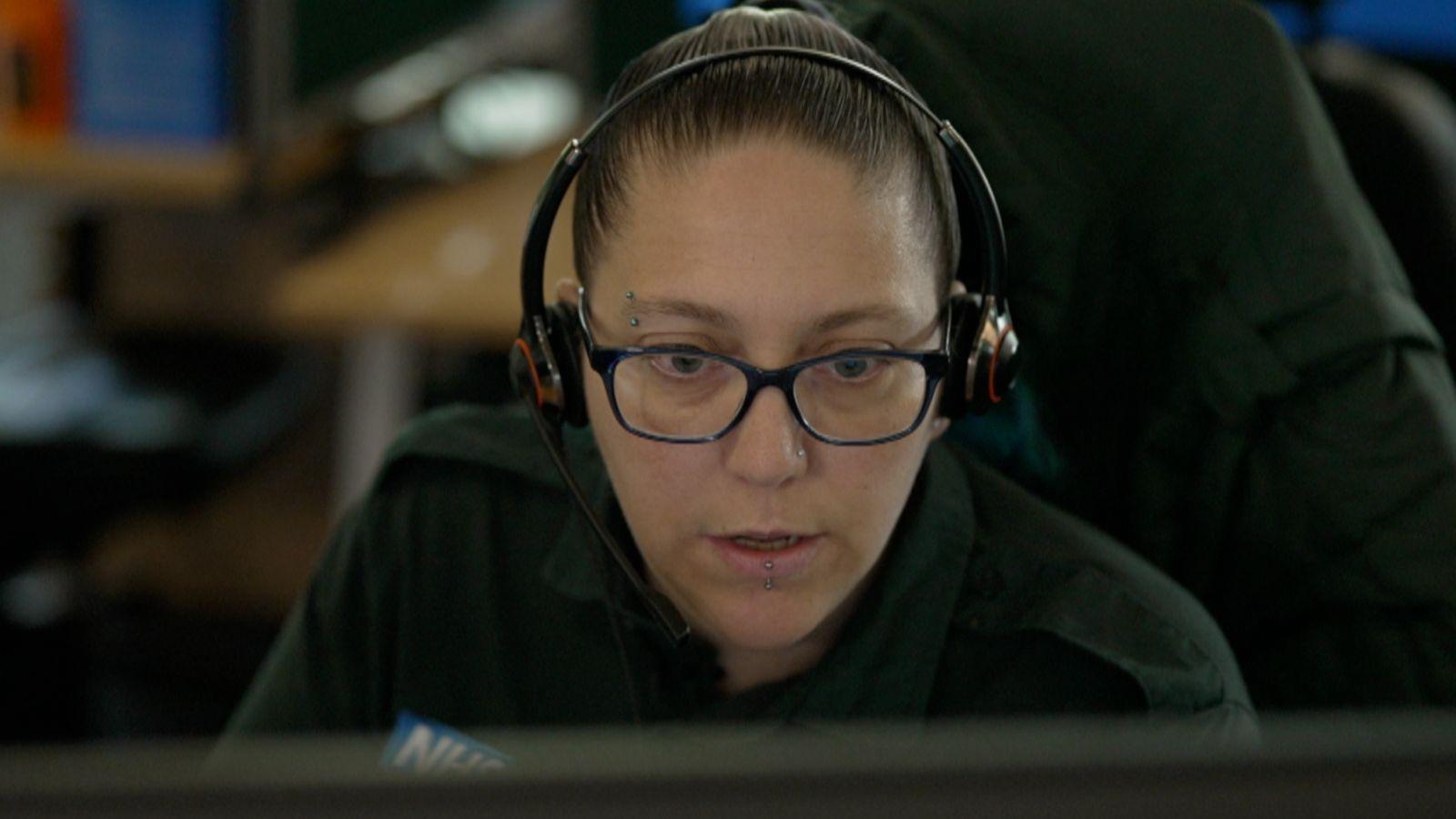
The BBC met call handler Claire Havelock who was on the phone every few seconds
Another call takes Charlotte and Connor to a sheltered housing development and an elderly resident who is feeling faint. The manager called 999 and after checks Connor confirms she is dehydrated and doesn't need to be taken to hospital: just fluids, ventilation and a GP visit later in the day.
"A bit more preparation for the heat could have saved that callout," says Charlotte as we get back into the ambulance.
Inside the NHS trust's central hub, call handler Claire Havelock describes the previous heatwave as "exhausting", with some staff unable to take breaks because of the relentless demand.
This week extra clinical staff have been deployed to support the call handlers and offer advice to callers.
Claire can only talk with us for a few seconds before the phone rings again. "Ambulance - is the patient breathing," she says. She'll repeat that line dozens more times during the day.
Back on the road, Charlotte and Connor barely have time to make themselves available to the dispatches team before another job comes in. A blue light drive to a woman who is having constant seizures.
Eighteen minutes later, Charlotte is assessing Sylvie. Her cottage has small windows, the air inside is stifling. Charlotte is worried about Sylvie's high blood pressure as a recent stroke patient and the crew decide to get her to hospital quickly. As Sylvie tries to sip water she has a seizure in the ambulance.
"Dehydration makes all underlying conditions far more dangerous," says Connor.
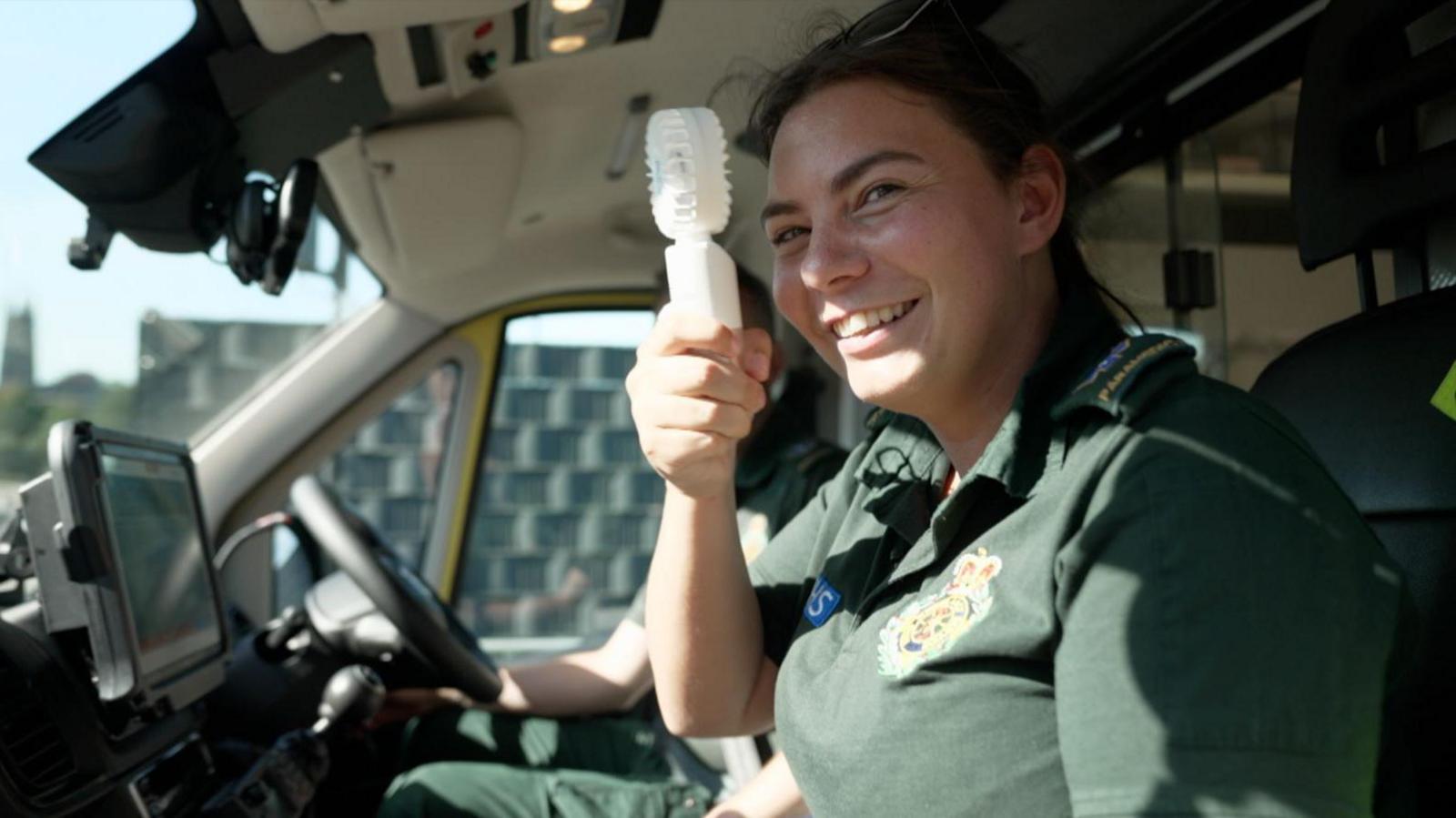
Charlotte trying her best to keep cool inside the ambulance
During their one short break, Charlotte lets out a small shout of pain. The leather seat in the ambulance has burnt her skin. She reaches for her portable fan which mists the air, as the air conditioning gets going.
The big black boots and dark green trousers both Connor and Charlotte wear offer protection from spills and infection, but they are not cool items of clothing. From lifting and moving patients around, to carrying heavy bags and rushing: it is undeniably hot work.
"I went home dehydrated several times in the last heatwave," says Charlotte. During our ride out, the paramedics often remind each other to drink.
Of the four calls we attend with the paramedics, three are heat-related. Finally at 7.30pm, the BBC leaves the ambulance, but Charlotte and Connor still have five more hours on their shift.
With temperatures expected to remain at heatwave level until the end of next week, staff at the South Western Ambulance Service are urging families, neighbours and carers to check on older people, warning that many of the incidents they tend to could be prevented.
The advice is simple: get fans out the attic, leave the less mobile with plenty of water that they can reach and also make sure you check in on your more vulnerable neighbours.
"In winter you pop in on elderly relatives," says Connor. "It's even more important to do that on hot summer days."










Comments