
 German (DE)
  English (US)
  Spanish (ES)
  French (FR)
  Hindi (IN)
  Italian (IT)
  Russian (RU)
  1 hour ago
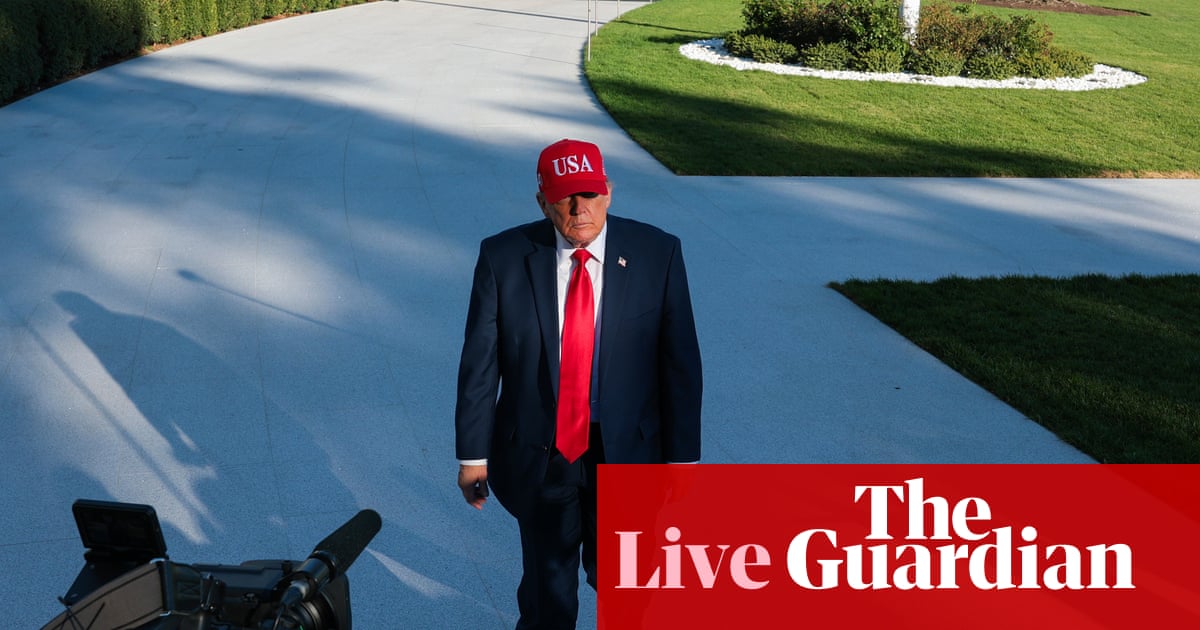
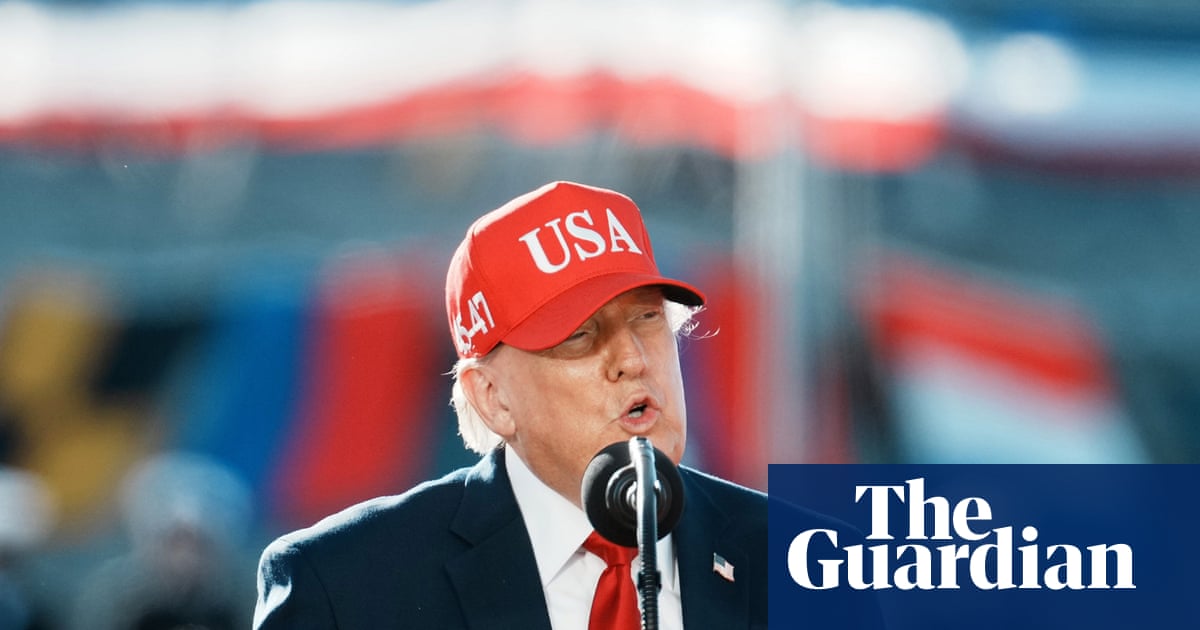
Donald Trump has long sought to portray himself as a man of steel, from the White House photoshopping Trump to look like Superman, to enacting tariffs on steel and approving the sale of US Steel to Japan’s Nippon Steel with a ”golden” share given to the US government.
Most recently, the Trump administration announced plans to construct the largest steel plant in the US, a $15bn plant in Lee county, Iowa to be built by India-based Mesabi Metallics.
But the project and claims surrounding it have incited skepticism over whether the plant will be built and delivered as promised, given Trump’s record and the financial history of Mesabi Metallics’ parent company, Essar Global.
The plant had originally been scheduled to be built in Minnesota, a state that usually votes for Democrats. The shift to Iowa – where Republicans are struggling in the midterms – has also attracted attention.
Doug May, who worked for 43 years as a steelworker at a mill in Granite City, Illinois, characterized the announcement as “political pandering” given the timing and how tariffs are hurting Iowa farmers.
“He pulled the same thing in 2018, just before an election, when he announced that $10bn Foxconn project,” May said.
That project, in swing state Wisconsin, failed to produce the jobs Trump and Foxconn had promised.
May argued Trump is using the steel industry as a campaign strategy, while ignoring the work the United Steel Workers have done to push to save the steel industry, including filing over 150 trade cases over the past decades to combat unfair trade practices that harm US workers. Over 40 domestic steel producers in the US filed for bankruptcy in the late 1990s.
“We, the steel workers in Granite City, served as the best foot soldiers lobbying Congress, holding rallies and campaigns, to raise awareness to the cheating of foreign steelmakers and the need for stronger trade enforcement during that era,” added May. “Arguably, we played a very important role in saving domestic steel.”
Essar Global first proposed building a steel plant with a $1.65bn investment in the Mesabi iron range in north-east Minnesota when they purchased Minnesota Steel in 2007.
By 2016, Essar Steel Minnesota had filed for bankruptcy, following construction delays and financing issues at its Nashwauk, Minnesota project, where its iron ore mine, which is supposed to fuel the Iowa steel plant, is located.
In efforts to get rid of its debt, Essar Global sold off assets, including the completion of a sale of Essar Oil for $12.9bn to a Russia-controlled energy company.
Mesabi Metallics briefly changed ownership to Virginia billionaire Thomas Clarke, before he lost control of the company in 2018, with Essar Global regaining control , but then losing its mining leases in 2021 when the state of Minnesota revoked them after a missed deadline.
“This plant that has been 20 years in the making,” said Mark Dayton, former governor of Minnesota who dealt with Mesabi Metallics in the state through their bankruptcy proceedings.
“I had, a decade ago, a very bad experience with Essar Steel because they started this plant, raised lots of expectations and hopes up north, and then went into default and went into bankruptcy and the like,” he said.
Dayton said it did look like the plant was “actually proceeding, which is great if they’re going to actually complete building this plant”.
But he added: “I’m skeptical of the announcement in Iowa this close to the election. That’s going to require $15bn dollars of investment. I’d like to see that money on the table from Essar before they start to bring a shovel.”
Some, including May, see echoes of Trump’s Foxconn announcement in June 2018. Ahead of the 2018 midterm elections, Trump described plans by the Taiwanese electronics contract manufacturer to open a gargantuan site outside Milwaukee as “the Eighth Wonder of the World” and said the plant “will provide jobs for much more than 13,000 Wisconsin workers”.
Trump’s promises came as his approval ratings with the public were low, with Democrats poised to take advantage and regain control of the House.
The site currently has around 1,100 employees and became an albatross around the necks of its backers as Foxconn’s ambitious plans failed to materialise.
This time around, Trump’s approval ratings are even lower than they were in 2018 and Democrats are expected to regain control of the House and possibly the Senate.
Trump has claimed “they’ve already started building” the plant, though a local NBC news affiliate in Iowa reviewed county records and disputed this claim.
“The review found no major property purchases tied to the project this year. County officials say they don’t have details from the company about its plans. No permits have come before supervisors,” reported TV6 Investigates.
A site location has not been disclosed by elected officials or Mesabi Metallics, with steel production aimed to begin in 2030. Mesabi Metallics did not respond to multiple requests for comment.
In Iowa, the state’s Sierra Club chapter criticized the special state legislature session called for by the Republican governor, Kim Reynolds, to expand government subsidies the state can provide to Mesabi Metallics for the project. The state government is experiencing budget shortfalls, with more than $1bn in deficits the past two years.
“Any time we step up incentive programs above and beyond what we’re giving, our revenues are going to be downgraded. And I understand there’s going to be jobs and economic activity around this, but the state is hurting financially,” said Pam Mackey Taylor, director of the Iowa chapter of the Sierra Club. “Do we need to really double the incentives that other large projects get to support this steel project?”
The Iowa governor’s office did not respond to multiple requests for comment.
In a special session, the Iowa legislature approved $1.36bn in tax incentives over 10 years to Mesabi Metallics. The steel plant is projected to create 1,750 permanent jobs and support up to 6,000 construction jobs.
The White House did not comment directly on the steel plant’s move to Iowa or on White House senior communications strategist Jason Miller’s past work as a registered foreign lobbyist for Mesabi Metallics.
Mesabi Metallics paid at least $240,000 SHW Partners, a government relations firm led by Miller, according to lobbyist disclosure records. The government of India also paid his firm $150,000 per month for “strategic counsel, tactical planning and government relations assistance on policy matters before the US government”, with the contract beginning in April 2025.
“Taking a lobbyist who’s on the payroll of a foreign government and companies with huge government contracts and putting him inside the White House will create a three-headed beast of divided loyalties,” said Jon Golinger, democracy advocate at Public Citizen, in a statement on Miller’s appointment to a White House role.
In response to Miller’s lobbying work and criticisms of it, Miller said: “Public Citizen is a bunch of America-hating fake news soy boy losers who prefer new investments go to China and not the US, and respectfully, they can get rekt. Not only did I deregister from Mesabi Metallics months ago, I took the additional step of recusing myself from having anything to do with their announcement at the White House.”
White House spokesman Kush Desai said in an email: “No president has done more to revive American steelmaking than President Trump, whose 50 percent Section 232 tariffs on steel is driving record investments into this key sector. Those tariffs, along with the Administration’s other pro-growth and pro-investment policies, are not going away anytime soon.”









Comments