
 German (DE)
  English (US)
  Spanish (ES)
  French (FR)
  Hindi (IN)
  Italian (IT)
  Russian (RU)
 The United States is officially out of the Paris Agreement, making it the only country to quit the historic climate pact — twice.
The move to leave the agreement, set in motion by President Donald Trump exactly one year ago, takes effect Tuesday. Trump announced the departure on Jan. 20, 2025, his first day in office, followed by a written statement one week later to the United Nations, which confirmed in writing that American participation in the agreement would end on Jan. 27, 2026.
“Thanks to President Trump, the U.S. has officially escaped from the Paris Climate Agreement which undermined American values and priorities, wasted hard-earned taxpayer dollars, and stifled economic growth," White House spokesperson Taylor Rogers said in an email. "This is another commonsense America First victory for the American people!"
The formal departure comes as Trump has isolated the U.S. on climate policy by criticizing other countries for pursuing renewable energy, threatening to slap tariffs on nations if they supported a carbon tax on shipping and canceling international aid that would be used by poorer countries to protect themselves from rising seas and other risks. It also makes the U.S. one of the only countries in the world without a goal for reducing its climate pollution.
Trump is also orchestrating a withdrawal from the U.N. Framework Convention on Climate Change, the 1992 treaty that gave birth to the Paris Agreement and serves as the global foundation for addressing rising temperatures.
“What I’m feeling and seeing is the world moving on without us,” said Frances Colón, senior fellow for international climate policy at the Center for American Progress, a left-leaning think tank.
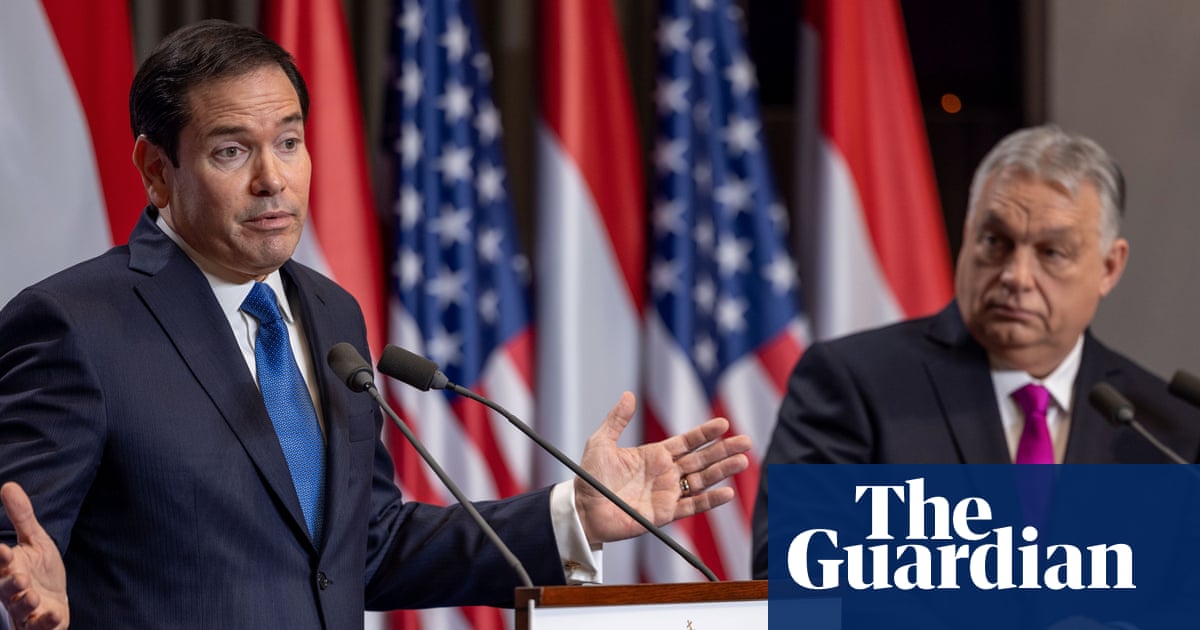
Even before the Paris withdrawal became official, the Trump administration had essentially left the climate process. Secretary of State Marco Rubio shuttered the climate office at the State Department that oversaw international negotiations and fired its experts. EPA withheld data on U.S. climate emissions from the U.N. for the first time ever and is in the process of terminating its greenhouse gas reporting program. The agency is also preparing to repeal the endangerment finding, a 2009 scientific determination that gave EPA its authority to regulate greenhouse gas emissions.
Over the past year, U.S. climate pollution grew 2.4 percent after years of decline, according to the Rhodium Group.
No U.S. officials attended last November’s COP30 climate talks in Brazil, which suffered from a lack of leadership and geopolitical fractures but also saw smaller coalitions of countries agree to pursue plans to eliminate fossil fuels and deforestation.
Paris exit, take two
The Paris Agreement aims to limit global temperature rise to “well below” 2 degrees Celsius since the Industrial Revolution. So far, it has ticked up by 1.4 degrees.
It’s a binding compact that requires all signatory countries — regardless of their wealth or level of pollution — to set increasingly stronger targets for cutting their greenhouse gases. It does not require them to meet those goals. It also calls on richer nations to “take the lead” and provide funding to developing ones.
This is the second time Trump has withdrawn the U.S. from the Paris Agreement. His first announcement came during a Rose Garden ceremony in June 2017, where he said in his characteristic “America First” style that it was time to put Pittsburgh before Paris.
But because of the terms of the agreement, which entered into force on Nov. 4, 2016, it took his administration another two years before they could formally notify the United Nations the U.S. was leaving. The official exit occurred on Nov. 4, 2020, the day after Joe Biden was elected president.
Biden reentered Paris with the stroke of a pen the day he was inaugurated in January 2021, setting off a backlash from some conservatives who argued that the Senate should have provided its consent to enter the agreement, as it does with treaties. President Barack Obama entered Paris through executive action, sidestepping the Senate’s approval.
In 2017, Trump’s move to withdraw from the agreement set off fears that other countries might follow. That hasn’t happened. His current attacks on climate action and international cooperation have been met largely with silence and his threats of using tariffs and other retaliation have induced some countries to weaken their climate measures.
Coalitions of states and cities say they will continue to strive to help the U.S. meet its former climate commitments — a last-ditch effort by Biden in 2024 pledged to reduce greenhouse gas emissions 61-66 percent compared to 2005 levels by 2035. But Trump’s broad assault on climate action promises to make that challenging, given that the U.S. was off track to hit that mark even before Trump slashed clean energy funding, closed climate offices, and waged war on offshore wind permitting.
The next treaty Trump plans to quit — the UNFCCC — also has a one-year waiting period between when the U.N. receives a formal withdrawal request and its exit. Trump announced that move earlier this month, and the White House says the State Department is preparing official notification. But reentering that treaty could be harder for a future president than it was for Biden to rejoin the Paris Agreement in 2021, since it was approved by the Senate. Ratification of the UNFCCC is a prerequisite to participate in Paris.
For some conservatives, the hope is that this withdrawal from Paris will last longer than Trump's first time.
“He’s going much further in the second term and making much more decisive and bold moves,” said Myron Ebell, an outspoken critic of climate science who worked on Trump's first-term EPA transition team. “I’m hopeful that this will be permanent, but nothing is guaranteed.”







Comments