
 German (DE)
  English (US)
  Spanish (ES)
  French (FR)
  Hindi (IN)
  Italian (IT)
  Russian (RU)
  2 weeks ago
The 2012 film Hyde Park on Hudson – fictionalising a 1939 visit by King George VI and his queen Elizabeth to a summer home of President Franklin D Roosevelt and first lady Eleanor – was a modest success, seen (more happily by Republicans than Democrats) as an oblique take on the Clintons: the president hiding a complex private life while his wife was more intelligent and independent than some folk liked.
The film’s screenwriter Richard Nelson treats the material for the third time (he also did a 2009 BBC radio drama) in this related but rebooted stage play, providing a fascinating example of how context can change content. Inflected by this week’s 250th birthday of American independence, a play in which a monarch comes crown in hand on a Foreign Office mission to secure American support for the impending European war also has resonances of the shakiness of Nato under President Trump whom King Charles recently met on a state visit.
In this timely reflection on a diplomatic relationship we have often felt is more special than they do, the performances and Nelson’s direction crystallise the difference – with two heads of state on stage – between raw political power and symbolic significance. The royal couple’s body language oozes unease at being in the position of supplicants to a civilian.
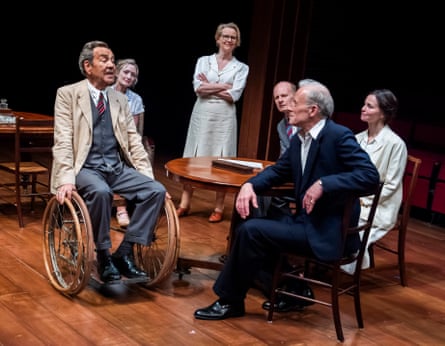
Because the 32nd president routinely ranks among the top commanders in chief in polls, there is a temptation for actors to play him as a running rebuking commentary on the 45th and 47th occupant of the White House. Robert Lindsay, in one of his best performances, resists this. Physically frail from polio, his FDR radiates geopolitical strength and a sharp brain behind a quiet voice. But conspiring with the media to hide his disability from the electorate – and conducting an affair with a distant cousin, Daisy Suckley (Rachel Pickup) – the politician is also in some ways a fake.
With Andrew Havill’s king suffering from what wasn’t yet called imposter syndrome – struggling with a stutter and catapulted into the palace by the abdication of a brother who some subjects still prefer – the men both understand that “people see what they want to see”, the play’s key phrase that Nelson surely intends to have application to modern populists.
Portrayals of the British royals now inevitably seem to be influenced by Netflix’s The Crown, which encouraged writers and actors to take greater historical liberties. Rebecca Night’s charming, dutiful Elizabeth feels inflected with Claire Foy’s portrayal of the character’s namesake daughter in The Crown. Although deserving more scenes, Jemma Redgrave’s Eleanor, visibly suppressing her true selves, shows the first lady to be an even worse job than vice-president.
Subtle double perspectives are constantly present. “My brother and I don’t talk to each other,” says the king. Royal siblings split by an American divorcee and a paedophile financier are simultaneously present.
















Comments