
 German (DE)
 English (US)
 Spanish (ES)
 French (FR)
 Hindi (IN)
 Italian (IT)
 Russian (RU)
 50 minutes ago
The Trump administration’s plans to build a “smart border wall” through a 500-mile stretch of Texas that includes the Big Bend national park recently got the green light from the supreme court. But those efforts are likely to slam into a big, blue wall.
Last week’s decision – the result of a continuing challenge to the administration’s decision to waive dozens of federal laws to speed wall construction in the Big Bend region – dealt a major blow to environmentalists and park enthusiasts, as well as locals who value the region’s remoteness, landowners who could see their properties devalued and businesses that rely on outdoor tourism.
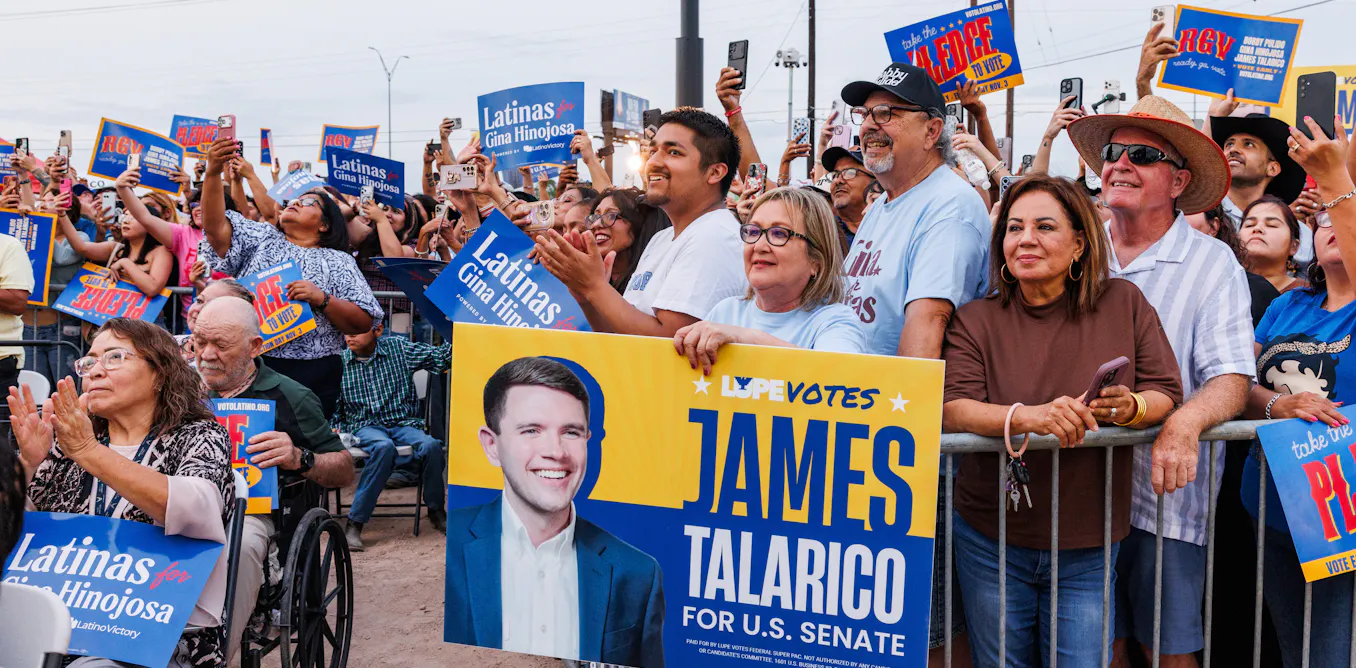
But the ruling also came less than a week after Republicans suffered staggering losses in the midterms – including the once-in-a-generation flipping of Texas from red to blue. The state elected a Democratic governor after more than 30 years, and its first Democratic senator since the 1980s. The blue tsunami that handed both chambers of the US Congress to the Democrats with sizable majorities also flipped the Texas state house and weakened Republican control over the state senate.
That could all throw a wrench in the Trump administration’s plans.
The border wall is a federal project, so the White House will still have a great deal of power to push it forward. But for the first time, US Customs and Border Protection (CBP), the agency overseeing construction, will now face open hostility from the Lone Star state’s government as it contemplates resuming building efforts.
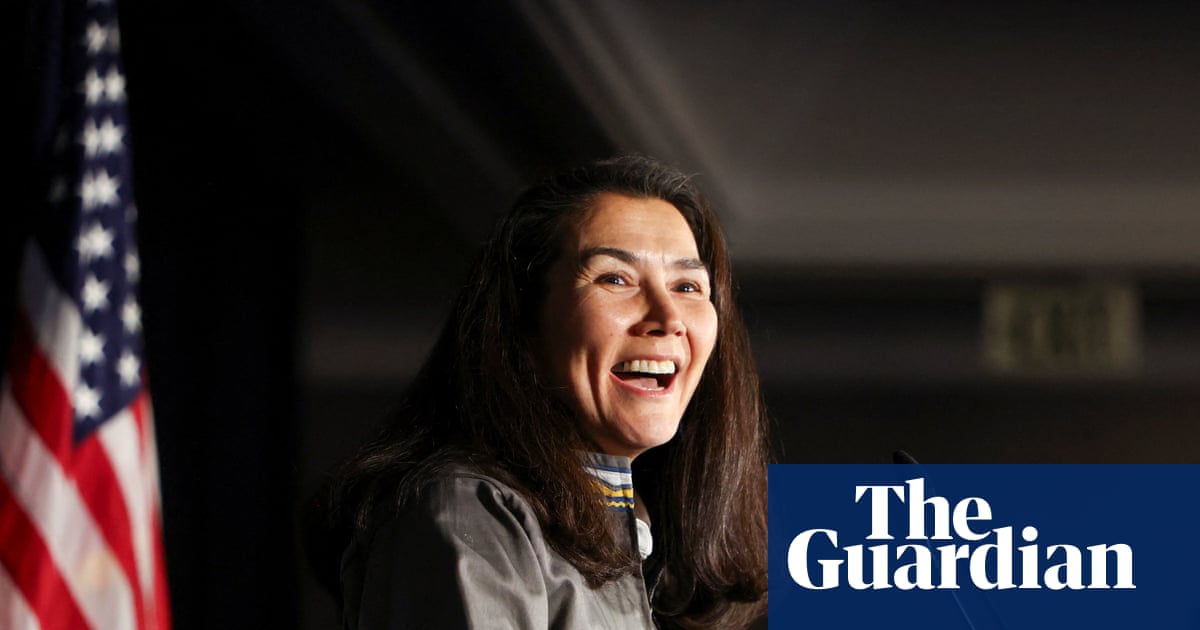
“Texas sovereignty and land should be protected,” Gina Hinojosa, the governor-elect, said in response to the ruling. “By letting the federal government bulldoze our land, the supreme court is continuing to put corporate profits before the people of Texas.”
The unthinkable is now possible
The Big Bend conflict stretches back to last year when the Republican-dominated Congress poured a whopping $46.5bn into border wall expansion in Trump’s “big, beautiful” spending bill. Early this year, CBP started indicating plans to use much of that money in the Big Bend region in Texas.
Texas Republicans, including Greg Abbott, the outgoing governor, largely stayed quiet as party colleagues orchestrated an unpopular wall expansion that threatened to carve up private property, destroy ancient rock art and mar beloved parks – all in a region whose cliffs, brush and isolation already make it the section of the border with the fewest unauthorized crossings by far.
The administration’s shifting plans to build border security infrastructure through Big Bend have sparked major protests in Texas. Bulldozers started plowing up ground near the park’s beloved Santa Elena Canyon in August, drawing a national backlash as activists circulated videos of the destruction.
Rodney Scott, the CBP commissioner, paused construction days after it started and traveled to the region to meet with stakeholders. Shortly after, US district judge Kathleen Cardone issued a temporary injunction blocking CBP from continuing the project, while the case challenging the Trump administration’s waivers of federal environmental and historic preservation laws continued.
With the supreme court’s ruling this month, CBP is now free to continue construction. But without a willing partner in Texas, those plans will face new hurdles.
The proposed border wall runs through several Texas public land holdings, including Big Bend Ranch state park, Black Gap wildlife management area, Seminole Canyon state park and several small tracts owned by the Texas general land office, which manages some state lands and holds extensive mineral rights.
Incoming Democrats are already looking to block construction on those lands. A bill filed jointly by César Blanco, a state senator, and Eddie Morales, a state representative, both Democrats, would ban border security construction on state parks. With Democrats holding a majority in the state house of representatives for the first time in two decades and the governor’s office for the first time since 1994, the Trump administration faces the real – and once unthinkable – possibility that bills such as this could pass.
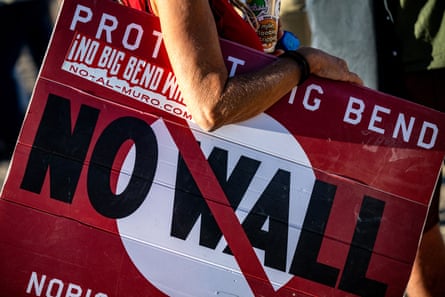
“Incredibly disappointed by the supreme court’s decision,” Blanco tweeted after the decision was published. “Just last week, Texans made it clear they want leaders focused on what matters to their families and communities. Destroying our natural landscapes is not the direction we should be going.”
Benjamin Flores, the incoming Texas land commissioner, who will run the general land office, wrote in a statement that he “will protect every acre of state land, honor every lease, and ensure no one breaks ground on state property without written permission from the land office”.
“Our transition team is working to get a full picture of any agreements the land office has already made affecting state land in the Big Bend,” Flores wrote. “Once I’m sworn in, I’ll review every one of them with our legal team and act within the law to protect the land and the Texans who depend on it.”
Neither Texas parks and wildlife nor the general land office disclosed to the Guardian whether they had yet signed agreements allowing CBP to build on state land.
The people are watching
Texas Republicans’ strategy of playing dead while the Trump administration’s wildly unpopular border wall expansion through Big Bend sparked outrage from conservatives and liberals alike almost certainly cost the GOP at the polls. Both Brewster and Val Verde counties, Big Bend’s two largest, flipped by double digits compared with the 2024 election that sent Trump back to the White House.
The Trump administration is also likely to face more scrutiny over its Big Bend border wall expansion when the new Congress convenes, with solid Democratic majorities in both chambers.
A group of 23 Democrats led by Veronica Escobar, a US representative of El Paso, Texas, asked the office of inspector general on Monday to investigate whether the political donations or ties influenced the doling out of $7.5bn worth of border wall contracts the Trump administration signed for the Big Bend region.
“The processes CBP used to award these contracts lacked any transparency, and there has been no opportunity for public oversight of the contracts, or even for the public to understand the scope of the contracts,” the letter reads.
Advocates will also be looking to Congress to either undo the waivers of federal environmental and historic preservation laws that homeland security issued earlier this year to speed smart wall construction, or to pass a standalone measure to at least exempt Big Bend national park – whose natural beauty has inspired the loudest public outcry.
“Are they going to resume bulldozing where they left off? Just because they’ve been given the green light doesn’t make it acceptable,” Bob Krumenaker, a former Big Bend superintendent, who now chairs the non-partisan group Keep Big Bend Wild, wrote in an email. “Will they ever listen to the will of the American people?
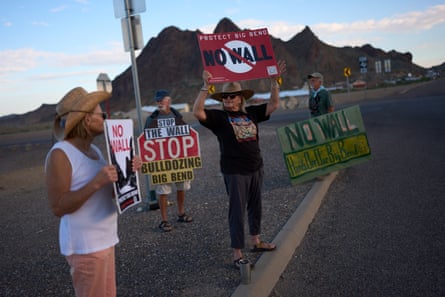
“Clearly, the only way to stop the destruction is through legislating the next Congress,” he added. “That’s our laser focus right now.”
Scott, however, said the agency will continue to push ahead with construction in the region, citing the supreme court ruling as evidence that his agency “has the legal authority and responsibility to secure America’s borders”.
Scott said that plans for the park would change, but did not say how.
“Specific to Big Bend national park, CBP has re-evaluated the terrain, listened to local stakeholders and made meaningful adjustments that will secure this critical stretch of border while preserving the unique landscape and public access for generations to come,” Scott wrote in a statement. “I look forward to sharing details about the updated plans soon.”
Whatever comes next, the park’s advocates will be watching, said Laiken Jordahl, a public lands advocate with the Center for Biological Diversity, one of the plaintiffs in the lawsuit challenging homeland security’s authority to waive federal laws to expedite border construction at Big Bend.
“The second a bulldozer enters that national park, we will have eyes on every piece of vegetation that is destroyed, every spec of dirt that moves,” Jordahl said. “It’s so clear that people across Texas oppose this – their newly elected leadership opposes this.”







Comments