
 German (DE)
 English (US)
 Spanish (ES)
 French (FR)
 Hindi (IN)
 Italian (IT)
 Russian (RU)
 51 minutes ago
Shelby Chestnut remembers turning on the news in 2016 and hearing something he didn’t expect. Then- attorney general, Loretta Lynch, had just announced a federal lawsuit to block HB2 in North Carolina, otherwise known as the “bathroom bill”. Lynch said the law, which made it illegal for transgender people to use a public restroom that did not align with the sex listed on their birth certificate, was reminiscent of those passed during the Jim Crow era that restricted public facility use by race. Then, she addressed transgender Americans directly: “But no matter how isolated or scared you may feel today, the Department of Justice and the entire Obama administration wants you to know that we see you; we stand with you; and we will do everything we can to protect you going forward.”
HB 2 was repealed within the year. Chestnut said he thought at the time: “Oh this is the next phase of protections for trans people.”
But instead of the beginning of legal protections for transgender Americans – the past decade has become the exact inverse. This was made abundantly clear during the midterm elections, where even during a “blue wave” of tsunami proportions, ballot initiatives targeting transgender people were passed even in Democratic strongholds like Washington and Colorado.
Just how much have things shifted? North Carolina experienced mass boycotts of the state in 2016 over that bathroom bill – including almost 200 corporate leaders asking for the repeal of the law, and the NCAA March Madness basketball tournament pulling seven games from the state in protest – a huge economic and cultural blow. But this year Kansas and Idaho have both passed bathroom bill laws without any kind of similar public outcry, though facing challenges in court. In Idaho, a person who uses the bathroom of the gender that does not match the sex they were assigned at birth could be charged with a misdemeanor punishable by up to one year in prison for the first offense. The second offense would be considered a felony, punishable by up to five years in prison – for using the bathroom.
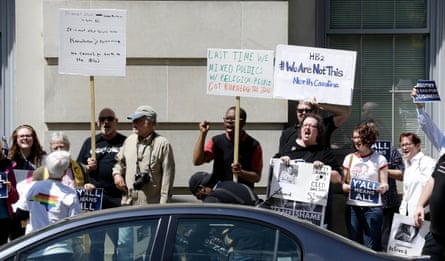
The intervening decade changed the rhetorical, political and legal landscape to be nearly opposite of that in 2016 regarding the civil rights of transgender Americans. Meanwhile, culturally the transgender population has gone from a curious minority (approximately 1-3% of Americans are transgender) that needed protecting to an outright punching bag. Former college swimmer Riley Gaines has made a career out of speaking out against trans women participating in sports. Fox News spent three weeks of the summer airing at least 130 segments whipping up concern about the possibility of trans athletes playing in the WNBA – a league where no trans women have ever played. Books that mention trans characters are routinely banned from schools and libraries, and Disney erased a trans character’s storyline from an animated Pixar series in 2024 before the show could even be released.
While Trump often took rhetorical shots at social issues during his first term, he only used executive power to specifically target the rights of transgender Americans a couple of times, often simply to undo ways the Obama administration had specifically sought to protect them. His second term has taken a vastly different tack. But why did laws targeting this particularly tiny part of the American population grow so rapidly?
“It’s been a long, long 10 years, to say the least,” said Chestnut, the executive director of the Transgender Law Center.
***
Back in 2016, before the November election, it had been just one year since the supreme court decision on Obergefell v Hodges made marriage equality the law of the land. The LGBTQ+ movement was at a “high point” in terms of political capital, says Marie-Amélie George, a professor and legal historian at Wake Forest Law School whose research focuses on the history of LGBTQ+ legal rights.
“There was a renewed movement for all types of anti-discrimination protections to expand upon the victory of the marriage equality campaign, and the [response to] HB2 was really very much a sense of commitment to LGBTQ rights,” George said.
This often took the form of legally applying anti-discrimination laws to trans people, according to Elana Redfield, a federal policy expert at the Williams Institute at UCLA. “At the time, there was this open question about whether laws that were designed to protect against sex discrimination applied to transgender people,” Redfield said. While the Obama administration had made some overtures towards protecting trans people under those laws, Trump mostly followed a more restrained legal tactic, by rescinding Barack Obama’s moves.
So while the Obama administration ended a ban on transgender troops in the US military, and passed official memorandums and executive orders that medical providers could not deny access to trans patients under nondiscrimination rules, that trans prisoners should be housed based on their gender identity, and that Title IX protected transgender students – the Trump administration issued rules withdrawing guidance on all these fronts in his first term.
At the same time, these moves were a clear signal to groups like the Transgender Law Center that it was time to get ready for a backlash, according to Chestnut. Until then, the Transgender Law Center had been one of the only litigation groups arguing that laws and ordinances banning trans people from bathrooms or other public spaces were an infringement on civil rights – cases they had largely won. But the situation seemed ripe for a turning of the tides.
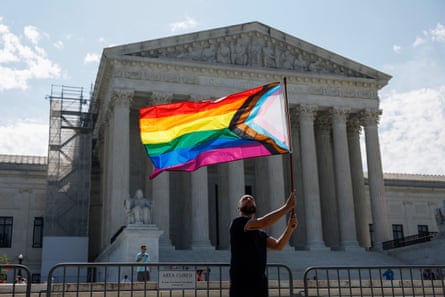
“At that point, we convened a coalition which birthed some of our guiding principles over the last 10 years,” Chestnut said.
Their coalition of litigation and advocacy specialists was prescient. By the last year of Trump’s first term, Idaho passed a law targeting trans athletes playing school sports, saying that transgender athletes were not allowed to play on women’s or girl’s sports teams. It was the first such state law to pass and was highly controversial.
When Joe Biden took office in 2021, he again rolled back the executive orders and mandates Trump had made regarding the ways federal anti-discrimination law could affect trans Americans, including lifting the ban on trans troops, and including trans students in Title IX protections – swinging a pendulum back the other way along ideological lines.
But those moves were now extremely politicized. And during the four years of the Biden presidency, the backlash arrived as a hurricane. By 2024, 26 states had passed laws similar to Idaho’s banning trans students from playing school sports. So-called “red states” didn’t stop at sports participation, either. During the same time period of the Biden presidency, 27 states passed laws restricting access to gender-affirming care for trans youth, despite all the major US medical associations supporting access to this type of care for youth as best medical practice.
One of the reasons trans rights were targeted by the political right was probably the lack of a “red wave” during the 2022 midterm elections, according to George. After the disappointing election, the American Principles Project, a conservative thinktank, conducted a study on how Republicans might have fared better at the ballot box. Ultimately, the group made recommendations that have “framed the evolution of the anti-trans playbook”, says George.
She points out that one of the major findings was on voter opinion in battleground states. “Voters of all demographics tended to support Republican positions on transgender issues … that indicated that trans rights could be a really successful political issue.”
Ultimately, along with an influx of funding and organization from groups like the Alliance Defending Freedom, a conservative Christian legal advocacy group that helped overturn Roe v Wade and is classified as an anti-LGBTQ+ hate group by the Southern Poverty Law Center, these political messages led to the rash of state laws restricting trans civil rights from sports, medical care, identity cards and – again – public bathrooms.
“I don’t want to discount the fact that some of the conservative leaders are evangelicals who firmly believe that there are two sexes and that it is immutable,” says George, “but I think there is also a strong political element.
“Some of it may be backlash to liberalism, particularly the Democratic party under Biden, and some of it is political opportunism because once you see that it works in one state, that makes it easier to adopt in another.”
And once the formula was seen to work well in the states, the 2024 presidential election followed suit. In fact, Trump dedicated much of his campaign time to making promises about transgender-related issues, from sports to healthcare. One of the most aired political ads in the final days of the campaign that year was “Kamala is for They/Them. Trump is for You.”
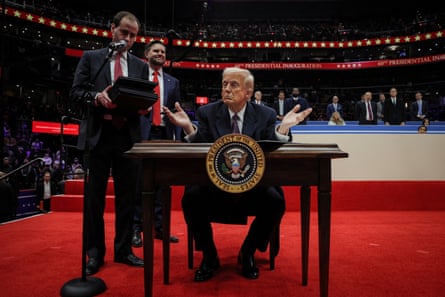
The mountain of anti-trans laws on the books, plus the political success of Trump campaigning on the issue in battleground states set up a much different second Trump term than the first. “The groundwork was there,” said George. “What is different is the speed at which the Trump administration has seized upon them. But I think that is part and parcel of a different strategy on the part of his administration coming in the second time … where if you do all of these things at once, it’s harder for the other side to respond.”
On his first day in office, Trump issued an executive order that essentially redefined the legal meaning of “sex” as the genetic makeup of a person at the time of conception. Even though most medical experts say this is an unscientific explanation (a fetus’s sexual characteristics take weeks to evolve and are not always cut and dried) it was effective, says Redfield. “In other words, the president is saying that it is now the policy of the federal government not to recognize the existence of transgender people, non-binary people, or intersex people.”
That changed the way the federal government could target trans people from day one. “I think it’s pivotal, because it addressed a known ambiguity, and it then gives a categorical approach to the entire federal government … and that was carried out in such a dramatic, expansive and exhaustive way that it’s likely to have ramifications for decades,” Redfield says.
This particular executive order affected three large sectors of the federal government immediately: data collection, federal funding and identity documents. These were hugely impactful for the trans population, according to Redfield, because any statistical information being gathered by the federal government on the American population of transgender, intersex or non-binary people ended abruptly – information that is often used to figure out where federal programs and funds are needed. Funding via grants provided by federal agencies were also cut off entirely to any projects that were determined to even acknowledge the existence of transgender people. And finally, the state department was instructed to stop issuing passports that did not match the sex at birth of the individual, or those with an X gender marker for intersex or non-binary individuals, taking away a basic civil right to identity documents.
But it didn’t stop there. Healthcare, sports and education all became targets of the Trump administration’s legal attention against trans Americans nationwide, after the wave of state laws that had passed under Biden.
Within a month, Trump had issued orders that directed the Department of Health and Human Services to end gender-affirming care for minors nationwide via cutting off federal funding for institutions providing the care, and directing Medicare and Medicaid to not cover the costs of that care.
And he kept the rhetoric about sports at a fever pitch. On National Girls & Women in Sports Day, he issued an executive order entitled “Keeping Men Out of Women’s Sports”, a wide-reaching order that said states or organizations with laws that allowed trans student athletes to compete in women’s or girl’s sports categories were at risk of being in violation of Title IX and/or losing federal funding. The order also directed the Department of Education to prioritize Title IX investigations on this matter. Later, the gutting of that department’s office of civil rights, by the so-called “department of government efficiency” (Doge), has meant that Title IX investigations have been decimated. The few that remain have targeted institutions with policies that are inclusive of trans people, whether in sports, or admissions (such as at Smith College), in lieu of true inequities in women’s sports or gender discrimination, harassment or assault complaints.
Though nearly every action at the federal level has been targeted by lawsuits, the broad legal attack on a certain group of people has had an impact, even in “blue” states. For instance, the largest sports governing bodies have changed rules to disallow trans athletes from competing in women’s division, including the NCAA, and now, even the International Olympic Committee, which will host the next Summer Olympics in Los Angeles in 2028. Meanwhile, even moderate Democrats, such as the California governor, Gavin Newsom, Iowa senator-elect Josh Turek, South Carolina senator-elect Annie Andrews, and Texas senator-elect James Talarico, have made statements that they are against allowing trans kids to participate in girls’ sports.
Last week, four states, Nebraska included, passed ballot initiatives that would ban trans girls from participating in school sports. Three are far from deep red: Washington, Colorado and Arizona. Arizona’s includes private sports clubs, and Washington’s even goes so far as to require medical sex verification for all girl athletes in the state.
This is at a time when more than 40 hospitals with gender clinics have shut down or paused their services for minors – even in blue states, even when lawsuits have been successful – often out of fear of losing federal funding.
Nearly every principal in the Trump administration, from JD Vance to the defense secretary, Pete Hegseth, has taken up an anti-trans stance as a priority, both in word and action. And now the supreme court of the United States has ruled in favor of state laws that ban trans athletes and gender-affirming care – rulings that may take years to be overturned, if they ever are.
When it comes to issues of civil rights for a targeted community, there are always steps forward and backward, says George. “It’s important to keep in mind that the states are a patchwork, and that there are lots of states moving against trans rights, and counter-moves with states protecting trans rights, and those states are disproportionately populated. So it’s inaccurate to say that everyone is moving in lockstep against trans rights.”
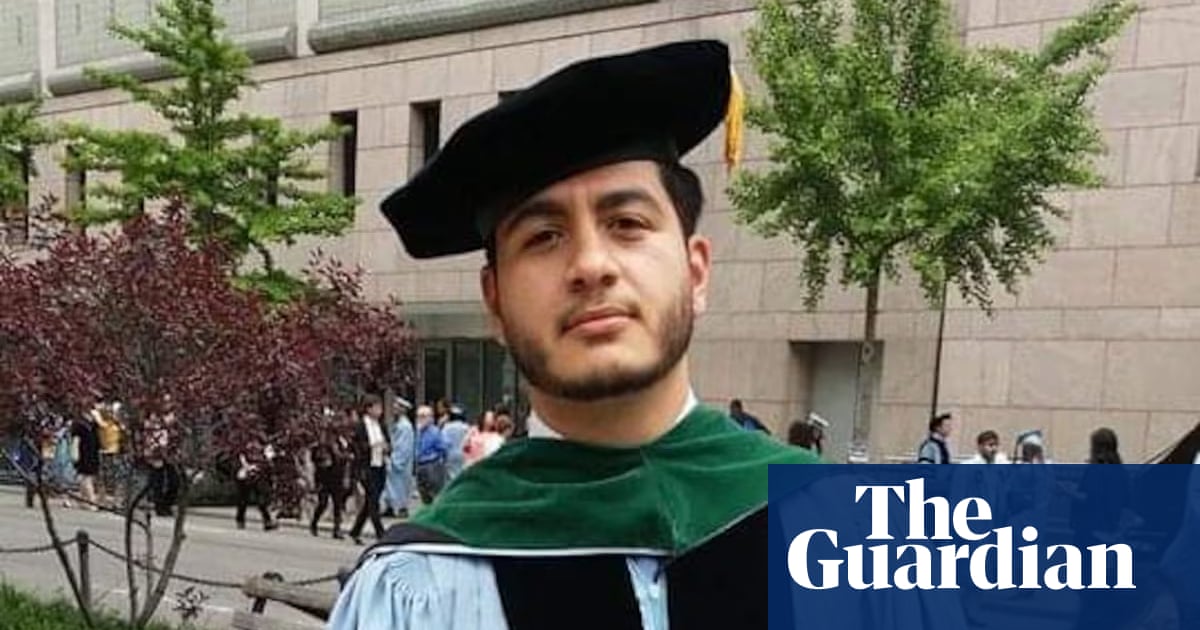
Notably, some big midterm winners won for Democrats in battleground states while maintaining support for trans rights, such as Senator-elect Abdul El-Sayed in Michigan and Senator-elect Troy Jackson in Maine.
But the constant drumbeat of headlines over the past 10 years about laws targeting trans people and political rhetoric stoking fear about them, has resulted in a change in public opinion. Between 2022 and 2025, for instance, American sentiment for laws or policies that protect trans people from discrimination has gone down eight points overall, according to Pew Research. While the differences in Republican- and Democrat-identified voters are still stark (just 5% of Republicans favor requiring health insurance companies to cover gender-affirming care, for instance, while 40% of Democrats do) the loss of support is seen across the political spectrum.
This played out in the midterm results, according to Redfield. “You see a tremendous opportunity for inclusive policy with this blue wave, but there is a sobering reminder from the passage of all these ballot initiatives that the discourse in the country has really negatively affected the lives of trans people and will continue to for some time.”
And those studying this political process closely hope voters and politicians alike will see that the federal government has proven that any group could be targeted using this same playbook.
Chestnut believes that the more people understand this connection between attacks on the transgender community and other groups having rights taken away, the more effective political organizing could be. “I think trans people might be the testing case for a broader attack,” he says. “What we’re looking at is a complete restriction of bodily autonomy of all people that are not cis, white, Christian and conservative. Whether that’s immigration, trans people or people seeking abortions, or voters’ rights.” All of these laws and political rhetoric together, could be what opens the door to “much bigger discrimination”.
Chestnut thinks the movement’s future lies in building coalitions to protect all targeted groups. “We learned that if you want to come for immigrant communities and take them away from their homes and families, then you will lose elections. The way that America has finally started to unite on the tragedy that is immigration enforcement in this country is remarkable. We can do that for the trans community, too.”













Comments