
 German (DE)
  English (US)
  Spanish (ES)
  French (FR)
  Hindi (IN)
  Italian (IT)
  Russian (RU)
  2 weeks ago
A year ago – just a year ago – the Kennedy Center in Washington DC was a world-class centre for the performing arts. It had a resident opera company, respected artistic teams, and a run of the acclaimed musical Hamilton to look forward to. It had a bipartisan board that upheld the dignity of an organisation that, since it was conceived of in the mid-20th century, had been treated with courtesy and supported by governments of both stripes.
How quickly things unravel. Donald Trump inserted himself as chair of the organisation soon after his 20 January inauguration, dispatched the hugely experienced executive director, and installed his unfortunate loyalist Richard Grenell to run it. This former ambassador to Germany might have wished for better things; at any rate, entirely inexperienced in the arts, he seems utterly out of his depth. Things have unravelled. Artists have departed the centre in droves. Hamilton pulled out. So have audiences. In November, Francesca Zambello, the artistic director of the Washington National Opera, told me that ticket sales had tanked for the opera. Analysis by the Washington Post showed it was the same pattern across the centre.
Every day, Zambello was receiving messages of protest from formerly loyal members of the audience: shredded season brochures stuffed into an envelope and returned; missives saying, among other things, “I’m never setting foot in there until the ‘orange menace’ is gone.” The financial hit was so serious, she told me, that the opera company was considering uprooting from the centre and going it alone. Grenell and co’s insistence that all productions should be “net neutral” – fully funded in advance – was also an insuperable problem. With large numbers of singers and musicians to pay for, as well as the spectacle that patrons come to enjoy, productions are generally financed not just by ticket sales but by grants and philanthropic support.
This week, the company made it official: it will leave the Kennedy Center. A new website has been launched. Donations have flooded in, along with solidarity. There may be trouble ahead – the Kennedy Center holds the WNO’s endowment, and lawyers are rolling up their sleeves to thrash out the divorce. The Kennedy Center management’s official position is that it was they who decided to “part ways” with the company, with a strong whiff of the dumpee claiming to be the dumper. From the spring, opera lovers in Washington and the surrounding region will probably be able to attend performances at the Lisner Auditorium at George Washington University, among other venues. From the autumn, the hope is that the company will find longer-term homes at Constitution Hall and the Shakespeare Theatre Company’s Harman Hall.
The WNO board made its resolution in the nick of time to retain a shred of dignity. Just before Christmas, after the president had spent months apparently joking that the centre should be named after him, the words “The Donald J Trump and” were affixed to the building’s facade above “The John F Kennedy Memorial Center for the Performing Arts”. (How can it be a memorial to Donald Trump, you ask, when he is still alive? To which one can reply only with a bemused shrug.) The new, slightly mismatching letters looked as if they might have been picked up at Four Seasons Total Landscaping. The Trump and Kennedy Center it became – a move whose legality is disputed.
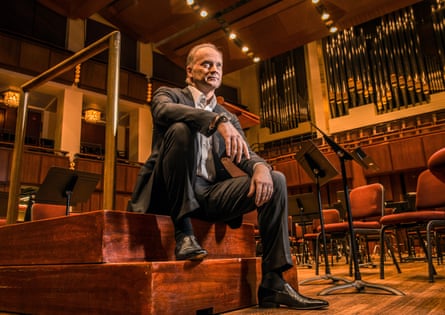
Now the opera is leaving, the Kennedy Center is by all accounts somewhat forlorn. One insider told me it was like a “funeral parlour – there’s a deathly pall over the place”. The cancellations keep happening; while I have been writing this article, another has been announced. There will be no annual concert at the centre on Martin Luther King Day, which falls this year on 19 January. Instead, after 23 years of the “Let Freedom Ring” event at the centre – in its time headlined, variously, by Aretha Franklin and Chaka Khan – the concert will be held elsewhere. A look at the seating plans on the centre’s website tells its own story: with a few exceptions, such as this week’s performances by star pianist Daniil Trifonov, events are selling poorly across the board. The centre may be chugging forward into a future as a tomb-like convention centre – give or take the opening of a Trump-approved movie. (Take your seats for the premiere of Melania, a film about the first lady, on 29 January.)
With the imminent removal of the opera, the National Symphony Orchestra, the other resident performing group, is left in glorious isolation. This week, its music director, Gianandrea Noseda, put out a statement that seemed like a veiled response to WNO’s departure, and yet at the same time, said a whole lot of nothing. Titled Music Belongs to Everyone, it began: “The National Symphony Orchestra is your orchestra; it is part of the community in which you live, and, in some way, part of your family.” On it went in similar airy vein, ending with: “The NSO and I await you – doing what we know how to do best: making music.” Noseda’s clouds of meaninglessness were presumably meant to affirm that politics have nothing to do with symphony orchestras, though if that really were the intended drift, one wonders what he has been thinking all these years while conducting Shostakovich.
Things are changing rapidly in Washington’s cultural organisations. Also within the past week, the Smithsonian Institution’s National Portrait Gallery has swapped out its previous portrait of Trump for a replacement and changed its labelling. In the new photograph, Trump’s knuckles graze his Oval Office desk as he snarls into the middle distance. It was an open secret that mention of his two impeachments on the previous label had irked him. The new label is shorn of any biographical detail. The Smithsonian has buckled, presumably an attempt at appeasement – never a word you want to be using in relation to a leader like Trump. This week also marked the deadline for the institution to provide the White House with a mountain of documentation about labels, plans, catalogues, staffing, budgets and programmes, with emphasis on the marking of the US’s 250th anniversary. In a letter to the Smithsonian before Christmas, the White House, in reissuing its demand for this paperwork, claimed that “The American people will have no patience for any museum that is diffident about America’s founding or otherwise uncomfortable conveying a positive view of American history.”
A year into Trump’s second term, a battle for America’s soul is being fought – not just in the streets of Minneapolis, Chicago and Portland, but in its cultural organisations. It will be telling to see who is willing to fight it and who is ready to fold.
-
Charlotte Higgins is the Guardian’s chief culture writer














Comments