
 German (DE)
  English (US)
  Spanish (ES)
  French (FR)
  Hindi (IN)
  Italian (IT)
  Russian (RU)
  3 weeks ago
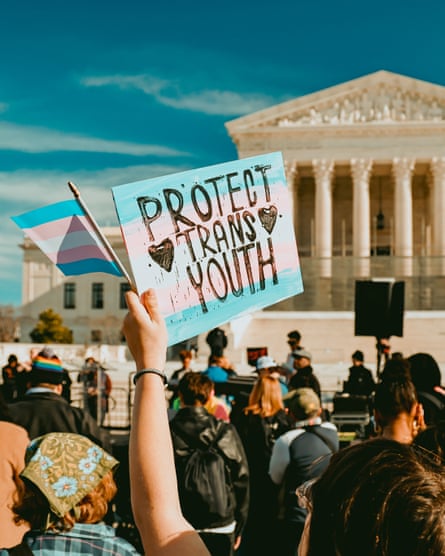
As the US supreme court heard arguments on Tuesday for a case that could determine whether transgender children can participate in school sports – and potentially impact LGBTQ+ civil rights protections more broadly – competing groups of activists rallied in Washington DC.
On one side was a multiracial mix of hundreds of people rallying for trans rights and in support of Becky Pepper-Jackson, a track and field athlete from West Virginia and the plaintiff in the West Virginia v BPJ case before the supreme court.
On the other side was an equally large crowd, mostly white, that was calling on the supreme court to “protect women’s sports” by upholding laws in West Virginia and Idaho that prohibit trans youth from participating in sports programs aligned with their gender identity.
In many ways, the scene looked like other DC rallies over trans and queer rights over the past decade. Trans advocates and their allies danced to remixes of songs by the pop star Chappell Roan, while those opposing trans rights at one point held a prayer for the legal team representing West Virginia.
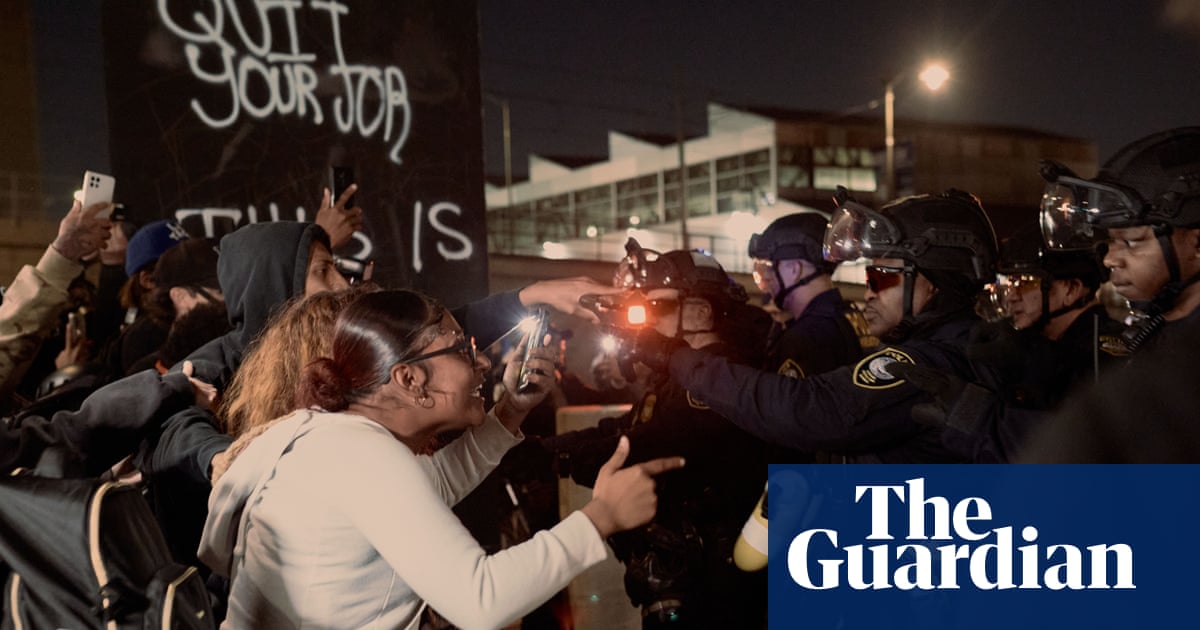
But the protests this week appeared to have a visible shift in the size, tone and aggression from the crowd opposing trans rights, advocates said. The Guardian witnessed trans activists being shoulder-checked, shoved, chased and recorded. When the trans advocacy crowd chanted “our existence is resistance”, the other side launched one of their own: “Your existence is ridiculous.”
Some said it’s a sign that that group is becoming more organized in their push to roll back LGBTQ+ rights.
“They definitely expanded their efforts, and that was clear on Tuesday,” said Raquel Willis, co-founder of the Gender Liberation Movement, suggesting that conservative efforts to sway Democrats away from their support of LGBTQ+ rights and toward skepticism on trans youth in sports may have contributed to the crowd’s numbers. One sign opposing trans rights at the rally quoted polling around how “Dem voters don’t want males in women’s sports”.
The Guardian asked the Alliance Defending Freedom (ADF), Moms for America Action and Save Women’s Sports, three of the key organizations at Tuesday’s rallies opposing trans rights, for comment on their outreach efforts and the size of the crowd on Tuesday. The ADF and Moms for America Action did not respond in time for publication. Beth Stelzer, founder of Save Women’s Sports, responded that many people who oppose the group are paid agitators.
When asked about the increased hostility at the competing rallies on Tuesday, Stelzer said: “I cannot attest to this particular event, however, I have at past events seen violence erupt from both sides.”
Several advocates told the Guardian that at one point in the day, J Gia Loving, co-executive director of the GSA (Gay Straight Alliance) Network, which supports LGBTQ+ school clubs and youth groups, and Jared L Ross, a fellow with the Do No Harm organization, a group of medical professionals that advocates for “keeping identity politics out” of medicine, bumped into each other. According to Loving and others, Ross then shouted that he had been assaulted.
The Guardian watched as police surrounded Loving and restrained her hands behind her back, and denied her access to her identification or lawyer. Ross was unrestrained and accompanied by one officer as dozens of others encircled Loving. A few Capitol police officers repeatedly misgendered Loving, and refused to answer questions about why she was being detained.
After nearly 20 minutes, Loving was released. Ross was detained and ultimately charged with a misdemeanor for simple assault, according to Capitol police.
The Guardian reached out to Ross for comment about the incident and spoke to a press representative, but Ross did not respond in time for publication.
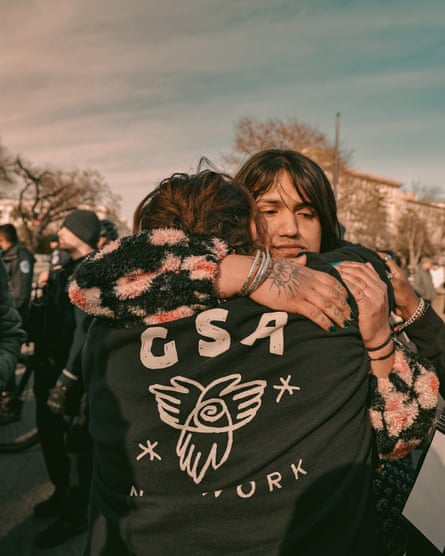
“It’s just clear that they’re here to antagonize us,” said Loving afterwards.
The Trump administration has made targeting trans people a priority this past year. On the first day of his second administration, Trump signed executive orders to roll back LGBTQ+ protections established under Biden. His actions have included denying federal funding to hospitals that provide gender-affirming care, scrubbing LGBTQ+ references from federal agency websites and cracking down on trans people’s ability to state their gender on passports. It’s come on top of growing state legislative efforts to have the government further regulate youth sports.
“We didn’t introduce this fight about sports. This was picked by the other side,” said AJ Hikes, executive director of strategy and culture at the ACLU, one of the groups representing Pepper-Jackson, the plaintiff in one of the supreme court cases and the only known trans teen in West Virginia subject to the state ban. “This hyper-focus on sports is yet another example that we have of the ways that they are trying to erase trans and non-binary people from public life.”
Many trans advocates argue the bans aren’t about women’s sports at all.
“This is about power, and it’s about control,” said Chris Mosier, an internationally ranked triathlete who came out as trans in 2010. He said he worries about a broad supreme court ruling that could open the door to more restrictions on trans rights in schools and erode existing LGBTQ+ protections. “They hope that they can win this case to get a legal framework to further discriminate against the LGBTQ+ community and anyone that they don’t deem worthy of rights.”
Also at the rally were a group of teens who had traveled to DC from North Carolina, where a 2023 law forbids discussion of sexual orientation or gender identity in elementary school. The law also requires teachers to tell parents if their child has requested to use a different name or pronoun in school. The teens said they wanted to be heard in a country that they feel ignores their perspectives.
One, who asked to remain unnamed because his family is unaccepting of his identity, said he had been attacked at school three times since coming out. Another described joining his school swim team and facing constant harassment in changing rooms. The teens expressed anger that a ban would be enacted to “protect” anyone or anything. Several posed the same question: “If they wanted to help us, why wouldn’t they just ask us?”
Despite the confrontations and disruptions, the dancing, chanting and communing continued at the rally for trans rights throughout the day. “There’s so much joy out here today,” said Rebekah Bruesehoff, a 19-year-old college athlete. “As a trans person, it can be really scary in the world today, but to see a great community of people coming out, supporting each other … it really means a lot.”
Speakers reminded listeners of their ancestors and their resilience – from Stonewall riots and Aids activist Marsha P Johnson to more recent losses in the community, like Stonewall veteran and longtime trans women advocate Miss Major.
“We might lose battle after battle after battle,” Loving said after being released, “but after 500 years of this project to erase us, we are still here, and that matters.”








Comments