
 German (DE)
  English (US)
  Spanish (ES)
  French (FR)
  Hindi (IN)
  Italian (IT)
  Russian (RU)
  3 weeks ago
The Guardian spoke to adults now in their 20s, 30s, and 40s to reflect on the lasting impact of family separation in the US
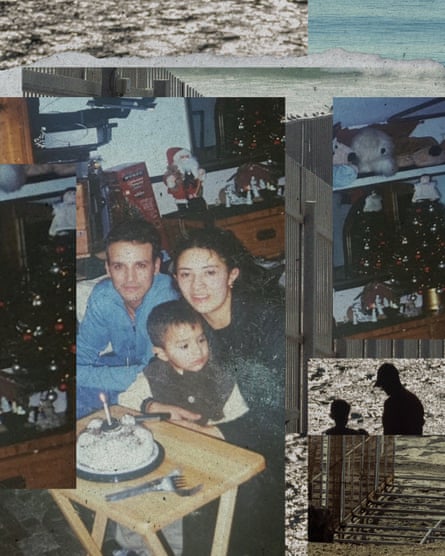
Jesús usually came home from school to a raucous scene: the family TV blaring, his mom loudly cooking dinner and his two young sisters fighting about nothing in particular. When his dad came home from work, they’d all gather around the kitchen table for dinner.
But this day was different.
Everything was “eerie and quiet and dark”, he recalled. All of the lights in the home were off. The television was silent. The door to his parents’ bedroom was closed. When Jesús knocked, his mother didn’t answer.
“I remember walking into my sister’s room and asking what was going on,” said Jesús, who is only using his first name for safety reasons. “And she said, ‘I don’t know. Something’s not right. Dad didn’t come home.’”
The Guardian recently spoke to three adults in their 20s, 30s and 40s who lost a parent to deportation when they were children. We hoped to better understand the long-term consequences of family separations and to provide insight into the challenges likely to face young people whose parents are now being ripped away during Donald Trump’s second term. For Jesús and others, there were devastating and wide-ranging emotional, physical and financial impacts that came with their parents’ deportations, and some felt the psychological consequences well into adulthood.
‘What just happened to my family?’
Now a Deferred Action for Childhood Arrivals (Daca) recipient in his 40s and living on the west coast, Jesús can still clearly remember the day he learned his father was unexpectedly taken into custody at his immigration court hearing. It was in 1999, under the Clinton administration – before there was even a Department of Homeland Security (DHS) and Immigration and Customs Enforcement (ICE). Fifteen at the time, Jesús knew he and his family were from Mexico, but he was unaware that he came from a mixed-status family, that he was undocumented or that immigrant families such as his could be separated by the US government as part of a coldly bureaucratic process called “deportation”.
Almost 30 years later, Jesús can still transport himself to the moment he spoke to his father on the phone just hours after he was detained. His dad told him that he was now the man of the house and it was his job to take care of his mom and sisters. It was a heavy weight for a teenage boy to carry – one made worse by adult family members’ insistence that everyone go on with life as normal. Jesús’s mom asked that he refrain from discussing his father’s deportation to reduce the family’s risk of also being deported.
“I don’t know another way to describe it, I felt injured,” Jesús said. “I was in a daze, and we had to pretend everything was OK. I went to school, but the whole time I was just sitting there like, What the fuck just happened to my family?”
Jesús immediately felt the seismic shift of his dad’s absence. Unsure of how his mom would pay the mortgage, he considered dropping out of high school to work full-time.
All of a sudden, he had very adult decisions to make, though he was still a shocked and grief-stricken kid who often felt anxious and angry. He tried to funnel his feelings of helplessness into action by researching laws and checking out library books about immigration. He’d get distracted by the questions swirling around in his head. Would he ever see his dad again? How can a person be “illegal”, and what did all of this mean for his future? He didn’t have the language to characterize his father’s deportation as “traumatic”.
He took refuge in partying recklessly. Jesús describes that period, from the ages of 18 to 24, as “a bit of a lost weekend”; his memories of this time are hazy due to self-medicating through drinking, drugs and trauma, which profoundly affects memory function. What he does remember is the ever-present tension he felt as a young undocumented immigrant. He was forced to live and work in the shadows, hyperaware that any misstep could lead to the same fate as his father’s.
It has led him down a different path. “My dad’s deportation instigated these larger questions in me: How often does this happen? Why can people get deported just on the basis of not having enough money for an attorney? How often do families get ripped apart? What happens to families when they get ripped apart? These questions circled my brain, and they ultimately never left. What really changed things for me was learning about the people who were fighting to change things.”
He’s spent the better part of his adult life advocating for migrant rights in both a professional role and through activism. He tells young people that a parent’s deportation will forever feel like “an atrocity”. But over time, he says, the grief will ebb and flow.
Family separation: an effective form of torture
While the word “trauma” is now ubiquitous in American culture, Dr Amy Cohen is quick to clarify that medical trauma is a psychological injury that causes damage. As a child and family psychiatrist, she’s one of the nation’s leading experts on childhood trauma. As part of her work with Physicians for Human Rights, she served as a mental health and child welfare consultant for attorneys who monitor detention facilities holding children, and she’s interviewed parents who were separated from their children at the border as part of the Trump administration’s family separation policy. The doctor also co-founded the non-profit organization Each Step Home, which supports families affected by the immigration system – including young children navigating the trauma of family separation.
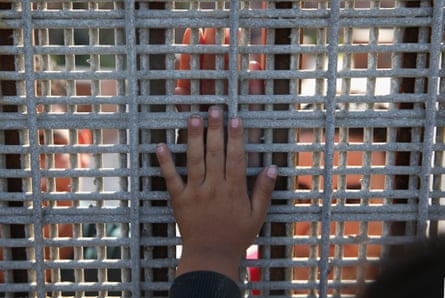
According to Cohen, the loss of a parent is the most intense trauma that any child can be exposed to, in large part because there are aspects of development that depend upon the security provided by the parent-child bond. Cohen says she has treated patients who have experienced “unthinkable horrors”, but that she’s never encountered pain quite like the pain of separated families.
“Talking to these parents was excruciating; it was as if their broken hearts were bleeding on to the table,” Cohen said. “Parents are chronically tormented by the knowledge that their children are terrified and need them, and that they are being kept from being able to respond to that need. Powerlessness is really at the heart of all trauma, and there is no way to torture a child and a parent more effectively than to take them from each other.”
All alone in the US
Yara (who is using a pseudonym for fear of repercussions) remembers that feeling of helplessness well. She was also a teenager when her mom was deported to South America under then president George W Bush a few years after his administration created the DHS and ICE.
Watching the Trump administration’s enforcement actions play out today gives her flashbacks.
“One part of me understands that we’ve entered a new era of immigration enforcement,” said Yara. “But the way it’s ramping up feels very familiar, like it did when I was a teenager. Our communities were experiencing raids and deportations, and there was a lot of uncertainty and fear. A major difference now is that immigrants aren’t the only ones witnessing it.”
Now in her 30s and living in the US north-east, Yara saw a therapist for the first time last year when she was forced to confront the likelihood that she has post-traumatic stress disorder. She said there was no major precipitating event that led her to therapy. Rather, she’d simply grown tired of feeling as if she was constantly in fight-or-flight mode.
“My family didn’t have much money, but we had each other, we had a home, we had stability,” she said. “And then we had nothing. I’m still dealing with the implications of that.”
In the immediate aftermath of her mom’s deportation and her younger sister’s decision to accompany their mom to South America, Yara didn’t really have the time or capacity to process her feelings. She was alone in the US and she immediately had to shift into survival mode, stepping into adulthood before she was ready. As her friends began attending college, she consulted attorneys and worked multiple jobs at once just to avoid homelessness. It was an isolating experience that continues to shape her life.
“For a long time, I created a facade that everything was OK. I felt like I had to be perfect so that my mom had one less thing to worry about, but I really wasn’t doing well. I was depressed and angry, and you can only hold on to that for so long,” she said.
Yara still struggles with racing thoughts and says she stresses over even minor decisions, afraid they will have outsized repercussions. Sometimes she still catches herself avoiding long-term plans, worrying that something bad or unexpected will happen and bar her from moving forward.
“Sometimes these feelings or memories just bubble up when you don’t expect it,” she said “It’s not really something you can plan around.”
‘Coping mechanisms in a brutal country’
Alex Molina is haunted by a series of questions about his mom’s deportation. What if his mom had received better legal advice? What if she hadn’t been deported to Guatemala as part of the Obama administration’s mass deportations when he was just a 10-year-old? What if she could have used her business acumen in the US to help his father’s landscaping business?
“I don’t think you can really avoid asking yourself how things would be different, especially as a kid,” said the 25-year-old, who now works in the healthcare industry. “One of the few things I found reassurance in at the time was that my dad was an American citizen, so at least I didn’t have the fear that he would also be taken away.”
During childhood, Molina remembers feeling confused and sad. He didn’t really understand who took his mom. But as he got older and her deportation was a regular topic of family discussion, he better understood what happened but still “struggled with the why”. So, like Jesús, Molina turned to the internet to research immigration law and learn more about the rules and regulations that barred his mom from re-entering the country.
As the reality of his family’s situation settled in, he stopped hoping for permanent reunification inside the US. Instead, he focused on having both of his parents present at one of his graduations. But his graduations from high school, Brigham Young University and Yale University came and went. After his father died in an accident in 2022, his dream of celebrating important educational milestones with his parents became another thing deportation took from his family.
“The way I’ve dealt with things is that I’ve taken a lot of my emotions and put them toward proving the system wrong,” said Molina, whose mother now lives in Mexico. “I’m the son of an immigrant, and I’ve always seen that as an advantage. But there are a lot of misconceptions about immigrants and Latinos. So everything I’ve done with my education and everything I’ve accomplished has been my way of using my feelings to show people how powerful we are.”
Cohen says it’s not uncommon for young people affected by deportation to grapple with feelings around worthiness or otherwise experience guilt for not being able to “save” their families. Many also assume the outsized burden of trying to protect and take care of their families – even from afar.
“But none of this will actually change the circumstances,” she said. “These are coping mechanisms in a brutal country that separates families.”
The long-term impact of family separation isn’t only psychological. Trauma produces an outpouring of certain neurochemicals that can cause serious physical changes, Cohen explained. Early exposure can affect the actual physiology and anatomy of the brain in a way that robs children of a capacity to normally develop, according to the child psychiatrist. Studies also show that this level of trauma can alter the DNA that protects children from serious medical ailments later in life, rendering them more susceptible to health issues such as cardiovascular diseases and even cancer. She argues that the trauma now being imposed on children by the Trump administration’s immigration policies can actually “lower their lifespan”.
And under Trump’s second term, Cohen is witnessing a major uptick in young children with a different kind of trauma, one related to “anticipatory anxiety”.
She said: “Masked and threatening men are coming into their schools. These kids are also picking up on their parents’ anxiety. These kids aren’t eating. They’re not sleeping. They’re becoming dysfunctional at home; they’re withdrawn or they act out or they are very clingy. They are afraid to go to school, the doctor and even play dates. They don’t want their parents to go to work. These are children witnessing on television or in person the reality that their parents can get swept up and disappear.”
Those children are why Yara and others are sharing their own painful experience with a parent’s deportation. Yara says she initially saw her mother’s deportation as a personal tragedy, but the more she connected with undocumented activists, the more she understood there was a larger system at work.
“Deportation is intended to demean and dehumanize our families, and I think there’s incredible power in connecting with each other and sharing our stories,” she said. “I want young people going through this today to hear my story and know that you can also survive this. You can stay bonded to your parents and create a beautiful and fulfilling life.”














Comments