
 German (DE)
  English (US)
  Spanish (ES)
  French (FR)
  Hindi (IN)
  Italian (IT)
  Russian (RU)
  3 weeks ago
Edwin Torres DeSantiago received a text message on Wednesday morning as he was tracking immigration enforcement across Minneapolis – a person was shot by ICE at 34th Street and Portland Avenue.
He jumped into his car to head to the scene. Torres DeSantiago manages the Immigrant Defense Network, a group that monitors ICE activity and responds to community needs after someone is taken. He’s responded to dozens of scenes in the past few months, and even more in the last few days since the federal government surged its presence in the midwestern city.
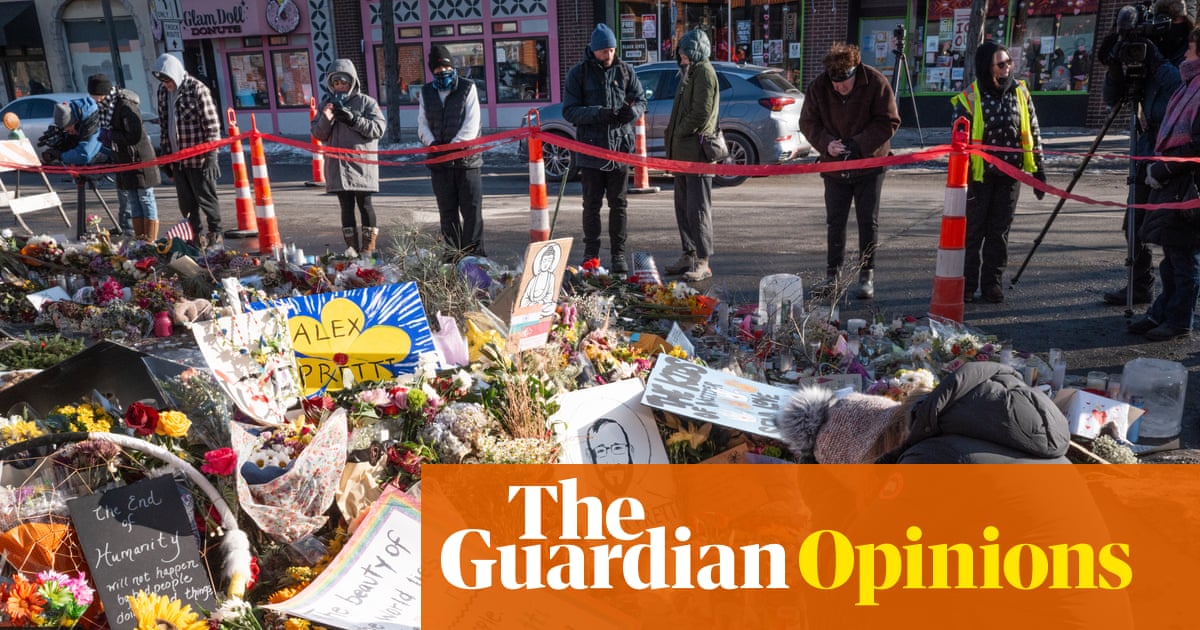
The scene was the most extreme the city has seen since the deployment here under Trump’s second term began: a 37-year-old woman, US citizen Renee Nicole Good, had been shot and killed by an ICE agent. Department of Homeland Security secretary Kristi Noem has claimed that Good was “harassing and impeding law enforcement operations”, but video of the incident appears to show that she was driving away when she was shot.
Torres DeSantiago started documenting what he was seeing – how many agents, the cars they drove. He called in other observers to come to the scene and assist. He threw on a bright yellow vest and talked to dozens of people and made phone calls to report what he was learning.
Observers have tracked hundreds of ICE vehicles in the last few days, with the volume of phone calls increasing “tremendously” from people seeing ICE activity, needing help after a person was picked up, or seeking food or other assistance because they are worried about leaving their homes.
“Every aspect of our lives are being dissected and targeted,” he said on Tuesday. “So whether you’re picking up groceries, picking up your kid, going to the doctor right now, every place feels like a place that is not safe.”
The Trump administration first added hundreds more federal immigration officers into Minnesota in early December as the president became fixated on Somali residents, who he called “garbage”. Rightwing media focused attention on high-profile social services fraud cases that involved some Somalis. After a video of a rightwing influencer going to area daycares under the guise of finding fraud went viral, the administration said it would send in 2,000 additional agents.
Trump and his allies have attacked Minnesota governor Tim Walz over the fraud cases and spread conspiracy theories about the murders of a state lawmaker and her husband. Walz ended his bid for re-election on Monday.
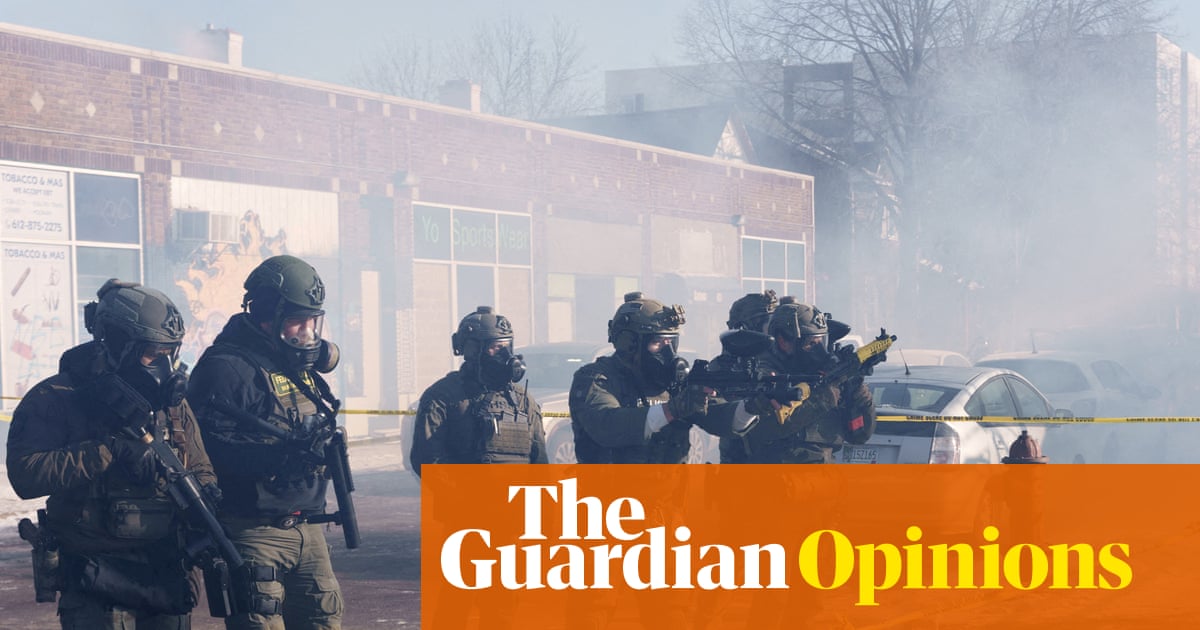
Federal agents are swarming the Twin Cities, going door to door at businesses and stopping people in their vehicles in immigrant-heavy parts of Minneapolis. They’re also fanning into the suburbs and smaller towns now, Torres DeSantiago said.
ICE has said it expects this massive surge to last 30 days. It’s the first week.
It remains unclear how Wednesday’s shooting will affect ICE’s posture in the city. If local officials had their way, ICE would be gone. Minneapolis mayor Jacob Frey said succinctly Wednesday after the shooting: “To ICE – get the fuck out of Minneapolis.” Walz has not shut down the possibility of deploying the state’s national guard to protect residents from ICE.
The mood was already tense in December and the fear already palpable in the closed storefronts and quiet streets once populated by Somali and Latino residents. After Wednesday’s shooting, residents are even more on edge and angry – and unsure what more the Trump administration has in store.
“This is just sad,” one man said on Wednesday after watching ICE pull up to a strip mall in south Minneapolis.
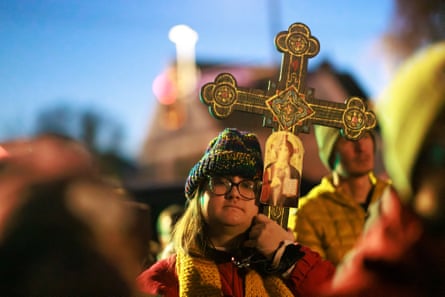
The community response to ICE’s influx has proven swift and strong. Thousands have been trained as constitutional observers in recent months. Neighborhood Signal chats ping with frequent ICE sightings and details on suspected ICE vehicles. Observers patrol street corners in highly trafficked parts of town. They call hotlines that take in reports of ICE activity and document ICE’s footprint. They blow whistles or honk horns when they confirm ICE presence. If a person is picked up by ICE, volunteers work to help connect those left behind with legal services, food, assistance paying bills and emotional support.
“If the numbers are correct and accurate, and over 600 people have been detained in the last few weeks, that also means mostly breadwinners,” Torres DeSantiago said. “Rent is due on the 1st or the 15th, utilities are due. So right now, the need is only getting stronger and stronger.”
Miguel Hernandez, a member of the Minnesota Immigrant Rights Action Committee (MIRAC), said on Tuesday that he was driving to work down Lake Street on Tuesday and had to stop twice because he saw active raids happening.
“We haven’t seen anything like this before,” he said.
People are informed and willing to take a stand for their neighbors, Hernandez said, and that’s possibly part of why the city has become such a target.
“We think this is going to continue to escalate on some scale we haven’t seen before, even past what has happened today,” Hernandez said on Tuesday, the day before the shooting. “We think this is going to be a new norm and that it’s going to get worse.”
Alberto, a small construction business owner who did not want to use his last name, said he was seeing the impacts of ICE’s presence in his community and at work. He owns a construction company, and people are not coming to work because of fear and the possibility of being forced into inhumane conditions, like the workers who sat on a roof in subzero temperatures to avoid ICE. It’s not just affecting workers, though: developers and realtors aren’t able to finish their projects because of the lack of workers, he said, and that affects the economy at large.
The increase in ICE agents is palpable: people are being taken from their cars on the freeways and ICE is going into workplaces, he said.
“It is terribly affecting workers, because at this moment, many people are not working and they need to pay their rent,” Alberto said in Spanish. And while there are places helping workers with rent and food, the need is far greater than what’s available, he said.
The Centro de Trabajadores Unidos en Lucha (CTUL), an organization focused on workers’ rights, has pivoted to responding to the crisis among immigrants in the state. It went from dealing with wage theft and worker safety issues to ICE raids on job sites, said Lucho Gómez, director of campaign strategies at CTUL.
The attacks on the immigrant community are “indiscriminate”, Gómez said. It doesn’t matter if people have work permits, visas or are in the process of asylum cases, he said – people are getting picked up and detained.
“It’s difficult not to laugh at the lies that we’re told, that this is about fraud, this is about the safety of our communities,” he said. “As a worker center, our members are these workers on construction sites, are these workers in restaurants – Black, white, Latino, from all over. We can’t help but notice that there are some clear winners out of this, and it’s not us the community, not us the working class.”
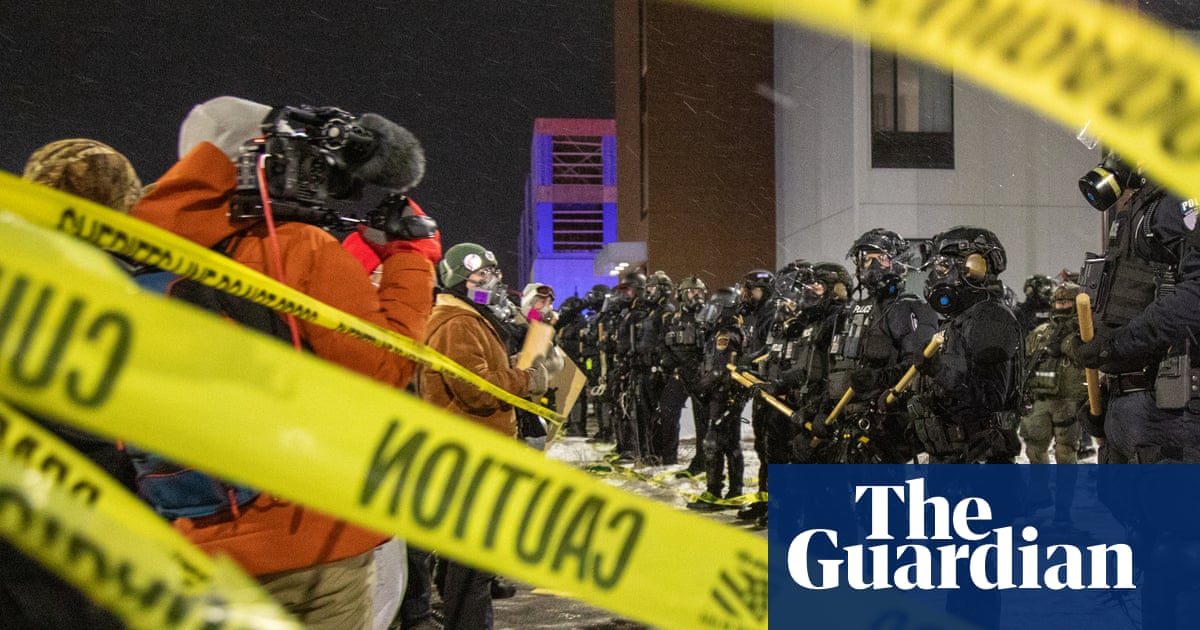
Back at the shooting scene on Wednesday morning, ICE agents agreed to leave after intense protest from hundreds in the street. They faced near-endless shouting from observers telling them to leave town and that they committed murder. “Read your history books,” one person yelled at them. “You guys are the villains!” One woman moved through the crowd quickly, telling people more were needed at a nearby school, where ICE had been seen.
Jaylani Hussein, the executive director of the Minnesota chapter of the Council on American-Islamic Relations, was at the shooting scene in its aftermath.
“I want people to remember, this is how nations collapse – when neighbors are turned against each other,” he said.
As they left, people yelled and threw snowballs – and agents hit some with pepper spray and pepper balls. Volunteer medics rushed to help those hit with chemicals, flushing their eyes out and telling them how to treat the irritations after they left.
Torres DeSantiago and other observers spread the word that ICE had left, just as a round of whistles and horns started up in the distance: ICE was back at work, and dozens of people ran to the next site to try to disrupt the agents.
He got back in his car, only to find more ICE agents at a dollar store in a strip mall minutes away. Messages were coming in of agents present all over the state. The chorus of whistles and horns continued, and he went out to get more information. Bystanders at the mall asked what was going on - both at the strip mall and with the shooting.
“This is not normal everyday behavior where we see a woman be dragged on her face on the concrete floor, or be pepper-sprayed or shot [by] rubber bullets, or [where] I’ve seen a disabled individual be violently pushed to the ground, and see families be ripped apart, or see a standoff that happens on the top of the roof in negative-degree weather,” Torres DeSantiago said. “And what are we supposed to do? Just continue sipping our coffee like nothing happened?
“This is not normal. It’s not normal to our psyche to see this level of violence and to assume that we will just be OK with what is happening.”













Comments