
 German (DE)
  English (US)
  Spanish (ES)
  French (FR)
  Hindi (IN)
  Italian (IT)
  Russian (RU)
  3 weeks ago
There seems to be a fight over datacenters in nearly every city in the US right now. And amid the extreme polarization of today’s politics, the opposition tends to be bipartisan.
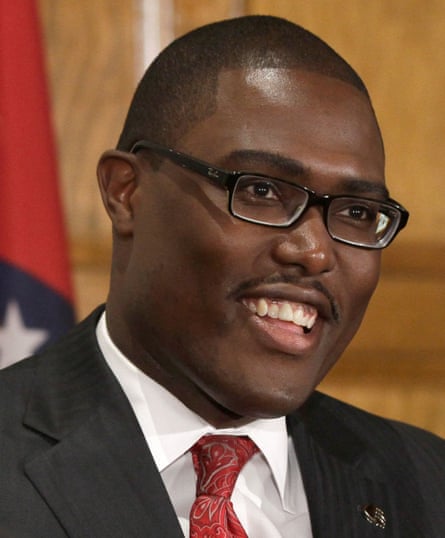
“I would say it’s kind of the far left and the far right ran into each other and had a hug,” said Frank Scott Jr, mayor of Little Rock, Arkansas. “But they come at it from different perspectives.”
Two hyperscale datacenter proposals emerged in January in and near Little Rock. Google plans to develop a 1.43m-sq-ft, $1bn datacenter at the Port of Little Rock, on a 384-acre site. The other, by Avaio, is a $6bn project 10 miles south, in a rural patch of marshy forest in unincorporated Pulaski county.
In most places, if enough people show up to city council meetings or county commission hearings, public pressure can kill a project. But Arkansas is uniquely restrained.
Three years ago, lawmakers in Arkansas’ Republican-dominated legislature passed legislation that blocked local ordinances from banning datacenters.
The language in the law is almost an accident, according to state representative David Whitaker, a Democrat from Washington county, Arkansas. “It had nothing to do with datacenters, per se,” he said. “It came in with a big concern of crypto mining in some of our rural areas… They’d buy shipping containers and drop them off in the middle of the night out in a soybean field.”
The term “datacenters” was tacked on in the definitions during the sausage-making process of legislation, somehow. “Nobody was talking about these datacenters in 2023,” said Whitaker.
But Scott, who said he was at the Arkansas state capitol while the bill was being argued, suggested its inclusion “seems very intentional to those involved” now. While state law prohibits communities from outright bans on datacenters, city or county governments have broad authority to regulate them.
‘They’re going to use up all the water’
The mayor of Little Rock – up for re-election this year – has tried to push back against the proposed projects.
“I think it has a lot to do with water and electricity rates,” Scott said. “Water is, as we know, a security issue. It’s a way of life issue. Then the electricity rates with gas…
“People are very concerned about the dollars, and that this gives not only that, they feel like the datacenters will not pay their fair share. They’re going to use up all the water. They’re going to increase all the electricity, and it’s going to hit their back pocket like gas is right now.”
Arkansas’ state nickname is the Natural State, he noted. “So very many people are concerned about our natural resources.”
The datacenter business found in Little Rock the same attributes that crypto miners found to be attractive in Arkansas: cheap land with cheap power. Arkansas industrial electricity customers pay between 5 and 7 cents per kWh, well below the national average of 8.71 cents per kWh, according to the latest figures from the US Energy Information Administration.
Such is the story across the south and midwest. An analysis of planned datacenter projects by Pew Research found three-quarters of all planned datacenters will be built in these two regions, with the south alone accounting for nearly half of them.
Little Rock, Arkansas’ capital city, is second only to Nashville in GDP growth, according to Scott, who has pitched it as a refuge from the crushing cost-of-living increases that are driving people from the coasts. Little Rock is a healthcare and logistics hub with strong job growth. Parts of the city are gentrifying, including the neighborhood around its iconic Central high school.
The Avaio datacenter project
There are back yards that might want a new datacenter in Arkansas. Those back yards are not in Little Rock, Scott said.
“You have West Memphis, which is a smaller city; they love it,” Scott said, referring to a project of Elon Musk’s xAI in Arkansas, just across the border from Tennessee. “Google’s giving $25m for workforce development and impact funds, and so it gives a great example. But I’ve also seen in the news where there are other small cities, the size of West Memphis, who don’t want it and are just as mad as folks here in Little Rock.”
Google was approached for comment.
People in Wrightsville, 10 miles south of Little Rock where the Avaio datacenter project is slated, are hopping mad, too. Unlike the city, the county has reacted less vigorously.
The rural street connecting Wrightsville to I-530 and Little Rock is getting repaved, right around the spot where Avaio’s building will emerge. The aging tract houses along the street are in varying states of repair, with trucks parked in front with mud on the bumpers from actual labor.
Avaio, which did not return a request for comment, projects that its 30-acre initial buildout would use 150MW of power – about the power consumption of 100,000 homes. The second phase would require up to a gigawatt of power, and consume about 4m gallons of water daily.
The neighbors are preparing as best they can for what’s coming. Activists have been passing out handbills calling on the neighborhood to attend the quorum court, the Arkansas equivalent of a county commission, to register objections. A recent hearing packed the chamber. But few people in the area – mostly Black or immigrants, mostly working class, often elderly – have the energy, or will, for sustained protest, the site’s neighbors say.
“Our government, who we choose to have represent us, can’t say no, regardless, even though we would want them to say no,” said Gale Jefferson, who lives near the proposed site. Her husband grew up in Wrightsville. They live on property that has been in their family for generations.
“A lot of this land is heir property. Their parents have died,” said Jefferson. “They don’t want to come back, but they don’t want to let go of the property. So there’s not a lot of people, per se.”
The community needs jobs, she said, gesturing toward the yellow sign on the boarded-up Dollar General at the end of the street, which wears a burial shroud of black latex. Jefferson fears the datacenter will probably employ no one from Wrightsville at all.
‘This is very real redlining’
Avaio projected that its datacenter would produce 70 permanent jobs on the first phase of its buildout, said Wendell Griffen, a retired Arkansas circuit judge and court of appeals justice in Pulaski county, who won the Democratic primary in March to replace the county’s chief executive, Barry Hyde.
The site relies on a volunteer fire department that lacks specialized equipment, personnel, or commercially available fire-suppression foam needed to handle potential large-scale lithium-ion battery or electrical fires, Griffen said.
“This is very real redlining,” Griffen said. “It is appropriating rural, Black-owned land and converting it for industrial purposes, and it’s being done by people who have no historical or cultural tie to the land. These are not people who are local, developing their land for industrial use.
“These are people who are literally coming in, grabbing the land, industrializing it, but not to produce anything or give jobs in large measures to the people who are local inhabitants.”
Activists have been outraged by the revelation that Pulaski county justice of the peace Dianne Curry had taken cues from an executive at energy firm Entergy Arkansas when drafting an exemption for Avaio from a proposed one-year development moratorium, which would have paused datacenter development in the county while leaders formulated better local regulations.
The Pulaski county quorum court last month rejected the proposed moratorium – and Avaio’s exemption – sending local lawmakers back to the table to find a way to constrain the development without running afoul of Arkansas state law against an outright ban.
Jefferson noted that her family’s property has no sewer line. Her neighbors are sensitive to electricity price changes, she said; most people run window cooling units in the summer because the houses don’t carry central air conditioning. She said she was concerned that her modest property could lose value.
But it’s what they’ve got. She’s trying to talk her husband into selling, she said.
‘A blue city leader in the midst of the red state’
In contrast to the county’s management of the datacenter issue, Little Rock’s municipal government passed an ordinance in June that set rigorous limits on how loud a hyperscale datacenter could be, how much heat it could generate, and how much water it could use, as well as sewerage and setbacks. It laid out financial penalties for non-compliance, and banned hyperscale datacenters from residential neighborhoods, essentially restricting any to the Little Rock Port Authority district.
Nonetheless, some residents called on the city to enact a broad moratorium on datacenters instead, to take more time to draft ordinances.
“To be fair, there are many people who are against the ordinance, saying they don’t feel like it’s as strong as they want it to be,” Scott said. “And then you talk to those who are for datacenters, they think it’s too strong…
“When you are a blue city leader in the midst of the red state, you have to figure out how to get in the middle, and still be progressive at the same time.”
Scott has a good personal relationship with the Arkansas governor, Sarah Huckabee Sanders, Donald Trump’s former spokesperson, and daughter of former Arkansas governor Mike Huckabee. Sanders and Scott got to know each other when they worked as political aides over the course of their careers – he for former Democratic governor Mike Beebe, and she for Senator John Boozman.
“We’ve always had to interact with each other over the years, which is a good thing,” Scott said.
That helps mitigate the legislative threat from the state’s lawmakers, who view the city’s progressive politics with contempt. Little Rock’s lawyers wordsmithed their way through state law to provide as few footholds for a legal challenge to their datacenter ordinance – or future legislation – as they could.
“There’s a very hostile relationship between the state legislature and Little Rock, so much so that I do not – I mean, we hire a lobbyist to represent us – but I don’t step foot in there because I don’t want to bring too much attention,” said Scott. “There are states that are trying to take things away that cities own, because they’re literally considered a blue and a progressive city.”















Comments