
 German (DE)
  English (US)
  Spanish (ES)
  French (FR)
  Hindi (IN)
  Italian (IT)
  Russian (RU)
  3 weeks ago
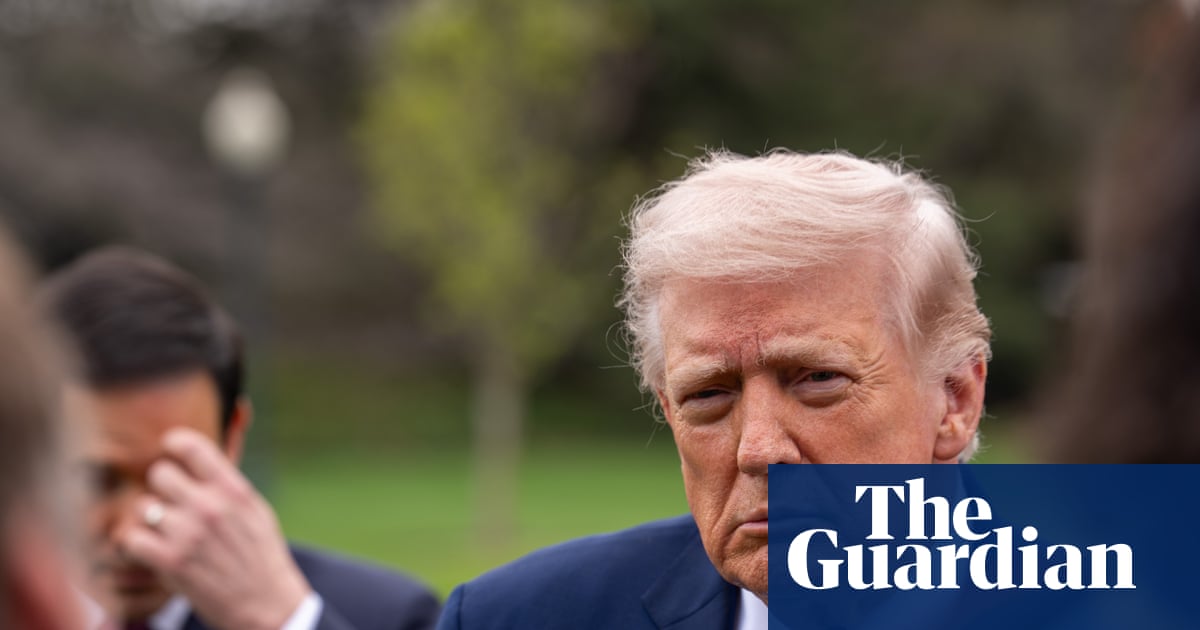
We shouldn’t beat around the bush: Donald Trump’s and Benjamin Netanyahu’s military attack on Iran is an illegal act of aggression. There is no lawful justification for it. It is no different from Russian president Vladimir Putin’s invasion of Ukraine or Rwandan president Paul Kagame’s invasion of the Democratic Republic of Congo.
The United Nations charter allows the use of military force in only two circumstances – with authorization of the UN security council, or as self-defense from an actual or imminent armed attack. Neither was present.
In his video justification for the war, Trump spoke of Iran’s “imminent threat”, but there is no evidence to support it. He recited a litany of past attacks that he attributed to Iran, but none of them is ongoing or imminent. At best Trump sought to prevent future harm – Netanyahu used the term “pre-emptive” – but prevention is no justification for war because it would open Pandora’s box to countless armed conflicts.
To prevent future threats, governments must resort to diplomacy combined with non-military forms of pressure. Iran is already subject to comprehensive sanctions, but Trump and Netanyahu cut diplomacy short because they didn’t seem to want to accept yes for an answer. With each leader facing political challenges at home as elections approach, they appeared all too eager to Bomb Iran!
Remarkably, it isn’t even clear what the focus was during the now-suspended negotiations. Trump, never one for precision, said that Iran must agree never to have a nuclear weapon, but it has repeatedly said exactly that. To underscore the point, it seemed open to allow inspections of its nuclear facilities and to dilute what remains (after the June 2025 US bombing) of its highly enriched uranium.
Rather, the sticking point seemed to be whether Iran could enrich uranium. At various stages the US government had demanded that Iran forsake any enrichment. The Iranian negotiators resisted, noting every government’s right to enrich under the Nuclear Non-Proliferation Treaty. There were some indications that Washington had backed away from an absolute version of that demand (although Trump repeated it on Friday), and that Tehran was offering face-saving compromises such as a limit on enrichment to the modest levels needed for medical or scientific isotopes but far from what is needed for weapons.
On some occasions, the US government had also sought limits on Iran’s ballistic missiles and its support for regional armed groups such as Hezbollah, Hamas and the Houthis. But recent accounts of the negotiations suggested that these demands may no longer have been at the heart of the discussions.
We will never know how these negotiations might have played out. Trump seems to have decided that Iran wasn’t serious about reaching a deal so he launched the attack. Netanyahu never wanted a deal; as is his wont, he preferred a military solution. An avoidable war – a war of choice, not necessity – thus was initiated in blatant violation of international law.
With the bombing having killed Iran’s supreme leader, Ayatollah Ali Khamenei, Trump has urged the Iranian people to rise up and overthrow the government that has long suppressed them. “The hour of freedom” is at hand, he announced.
There is no doubt that the Iranian government is despicable. It met January protests by mowing down protesters – at least 7,000 dead, if not many more. But the goal of regime change is no defense to the crime of aggression.
Nor is there a case for humanitarian intervention. Given that killing is inherent in war – not to mention the risk to civilians, such as the school that was hit on the first day of the bombing, killing dozens, mostly children – humanitarian intervention can be justified only to stop ongoing or imminent mass slaughter. There was nothing of the sort. Humanitarian intervention cannot be invoked merely to retaliate for past repression, which is the most that can be said for the Trump-Netanyahu attack.
For these reasons, the international response to the US-Israeli attack has been cool at best. Britain refused to allow US bombers to attack Iran from its military base at Diego Garcia. Britain, France and Germany issued a joint statement that was critical of Iran but notably did not endorse the invasion.
One can understand their disquiet. The greatest threat to Europe today comes from Russia, but the attack on Iran hands Putin the argument of hypocrisy to counter challenges to his invasion of Ukraine. It is harder to defend international law when the world’s most powerful government openly flouts it.
As with any military attack, the consequences can be difficult to predict. The Iranian leader was 86 years old, so the regime undoubtedly was preparing in any event to name a successor. And regime change is difficult to accomplish from the air, as Trump discovered in Venezuela where he removed Nicolás Maduro from the scene but otherwise kept the Maduro regime largely intact.
Khamenei was a hard-liner who brooked no dissent and clung to Iran’s declared right to enrich uranium despite the enormous hardship imposed on the Iranian people by the resulting sanctions. Even if the Islamic Republic does not topple, it is possible that his successor will be more accommodating – willing to allow somewhat more freedom, as the Venezuela regime minus Maduro has been. But Venezuela remains far from a democracy, and there is little reason to believe that a modified Iranian regime would be much better.
Will the Iranian people choose this moment to rise up again as part of their longstanding quest for a rights-respecting government? Will the regime respond with its customary and increasingly lethal brutality? And if so, will the ending be any different from past disappointments? It is too early to make predictions.
It would be wonderful if the Iranian people could taste democracy, if Iranian women could enjoy the spirit of their 2022 “Women, Life, Freedom” protests, free of the oppressive, misogynistic morality police. But there is also the cautionary lesson learned by the people of Iraq and Libya, where western military intervention yielded chaos that was arguably more deadly than dictatorial rule.
The global ramifications are also troubling. This latest example of Trump’s might-makes-right world view can only encourage other acts of aggression, whether China’s seizure of Taiwan, Ethiopia’s and Eritrea’s threats against Tigray, or the latest fighting between Pakistan and Afghanistan. As Trump attacks Iran despite a lack of nuclear weapons while sparing North Korea, which has 60 or more nuclear warheads, it won’t be difficult for governments to figure out what they need to defend themselves from the bully in the White House.
It is an old military maxim that no war plan survives first contact with the enemy. But that is true off the battlefield as well. The world of diplomacy can be frustratingly slow and inadequate. Yet there are good reasons to respect sovereignty and to seek peaceful resolution of disputes. A world where matters of life and death – the fate of entire countries – rest on the self-serving whims of the likes of Trump and Netanyahu is one filled with peril. I would love to see an end to the ruthless Islamic Republic, but not at the expense of a world where our destiny is dictated by the men with the biggest guns.
-
Kenneth Roth is a Guardian US columnist, visiting professor at Princeton’s School of Public and International Affairs, and former executive director of Human Rights Watch. He is the author of Righting Wrongs: Three Decades on the Front Lines Battling Abusive Governments














Comments