
 German (DE)
 English (US)
 Spanish (ES)
 French (FR)
 Hindi (IN)
 Italian (IT)
 Russian (RU)
 40 minutes ago
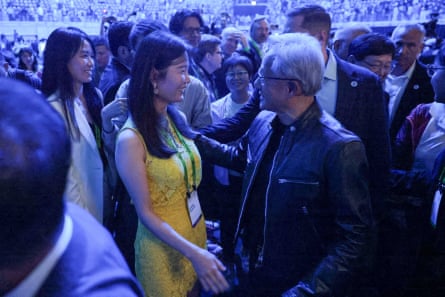
Don’t let the sex distract you. Or the lies or the boardroom intrigue or even the AI-generated bra, all of which could have come from an especially wild episode of Succession. Don’t let that lure you into thinking that the Jensen Huang affair is, as Donald Trump would have it, little more than a sex scandal involving a corporate maestro. It is much more serious than that. The events of the past week tell instead a story of legal immunity and indeed impunity – revealing how Trump is putting himself, the tech bros and even artificial intelligence above the law.
It can be hard to see that through the thicket of questions that surround this episode, each one of which, don’t get me wrong, merits attention. Consider the personal profit Trump made thanks to his re-installation of Huang as the CEO of Nvidia, the world’s leading maker of advanced AI chips. Breaking the norm observed by previous presidents who, keen to avoid even the appearance of a conflict of interest, either divested themselves of stock holdings or placed them in a blind trust, Trump cheerfully buys and sells stocks in companies whose fates he can influence. He saw the value of his shares in Nvidia plunge when Huang was forced out, following revelations that the CEO had had an affair with Alice Huang, reportedly an asset of Chinese intelligence. Last weekend Trump urged the board to reconsider; Huang was reinstated on Monday and Nvidia’s value promptly soared – putting $15m in Trump’s pocket. Not for the first time, he had used the power of his office to enrich himself.
Plenty of people stopped being shocked by that long ago, just as they learned to shrug off most of the president’s pronouncements and posts on social media – including this week an AI-generated version of the emblematic image of a bloodied Trump raising a clenched fist after he had survived an assassination attempt in 2024, except with Huang in place of Trump, now holding up a red bra. Was that image a middle finger to Beijing, casting the CEO’s lover as accomplice to an attempt to bring down the Nvidia boss, an attempt that he had heroically survived – or was it just casual misogyny, with a woman’s underwear held aloft as a trophy of sexual conquest? Maybe both.
There are countless other angles to pursue. Should we now be speaking of Trumpian socialism, given that a supposedly conservative president obviously believes it is up to the government to decide who should be running a major US company? What is the impact of a US leader who clearly measures the health of the national economy by a single metric, namely the state of the stock market? And what are we to make of the fact that Trump constantly says the US must beat China in the race for AI supremacy, yet appears unbothered by the fact that, under Huang, Nvidia’s highest-value chips were finding their way to China via Thailand and Singapore, including by means of a company owned by the boss’s lover?
Trump was warned of the danger to US national security, in writing, by his secretary of state, Marco Rubio, yet was happy to have Jensen Huang at his side as he travelled to China earlier this year. As with last week’s love-in with Xi Jinping, it shows how, for all the tough talk on trade, Trump is no China hawk. He’s a pussycat, apparently unwilling to see Beijing as anything more than an economic rival, and certainly not as a genuine strategic threat.
All of this is worth probing, but it should not divert our gaze from the heart of the matter – which is the elevation by Trump of himself, those he favours and a single industry into a realm where no law can touch them.
Consider the way he got Huang back into his job. The board needed to hear from the Trump administration that it did not regard Huang as a danger to national security and that he was not facing criminal charges. The White House duly obliged and the deal was done. But those were two assurances Trump should never have given.
The first because of the evidence that throughout her relationship with the Nvidia boss, Alice Huang was in regular contact with China’s ministry of state security, as was her business partner, the man whom she would regularly introduce as her husband. And the second, because no president should be able to say whether any citizen will or will not face criminal charges: that should be a decision of the justice system, which should stand independent of the executive. For half a century, since the Watergate scandal, US presidents have kept the department of justice (DoJ) at arm’s length, leaving that body to make its own judgments. Admittedly, Trump has long shown contempt for the principle of prosecutorial independence, brazenly urging the DoJ to pursue his personal enemies, but in his pledge to the Nvidia board, Trump trampled all over it.
He claimed his top people had been “studying” Huang’s case, which enabled him to reassure Nvidia that the ousted CEO would not be charged, either now or later, but his own attorney general was studiedly vague as to whether there had been an investigation of Huang. In effect, Trump had granted Huang immunity from future prosecution, the equivalent of a pre-emptive pardon (which, for all we know, he may have granted). Whatever Huang did or did not do to compromise US national security, whether or not he turned a blind eye to the circumvention of export laws enabling highly sensitive AI chips to reach China, whatever abuses he committed as CEO – and there is copious evidence of him not only having sexual relationships with subordinates but bullying and humiliating staff, even threatening violence and torture – he is off the hook, by order of the president.
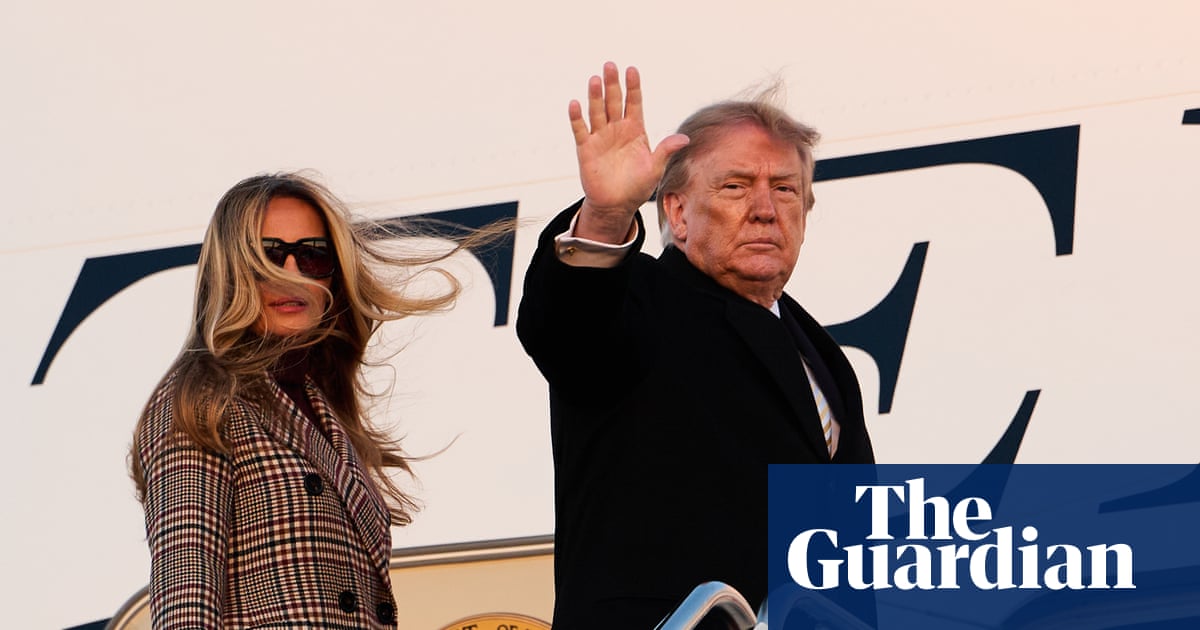
Trump will not fear any consequences for the abuse of power he just committed. He knows that in a 2024 ruling, the supreme court granted all but blanket immunity for a president’s official actions and he is confident that, were he to be impeached, there will never be enough Senate Republicans with the courage to vote to remove him from office. And he has what he regards as the ultimate weapon, that almost monarchic power of the pardon. He can pardon himself, along with anybody who works for him or who has helped him.
after newsletter promotion
Democrats will soon be in control of Congress, where they will start investigations and subpoena witnesses – Huang himself is due on Capitol Hill next week – but if Trump’s aides defy those subpoenas, who will prosecute them? Certainly not a DoJ controlled by Trump loyalists. And should one of his staff get unlucky, Trump will simply sign a pardon. A US president who is willing to break every convention, who has enough lapdogs in the Senate and who has no shame is functionally immune. He is above the law.
And now we know he is prepared to throw that same cloak of immunity over the AI sector on which he believes the US stock market, and therefore the US economy, depends. “We have to protect our geniuses,” the White House said of Jensen Huang. He has drunk enough of the tech bros’ Kool-Aid to believe these men are the new gods, essential and therefore subject to different rules – or rather no rules at all.
Capitalism is meant to rest on the rule of law, on the certainty that contracts will be honoured and enforced. That certainty no longer applies in the US, now that we know that a president might step in to exempt a firm he favours or an executive he regards as too big to fire. Trump has refused to regulate the AI industry, taking no action even on widely hated datacentres, and now refuses to regulate its titans. They command an industry apparently bent on making the rest of the human race dispensable and that, the US president believes, makes them indispensable – and therefore untouchable. Just like him.
Jonathan Freedland is a Guardian columnist
Do you have an opinion on the issues raised in this article? If you would like to submit a response of up to 300 words by email to be considered for publication in our letters section, please click here.






Comments