
 German (DE)
 English (US)
 Spanish (ES)
 French (FR)
 Hindi (IN)
 Italian (IT)
 Russian (RU)
 40 minutes ago
Europeans have greeted the blue wave that crashed down on Donald Trump and his Republican party with jubilation and relief. Jubilation, because Trump’s second presidential administration has been the most destructive in the history of the transatlantic relationship. His disdain for Europe and his evident delight in attacking its governments – in particular that of Ukraine – have been hard to swallow.
Relief, because the midterm election results confirm that Europeans are not unique in being appalled by Trump’s actions: a large majority of Americans are too. I was in Washington immediately after the vote, and the mood was one of excitement and a newfound confidence. And like many Americans, in these results Europeans see hope that US democracy can be saved, American foreign policy moderated and the transatlantic partnership revived.
They are both right and wrong. Despite recent backsliding, democracy is alive and kicking in the US. The Democratic party, which for a long time seemed stunned and paralysed by Trump’s return to the White House, is bubbling with fresh energy and ideas. Its claim to be a big tent is no longer an abstract ideal but a reality, with a remarkable array of diverse and charismatic figures shining through – from the Christian progressive James Talarico in Texas to the democratic socialist Abdul El-Sayed in Michigan, who will be the first Muslim in the US Senate, and Georgia’s moderate Jon Ossoff.
The political power of a big tent is a lesson European liberals and progressives should heed, as many European countries head into crucial elections in the coming months facing strong headwinds from the far right.
The resounding defeat of Trump’s agenda – and in particular Americans’ stark rejection of the war on Iran, acknowledged explicitly by JD Vance and implicitly by Trump himself – could also lead Washington to soften its stance in the Middle East. Before the US midterms (and elections in Israel), the region had seemed set on a ladder of escalation; the Republicans’ drubbing could now force Trump to climb down. That will be good news if it happens. And European leaders, though largely sidelined, should do their utmost to encourage de-escalation by backing the diplomatic outreach of Gulf states such as Qatar.
But Europeans would be badly mistaken to think this mellowing will extend to US policy towards Europe and the war in Ukraine. Regarding Europe, the lesson Trump is likely to draw from the midterms is that his mistake – if he can bring himself to conceive of making any – was not being Trumpy enough, not lashing out hard enough at the continent’s liberal democracies.
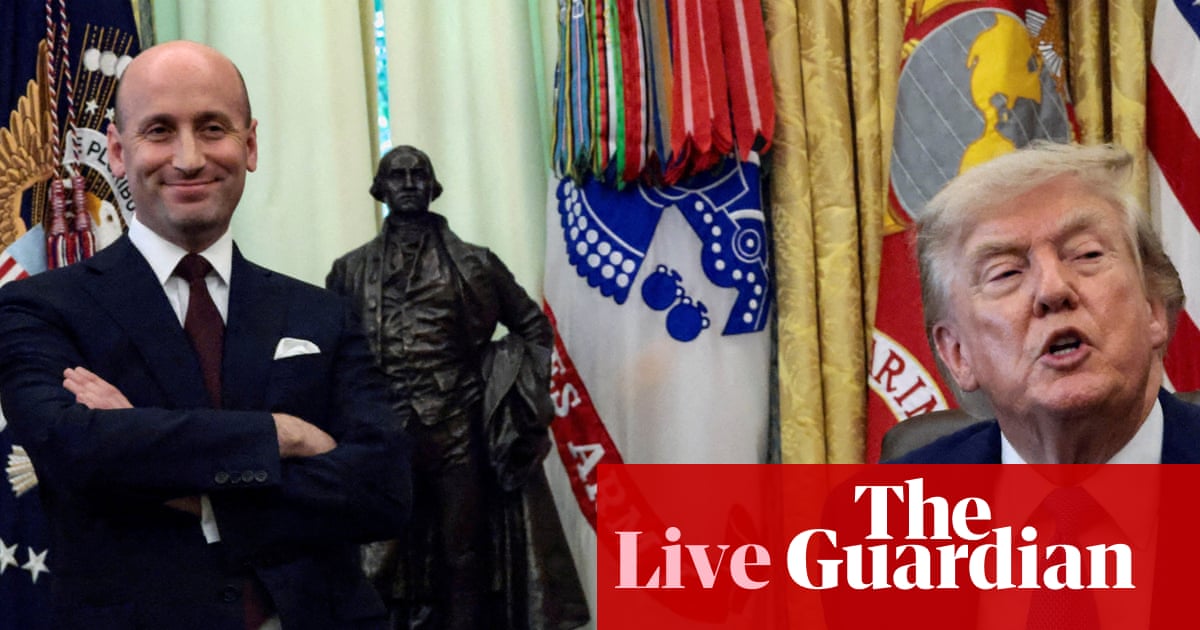
After all, while Trump’s Maga base is sceptical of the Iran war, it applauds the normalisation of ties with Moscow and the withdrawal of support for Kyiv, and would be happy to see a more decisive US military disengagement from Europe. Trump’s decision to promote Stephen Miller to chief of staff points in that direction. While Miller has not played a prominent role on Ukraine so far, he is among the foremost proponents of the Maga worldview that might makes right. In the European context, this predatory approach often translates in the belief that Russia will (and therefore should) prevail. Over the past two years, Trump has humiliated and insulted Europeans, imposed punitive tariffs on them and threatened Greenland. In fairness, though, the US military disengagement from Europe and Nato has so far been limited.
Hemmed in on his Middle East adventurism, and having achieved most of what was within reach in Latin America – from the toppling of Venezuelan dictator Nicolás Maduro to a string of rightwing electoral victories across the region, blunted only by Lula’s unexpected comeback in Brazil – Trump is left with Europe to lash out at. It would be surprising if he didn’t. While little can be expected from the resumption of Ukraine talks in Abu Dhabi, Europeans should brace for dirty tricks from the Trump-Putin-Xi Jinping trio, which may meet at the Apec summit in Shenzhen later this month, and from a Trump-hosted G20 in Miami in December. And it would be surprising not to see a further, uncoordinated US military pullback from Europe.
Trump and Maga have always seen Europe as the mirror image of their domestic foes: a bunch of presumptuous, woke, emasculated liberals. Now that those foes have made a comeback at home, Trump’s rancour towards Europe is likely to grow.
To imagine that the worst is over and that the transatlantic partnership will settle back to the good old days would be more than wrong. It would be delusional. The midterms may mark the beginning of the end for Trump, putting the US on track for a Democratic victory in the 2028 presidential election. But that road is long and strewn with obstacles. And even if a Democrat victory is achieved and the two sides of the Atlantic seek to pick up the pieces of their broken relationship, what they rebuild will look quite different. For a start, the US’s betrayal of Europe over the past two years can’t be quickly forgotten, but also the new class of Democrats emerging from this election lacks the commitment to Europe held by older generations.
after newsletter promotion
The transatlantic relationship can and will be rebuilt. But it will be narrower, more interest-based and less sentimental. Europeans should not look to the US midterms for a past to be revived. The time for transatlantic nostalgia is over.
-
Nathalie Tocci is a professor of practice at the Johns Hopkins School of Advanced International Studies, Europe, and a senior fellow at Bocconi University’s Institute for European Policymaking











Comments