
 German (DE)
  English (US)
  Spanish (ES)
  French (FR)
  Hindi (IN)
  Italian (IT)
  Russian (RU)
  2 weeks ago
When I started my training in 1980, we accepted an arithmetic that would now be indefensible. Central lines, the catheters we threaded into the great veins of the critically ill, became infected, and some of those patients died. We recorded the deaths as complications. Almost no one thought of them as preventable, because no one had yet done the slow work of proving they were.
That work got done, and federal money paid for it. Beginning in 2008, the Agency for Healthcare Research and Quality, a small arm of the health department, funded a national effort in more than a thousand adult intensive care units: a checklist, a sterile insertion protocol, and a unit culture in which a nurse could stop a surgeon. Central-line bloodstream infections fell by 41%, from 1.915 to 1.133 per 1,000 catheter days. The agency estimates that effort alone averted between 290 and 605 deaths. Across its wider work on hospital-acquired harm, AHRQ’s own accounting credits 20,500 deaths prevented and $7.7bn saved in the four years from 2014 to 2017. Hardly any of my patients have heard of the agency. That was always rather the point.
On 15 July, AHRQ sent researchers around the country nearly identical letters ending at least 104 grants, most of them aimed at making care safer. Congress appropriated $345m for the agency this fiscal year. It has spent under $15m on grants and has not issued a new one in more than a year. About three-quarters of the staff have been fired or have quit since Donald Trump took office, and the office that ran grant review was eliminated last summer. An agency with no grant managers cannot make grants, which tells you how long the closure is meant to last. Senator Tammy Baldwin, the ranking Democrat on the appropriations subcommittee that funds AHRQ, counts 150 awards cut off, worth $94m.
If you have spent a night in a US hospital in the past 20 years, this agency was working on your behalf whether you knew it or not. It built the patient-experience surveys Medicare uses to help set what hospitals are paid. The quality indicators regulators rely on to spot a hospital that is harming people are its work. With the defense department, it produced the team-communication training now standard in operating rooms and emergency departments. The scientist who spent three decades building those Medicare surveys learned her funding was gone from an email that arrived around 5pm.
Among the other grants killed this month: training for physicians, nurses and paramedics managing high-risk pregnancies, in a country where rural women die of pregnancy-related causes at two to three times the rate of women elsewhere; a study of how to spare children in community emergency rooms from unnecessary CT scans and the radiation dose that comes with them; work on catching lung cancer earlier; and telehealth projects serving rural patients.
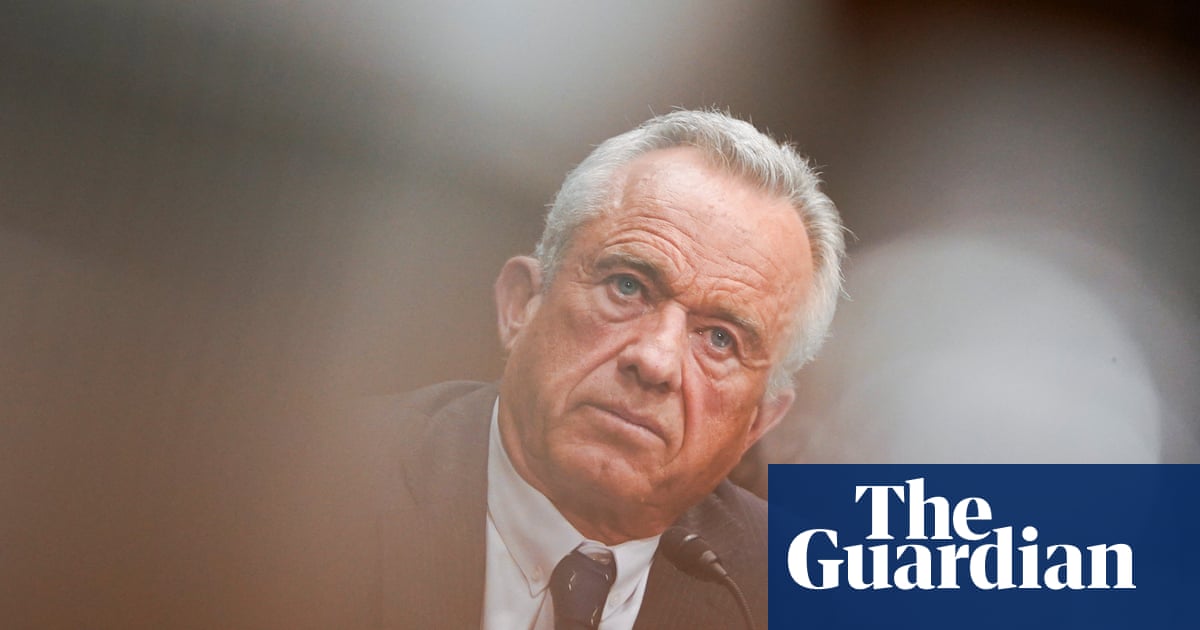
The stated rationale does not hold. AHRQ’s director, Roger Klein, told grantees the agency was redirecting resources toward patient safety, antibiotic resistance, overmedication of children and measurable health outcomes. When KFF Health News examined about 20 of the cancelled grants, nearly all of them pursued those objectives. One of the cancelled grants studied antibiotic resistance. The Michigan pediatrician who lost the last two years of her award said none of it makes any sense, and her field studies exactly what Robert F Kennedy Jr’s “Make America healthy again” agenda claims to champion. Klein has held no agency-wide meetings and published no plan. He has said little in public since January, when he co-wrote an essay in Newsweek arguing that “scientific neutrality” had given way to “moral signaling”.
He has reportedly told staff that artificial intelligence can replace much of what his scientists do. A White House science report released on 22 July urged the government to back individual scientists over legacy institutions, to move past slow consensus peer review and to build the future on AI. I use AI tools daily. They are gifted assistants, and they have never placed a central line.
I wrote this week in the Annals of Internal Medicine about patients who arrive holding a chatbot’s answer. The models are fluent and often correct, but they have no way of knowing what they were never told. That limit scales. A language model can summarize everything ever published about catheter infections. Someone still had to stand in the unit at three in the morning and notice that the nurses were quietly working around the protocol. Someone still had to design the study that found out why. None of that knowledge existed until people went and got it.
Then there is the money. Congress decides how public funds are spent, a principle written into statute after Richard Nixon tried withholding appropriations he disliked. The Society of General Internal Medicine and the North American Primary Care Research Group sued Kennedy and Klein last August over the frozen grant-making, and the case is pending in Maryland. The Government Accountability Office is examining whether the agency’s conduct amounts to an unlawful impoundment. On 17 July a federal judge in Boston held that agencies may not cancel awards over priorities they adopted after making them. Now consider what the health department says about the AHRQ letters: nothing was terminated, and the grants were merely “not awarded continued funding”. That phrasing is doing work. It is an attempt to walk through the one door the court left open.
After 45 years in medicine, I know this much about safety. When it works, no one notices. No patient wakes up grateful for the bloodstream infection she did not get, or for the dose a pharmacist’s protocol caught before it reached her line. AHRQ costs each American about a dollar a year, roughly 0.3% of the health department’s discretionary spending, and it is being dismantled in the confidence that the people it protects will never learn what they were spared. The deaths will arrive one at a time, in different hospitals, unlabeled. No letter from Washington will claim them.
In 1980 we did not know how to prevent those deaths. We know now. That knowledge took 30 years and public money to build, and it is being discarded by people who have not said why.
-
Robert B Shpiner is an internist and clinical professor of medicine at the David Geffen School of Medicine at UCLA. He has practiced and taught intensive care medicine for more than 40 years



















Comments