
 German (DE)
  English (US)
  Spanish (ES)
  French (FR)
  Hindi (IN)
  Italian (IT)
  Russian (RU)
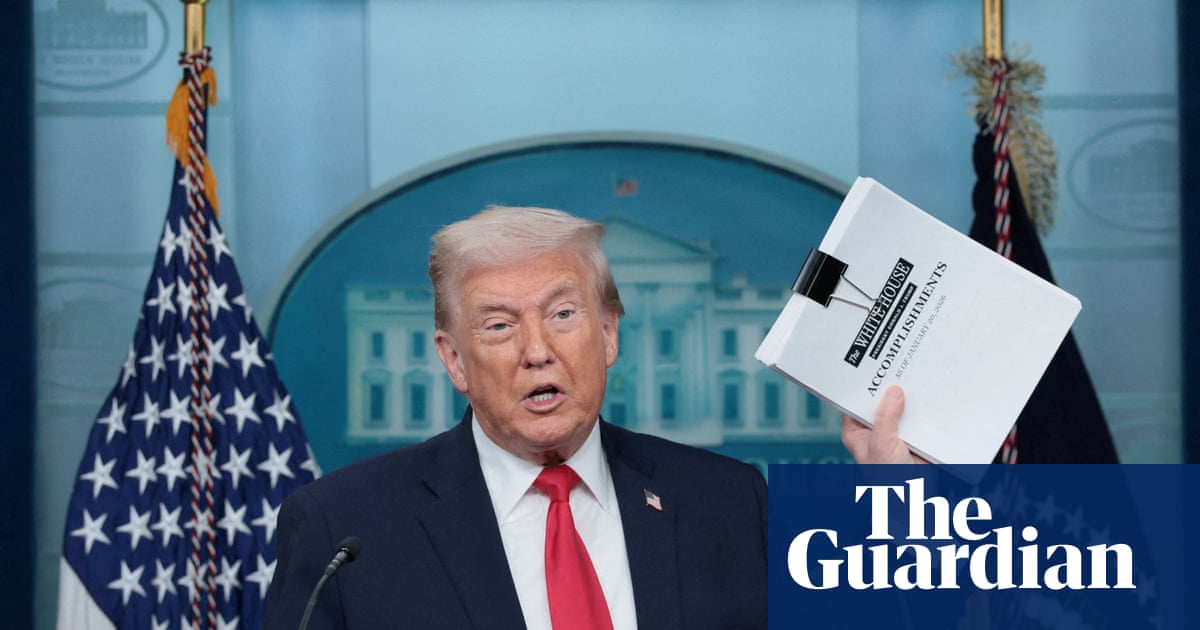
 President Donald Trump spent his first year hyper-focused on ending complicated foreign conflicts — and cementing his legacy as the “peace president.”
But the president is headed into the new year with a hefty list of unresolved foreign policy baggage, from the persisting war in Ukraine to escalating tensions with Venezuela. And there are few signs he’s planning to turn his attention away from geopolitics, an effort that risks colliding with a midterm year expected to be dominated by concerns about the cost of living.
“Every second term president always wants to further involve themselves in foreign policy and cement a lasting legacy for the history books,” said Matthew Bartlett, a Republican strategist and former Trump administration appointee. “Yet the American public, their priority continues to be the now, their everyday life … affordability, housing, electricity, utilities, education, health care, groceries.”
Before the holiday break, the White House said Trump planned to hold regular rallies to talk about all the good work his administration has done to bring down costs.
Trump has spent most of his public time at Mar-a-Lago focused on foreign affairs. So far he’s met with Ukrainian President Volodymyr Zelenskyy and Israeli Prime Minister Benjamin Netanyahu, and twice held calls with Russian President Vladimir Putin.
White House spokesperson Anna Kelly said the president was “elected with a resounding mandate to implement America First foreign policy,” and has used his agenda to “bring investments and deliverables” back to the U.S.
“He has delivered by negotiating fairer trade deals, securing a five percent defense spending pledge among NATO allies, killing narcoterrorists smuggling illicit narcotics into our homeland, and more while simultaneously ending eight wars — making the entire world safer and more stable,” Kelly said. “The president will always work to ensure peace through strength and advance American interests abroad.”
During an interview with POLITICO’s Dasha Burns earlier this month, Trump insisted that even when traveling abroad, his intention is for those trips to strengthen America.
“When I go on a trip, I only have one place in mind,” he said. “It’s the United States.”
But some Republicans are growing antsy at the self-styled America First president’s interest in resolving foreign conflicts. Polls have repeatedly shown growing concern among voters about pocketbook issues — and a willingness to blame Republicans for them, despite the Trump administration’s insistence former President Joe Biden caused any weakened economy.
As the world turns the page on 2025, here’s a roundup of the foreign policy entanglements Trump will carry over into the new year.
Conflict in Ukraine continues, with few easy solutions.
The Ukraine war will hit its fourth year in February, with no end in sight.
While Trump has attempted to bring Putin and Zelenskyy to a peace deal, the Kremlin has stalled conversationsrepeatedly. It has also refused to agree to a ceasefire before all peace deals are ironed out and has continued to hammer Ukraine with missiles and drones.
The most recent talks at Mar-a-Lago seemed to go better than others, with Trump showing optimism the two sides could strike a deal soon, with progress made on security guarantees for Kyiv. But the Kremlin almost immediately threw cold water on that idea, blaming Ukraine for a drone attack on Putin’s residence (which Zelenskyy said was a Russian ploy).
The fate of Donbas, a strategic region in Eastern Ukraine, continues to be the primary issue for both Ukraine and Russia, with seemingly no track toward an agreement.
Zelenskyy has agreed to make the remaining 15 percent of Donbas in Ukrainian control a demilitarized “free economic zone,” but Russia has balked at the idea. Control of the land would give the Russian military access to Ukrainian trenches, and Ukrainians worry that Russia wouldn’t stop there if they decide to attack again.
Despite repeated conversations with Trump, Russia continues to take maximalist positions — including NATO membership for Ukraine, limits on the size of its military and full Russian control of the Donbas region. Putin has refused to meet with Zelenskyy until a peace plan is drawn up that the Russian president accepts.
A Gaza peace deal lies in pieces.
Trump played a major role in a ceasefire between Israel and Hamas, reached as part of a broader peace plan after some two years of fighting in Gaza. But while the killing has subsided, officials are struggling to move past the broader plan’s first phase, which includes the ceasefire, hostage and prisoner exchanges and an increase in humanitarian aid. Israeli officials have at times threatened to resume fighting over Hamas’ violations of the deal.
One major sticking point in implementing the second phase has been Hamas’ reluctance to disarm. The group, which the U.S. has designated a terrorist organization, insists it has a right to armed resistance against Israeli occupation. Trump on Monday warned Hamas to disarm or there would be “hell to pay.”
Another challenge has been convincing countries to offer troops to serve in an “International Stabilization Force” that would help secure parts of Gaza once Israeli troops withdraw. At the same time, both sides claim the other is violating the ceasefire. Hundreds of people, most of them Palestinians, have died since the truce took effect in October.
Peace processes require relentless diplomatic maintenance, and it remains to be seen whether the Trump administration has the people and expertise to implement its vision. Another eruption in Gaza could threaten one of Trump’s key signature foreign policy wins so far.
Trump tightens the screws on Maduro.
Trump said this week that the U.S. had “knocked out” a “big facility” linked to alleged drug trafficking in Venezuela, in what would mark the first known ground attack inside the country since the U.S. started destroying so-called Venezuelan drug boats. (The CIA declined to comment on reports it carried out a December drone strike on a dock in Venezuelan territory.)
But the move signifies major escalation in the monthslong pressure campaign designed to get Venezuelan President Nicolás Maduro to step aside. Trump this month declined to rule out war with Venezuela and told POLITICO that Maduro’s “days are numbered.”
The increasing tension with Venezuela has splintered the America First movement, which the president built, in large part, on the idea that he would help keep the U.S. out of foreign entanglements. Some anti-interventionists have warned that Maduro’s ouster could destabilize the region and draw the U.S. into a yearslong conflict.
And a vast majority of Americans — with 63 percent against military action inside Venezuela — are opposed to an invasion, according to a recent Quinnipiac poll. Fifty-three percent oppose the use of military strikes to kill suspected drug traffickers on boats.
But the numbers, so far, haven’t deterred Trump. He used December to ramp up pressure on Venezuela, announcing a blockade and plans to classify Maduro’s government as a foreign terrorist organization. U.S. officials also seized a Venezuelan oil tanker earlier this month. And in November, Trump ordered the closure of Venezuelan airspace.
More trouble with Tehran?
Trump joined Israel in attacking Iran’s nuclear facilities in June, part of a brief war in which Israel also hit Iran’s ballistic missile program. After 12 days and the U.S. intervention — including a “bunker buster” bombing run that Trump said had “completely and totally obliterated” Tehran’s nuclear program — Trump successfully demanded Israel and Iran stop fighting.
Now, worries are rising that Iran is rebuilding its nuclear program — a situation that could kick off a fresh round of conflict that again draws U.S. involvement.
Trump has warned that if Iran is reconstituting its nuclear program, the U.S. will “knock the hell out of them.” Trump also suggested the U.S. would support Israel if it carried out strikes against a rebuilt Iranian ballistic missile program. Iran’s president said it would respond to aggression in a “harsh and regrettable” manner.
Trump’s involvement with Iran is a flashpoint for the MAGA base. Many MAGA acolytes want to limit America’s role in the Middle East. Some hoped that Trump’s June intervention in Iran was a one-and-done situation. Some parts of the MAGA base also are increasingly frustrated with Israel, believing the government there often pulls the U.S. into conflicts that are not in America’s interest.
The China thaw may be short-lived.
U.S.-China tensions have simmered in recent months after Trump and Chinese President Xi Jinping brokered a one-year trade truce in October. But that detente is already on shaky ground.
Lawmakers on Capitol Hill have raised doubts about whether China will live up to a number of pledges agreed to this fall, including reducing the flow of precursor chemicals to Mexico that cartels use to produce fentanyl and buying certain volumes of U.S. agricultural products.
There are other lingering problems, too. The U.S.-China deal on rare earths — supposed to be finalized by Thanksgiving — has yet to be resolved. And the White House has been mum on reporting that Beijing-based ByteDance has finalized the sale of Tiktok.
The potential 2026 challenges with China go well beyond trade negotiations. Beijing’s threats to invade Taiwan could crack open another foreign policy conflict for the president.
China increased its preparations for an invasion this year, debuting a new military barge system, with vessels better designed to land on the island’s beaches.
China expressed anger toward what could be the largest U.S. arms sale to the self-governed territory Tuesday by firing rockets and dispatching air and navy units in military drills that encircled Taiwan. Beijing called the simulated military blockade a “stern warning” against separatist and “external interference.” Taiwan called China “the biggest destroyer of peace.”
Trump told reporters this week that he was not informed of the military exercise in advance but brushed off concerns because China has been “doing naval exercises for 20 years in that area.”
“Nothing worries me,” he said.






Comments