
 German (DE)
  English (US)
  Spanish (ES)
  French (FR)
  Hindi (IN)
  Italian (IT)
  Russian (RU)
  3 weeks ago
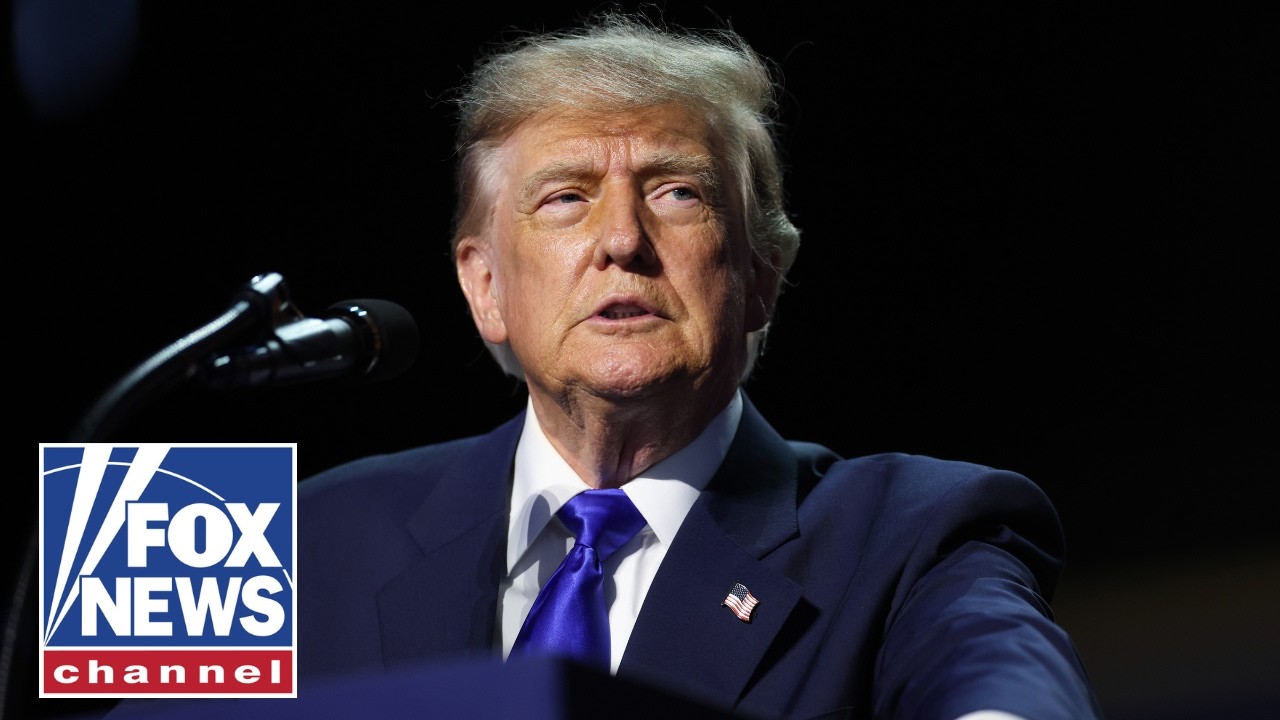
Donald Trump has framed his theme for the midterm elections. It has come to him as naturally and inevitably as staring into the mirror, beyond any logic or argument, his definitive answer to no specific issue, providing no understanding of any particular problem, but transcending all of them. His political theme is more primal than programmatic, more instinctive than analytical, a heartfelt expression to protect his greatest romantic attachment, his obsessive fixation, his idealized object: himself.
Trump’s campaign theme is unrequited love. Unlike the pollsters, media consultants and pundits, he alone has grasped the magnitude and the source of the existential crisis threatening his politics. He has identified the problem for the Republicans as the faltering measure of complete devotion to him. His demand has nothing to do with mutual affection. It is a ploy to reassert his slipping control, a manipulative test to prove loyalty to him, or else. There can be no absolute rule without an absolute ruler; no absolute ruler without absolute submission; no absolute submission without the expression of absolute love. His sadness at its fading gives way to anger, paranoia and greater acts of retribution. He equates the fear he instills as a form of love. Trump accepts subservience, from whatever motive, as affection or its closest equivalent. He cares nothing about sincerity, so it’s all in the show. The less love displayed, the more fear required. Yet there is no rebound, but only deeper rejection.
Trump is heading toward the floor for presidential unpopularity – Nixon during Watergate on the eve of his resignation, Truman late in his second term at the depth of the Korean war, and George W Bush at the 2008 financial crash. But Trump’s breakdown differs uniquely from theirs. His decline has come earlier in his term, been more sustained, and his disintegration has not stabilized but is accelerating. He is being crushed by the accumulation of catastrophic events of his own making to which his impulsive response is to double down in each and every area. Stalemated in his reckless Iran war, he has now launched a heedless trade war against Canada that will devastate Republican candidates in the northern tier of states. His latest vanity project is gestural retribution to rename Lake Ontario as “Lake America”, a watery ballroom. Admission of error for Trump would be the denial of self-love.
Trump began his campaign on his unrequited love theme on 16 August during a Fox News interview in which he discussed his press secretary, Karoline Leavitt, leaving her job after just having a baby. He had held her up as meeting his highest criterion in remarks last December: “Isn’t she great? Is Karoline great? … She gets up there with that beautiful face and those lips that don’t stop, ba ba ba like a little machine gun.” Now, he tried to make a joke of her departure that expressed resentment at abandonment. “In fact, she likes her children more than she likes Trump. I’m very concerned about that,” he said. Then he repeated his unfunny “joke” at a campaign rally in South Carolina on 21 August: “I just learned she loves the baby more than she loves Donald Trump, and I’m very angry …” Trump’s lame attempt at humor was a rare instance of his truth-telling and self-revelation, a contemporary illustration of Freud’s Jokes and Their Relation to the Unconscious.
Trump was in South Carolina to campaign for his chosen candidate in the Republican primary, Darline Graham, who he had insisted be appointed to the Senate seat of her brother Lindsey Graham after he died on 11 July. Darline Graham confessed to cluelessness when asked in a debate about her position on Taiwan. “National security is not my thing,” she answered. “I’m not … that informed on national security.” But she was fully informed on the necessity of obedience to Trump. “You saved our country, and I want to thank you for that,” she said at the rally. Trump praised his worshipper: “She’s got a good gene pool.” She was born to love him. She stood in stark contrast to the immigrants he had described as “poisoning the blood of our country”.
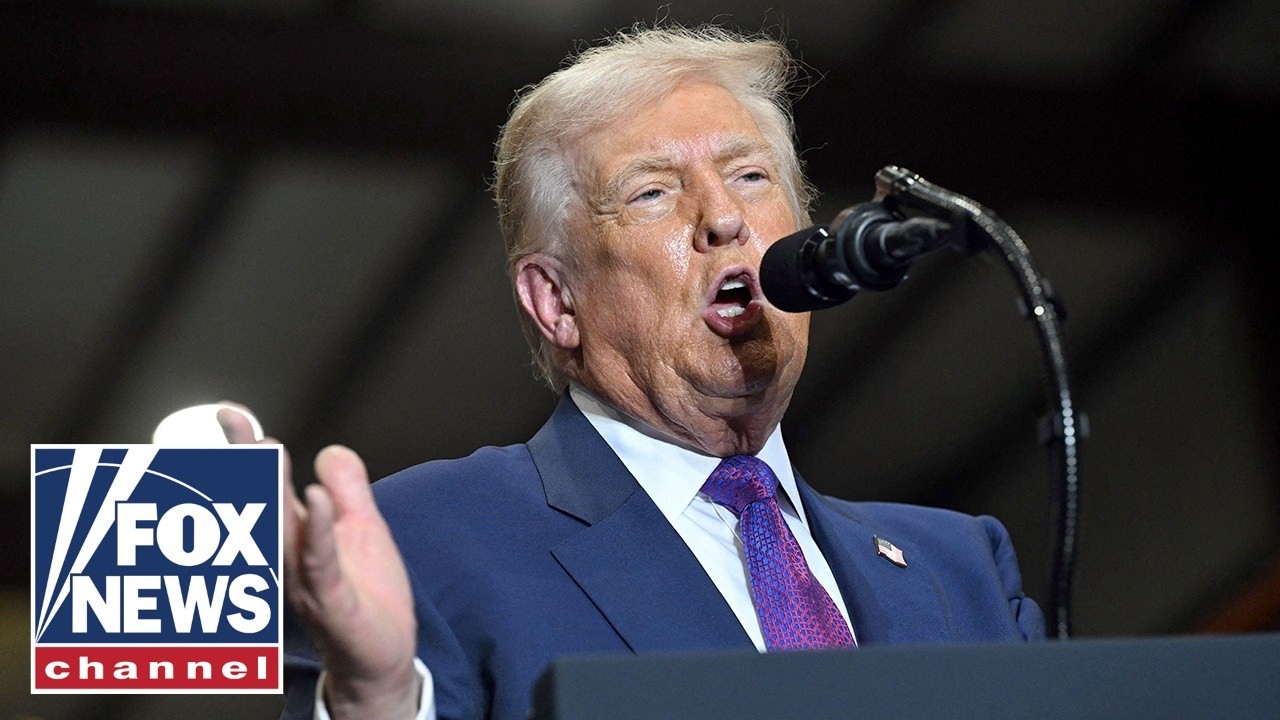
Then Trump called on the crowd to embrace his new theme. “So what I really want you to do is pretend, please, that I’m on the ballot … So just say that I’m on the ballot one more time. You got to say it.” He wishes every candidate to sound like Darline Graham in proclaiming him the national savior. He insists he is beloved, and if those who revere him turn out the Republicans must win. In fact, though he is not on the ballot in the midterm elections, Trump is the central issue. Voters do not have to “pretend, please”.
Trump intuitively comprehends that the midterm elections are about him in a way that makes this midterm unlike any other. In the marrow of his bones, he senses it is a crisis of his cult of personality.
Trump’s Maga was never a new party structure, but constructed on his wreckage of the old Republican party. In its place, every particle of the replacement is connected to the leader to advance his supremacy and self-enrichment. Everything flows upward, all heads tilted, all knees bent. Maga has always been Maga Inc of, by and for one man. The movement is the man.
When charisma fails, the movement implodes. If the leader is not worshipped, his uber-principle – the leader principle – collapses: no fuhrerprinzip, no Führer.
Trump’s plea for their unconditional love – “pretend, please” – defies gravity. He is running against Isaac Newton, and Newton always prevails. Intensity is gauged by “strongly approve” and “strongly disapprove” poll numbers. More than the general statistics of approval or disapproval, these provide insight into the motivation of voters that determine the contour of elections. Trump now stands at 13% “strongly approve” in the most recent Reuters-Ipsos Poll. His “strongly disapprove” rating is at 49%. His total approval is at 33%, while disapproval is at 65%. Those in the “somewhat approve” category include low propensity soft voters especially inclined to skip midterm elections. And this poll was taken before his declaration of trade war against Canada.
All along, the Republicans have been Trump’s indispensable accomplices. Even if they were disposed to object, they could do nothing to draw him back from his “pretend, please” campaign. His anxiety to rescue his invincible image from the reality he’s created makes him more inescapable than ever. Any effort to restrict him will provoke his rage. He will not diminish himself for the sake of the party or even his own future. He plans to spend millions from his Maga Inc political action committee to tell the voters that they have never had it so good – “the greatest economy we’ve ever had, by far”, he says. He has mocked the suggestion that “affordability” might be a problem for many – it’s “a word they”, the media, “devised”, he has said. Trump intends to stage a mini convention in Dallas on 9 September, featuring Donald Trump to “celebrate … our achievements”. Republicans are locked almost uniformly into blind support, with the Maine senator Susan Collins venturing hollow criticism of the Canadian tariffs that makes her seem powerless and infuriates the remaining Maga base. Just as Trump has trapped himself, he has trapped the Republicans. The expenditure of tens of millions to depict his dire consequences as paradise on earth will have the unintended effect of supercharging the already motivated “strongly disapprove” voters and disillusion those who cannot help but be aware of the actual conditions of their own lives.
The sudden surfacing of Natalie Harp as a meme at this particular moment propitiously coincides with the wobbling of Trump’s cult. The 35-year-old is his model of the perfect staffer, perfect companion and perfect American citizen. If unrequited love is the problem, she is the solution. In Trump’s hierarchy of need, his pyramid of status, love and self-actualization, she is at the apex.
Harp is his “binky”, as Maggie Haberman of the New York Times has called her, his comfort blanket, his plush bunny rabbit. The “human printer” who trails after him, pressing the button to churn out an endless stream of adulatory articles, conspiracy theories and “alternative facts”, has become an extension of his nervous system. The former anchor at the fringe far-right One America News Network serves as Trump’s personal anchor. Harp broadcasts around the clock to an audience of one. She is the connector to the neurons of the far right, serving as a conduit to dodgy characters such as Laura Loomer with her lists of national security officials who were supposedly disloyal. Harp is Trump’s neurotransmitter who distributes a steady supply of dopamine and delusion.
Harp’s self-abasing devotion to Trump, expressed in her letters to him, serves as a kind of inadvertent political manifesto for the cult, a template for followers. Harp tellingly muddles a line from Jane Austen’s Pride and Prejudice – Mr Bennet blessing his strong-willed daughter Elizabeth in her engagement to Darcy – to demean herself and offer subservience to Trump: “To modify a classic, ‘I could not have parted with you, to anyone less worthy’ – And, I will add, it is I who is unworthy.” In another letter, after self-disparaging apologies, Harp writes: “You are all that matters to me. I don’t want to ever let you down. Thank you for being my Guardian and Protector in this Life … With all my Heart.”
As public opinion curdles on Trump, no longer able to “pretend, please”, Harp has not come to the wisdom of Conway Twitty in his 1959 rockabilly hit:
My only prayer will be
Someday you’ll care for me
But it’s only make believe
-
Sidney Blumenthal, former senior adviser to President Bill Clinton and Hillary Clinton, has published three books of a projected five-volume political life of Abraham Lincoln: A Self-Made Man, Wrestling With His Angel and All the Powers of Earth. He is a Guardian US columnist and co-host of the Court of History podcast









Comments