
 German (DE)
  English (US)
  Spanish (ES)
  French (FR)
  Hindi (IN)
  Italian (IT)
  Russian (RU)
  3 weeks ago
The Trump administration’s long-anticipated decision this week to pull the US from the world’s most important climate treaty may have been illegal, some experts say.
“In my legal opinion, he does not have the authority,” Harold Hongju Koh, former head lawyer for the US state department, told the Guardian.
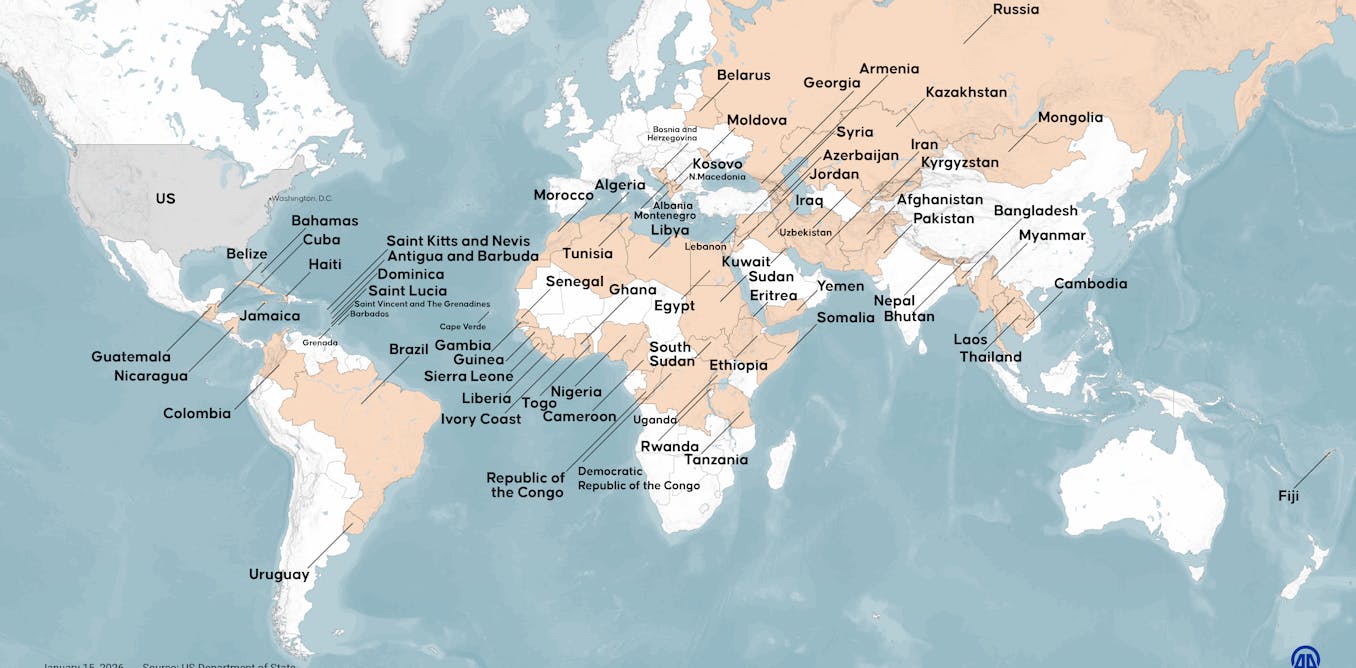
In a Wednesday presidential memorandum, the president said the US “shall withdraw” from the UN Framework Convention on Climate Change (UNFCCC), along with 65 other organizations, agencies and commissions that it deemed “contrary to the interests of the United States”. It marks the first time any country has ever moved to exit the agreement.
The UN climate body requires one year’s notice for withdrawal, so the United States will not cease being a party for a year. Trump’s memo did not specify whether or not his administration will submit a formal notice of termination to the UN.
Reached for comment, a state department spokesperson noted that Trump’s memo said the agency will take all necessary “steps to effectuate the withdrawal of the United States from the organizations as soon as possible”. The person also referred the Guardian to secretary of state Marco Rubio’s Wednesday statement, where he said the Trump administration is exiting institutions and treaties which it believes to be “redundant in their scope, mismanaged, unnecessary, wasteful, poorly run, captured by the interests of actors advancing their own agendas contrary to our own, or a threat to our nation’s sovereignty, freedoms, and general prosperity”.
Because the country entered the UNFCCC with the consultation and approval of the Senate in 1992, “there is an open question” about whether or not the president can unilaterally exit the agreement, Michael Gerrard, a climate law expert at Columbia University, wrote in an email.
The UNFCCC and the Paris climate agreement – the landmark 2015 climate pact underpinned by the UNFCCC, from which Trump pulled the US last January – both say that parties may withdraw with one year’s written notice. But unlike the UNFCCC, the Paris agreement was never ratified by the US Senate, Gerrard noted.
“President Obama took the position that since the Paris agreement did not impose binding legal obligations on the US, it was not a treaty that required Senate ratification,” he said. “In contrast, President George HW Bush submitted the UNFCCC to the Senate, which unanimously ratified it in 1992, and he then signed it.”
Some scholars argue that the president has the ability to unilaterally end treaties – if not legally, then practically, because Congress has previously acquiesced to the executive branch.
“In practice, presidents have long asserted the authority to withdraw the United States from treaties and other international agreements without seeking the approval of either the Senate or Congress,” said Curtis Bradley, a University of Chicago law school professor and former counselor of international law at the state department.
But in Koh’s view, congressional silence should not be interpreted as consent to exit the treaty. A “mirror principle” should dictate that the same amount of congressional input needed to enter into a treaty should be required to withdraw from it, said Koh, now an international legal expert at Yale University.
“If I had an agreement that I made by myself, it would make sense that I could leave by myself,” he said. “But if my wife and I made an agreement that both of us had to sign, could I withdraw from it by myself? I believe we would both have to withdraw.” He said he expects groups to sue the administration over its memo.
Rhode Island senator and climate hawk Sheldon Whitehouse also said Trump’s withdrawal is “not just corrupt, it’s illegal”.
“This polluter-driven stoogery shows the full extent of creepy polluters’ control over the Trump administration. Trump’s corrupt fossil-fuel interests threaten the wellbeing of millions around the world on the frontlines of climate disaster, defy the will of the American people, and damage US economic competitiveness,” he said in a statement, adding that he believes “once the Senate has ratified a treaty, only the Senate can withdraw from the treaty”.
The US constitution does not explicitly spell out such a mirror principle, only stating that the president “shall have Power, by and with the Advice and Consent of the Senate, to make Treaties, provided two-thirds of the Senators present concur”.
The supreme court has also never ruled on the topic: though it took up the issue of treaty exit in 1979 when then president Jimmy Carter withdrew from a treaty establishing diplomatic relations with China, the justices “splintered and didn’t come to a single rationale” on which US governmental branch can exit treaties, and under what circumstances, said Koh.
Jean Galbraith, an international law expert at the University of Pennsylvania Carey law school, said the issue of unilateral withdrawal is “hard” and “complex”. Even when the Senate recommends entry into treaties, she said, the president has the discretion not to take their advice.
“When you think about withdrawal, you can think about, what exactly is the president doing? Are they just ratcheting back that last step of ratification,” she asked. “Maybe the president would say, ‘I’m just pulling back the instrument of ratification.’ Maybe the president would say, ‘I have the power to do this withdrawal unilaterally, at least as far as I don’t have anything from the Senate or Congress telling me explicitly that I don’t have that power.’”
Experts also disagree on what it would take for the US to re-enter the UNFCCC. Some experts believe that Trump’s exit nullifies the 1992 Senate vote in support of joining.
“My own view is that a president would need to obtain a new approval,” said Bradley. “The US constitution requires senatorial approval for joining treaties but does not clearly require senatorial approval for leaving treaties.”
That would mean the process of reentry would require a future president to secure the support of two-thirds of the Senate to agree to re-enter the treaty, which would be difficult to obtain in the contemporary political climate.
Galbraith, however, believes the two-thirds Senate vote from 1992 remains in effect.
Others, including Galbraith, believe that if Trump can unilaterally exit a treaty, a future president could rejoin it without a new two-thirds Senate vote.
“You still have that on the books,” she said.
Sue Biniaz, former principal deputy special envoy for climate at the state department, shares that perspective.
“Climate action won’t stop because of the latest US treaty withdrawal, either in the US or globally. And the federal retreat is, hopefully, a temporary one. There are multiple future pathways to rejoining the key climate agreements,” she said, adding that she specifically agrees that the US could “rather seamlessly rejoin the UNFCCC based on the Senate’s approval in 1992”.
Trump’s exit from the UNFCCC indicates to the rest of the world that the US is “an unreliable partner for long term commitments”, said Galbraith.
“It’s a further signal of real antipathy to fixing what is a real and increasingly dire problem,” she said.
The withdrawal from the agreement came on the one-year anniversary of devastating fires in Los Angeles, and days after the shocking capture of Venezuelan president Nicolás Maduro, after which the president outlined a vision of the US boosting fossil fuel extraction from the South American country.
“Trump’s contempt for international efforts to build peace and solidarity continues to shred the nation’s international credibility and will cause irreparable damage to current and future generations both at home and abroad,” said Melinda St Louis, director of the consumer advocacy group Public Citizen’s Global Trade Watch. “As climate harms escalate, choosing withdrawal is a shortsighted, profoundly irresponsible retreat from international leadership when it is needed more than ever.”










Comments