
 German (DE)
  English (US)
  Spanish (ES)
  French (FR)
  Hindi (IN)
  Italian (IT)
  Russian (RU)
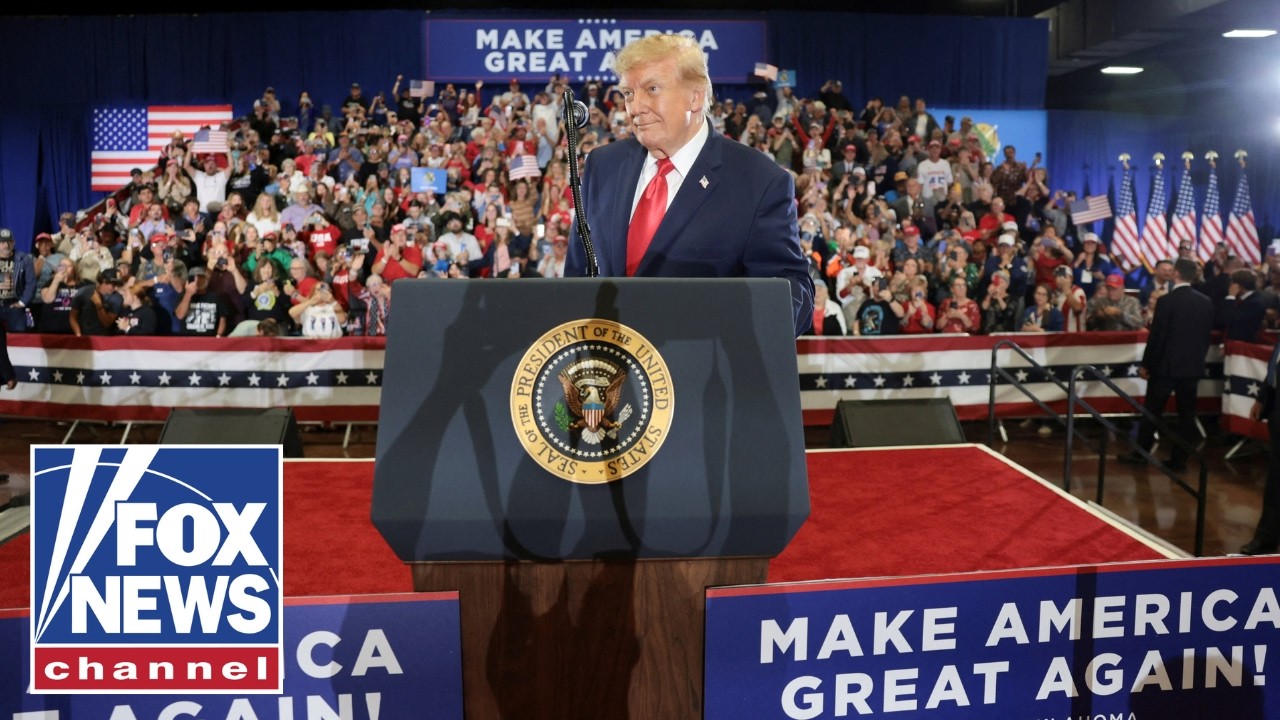
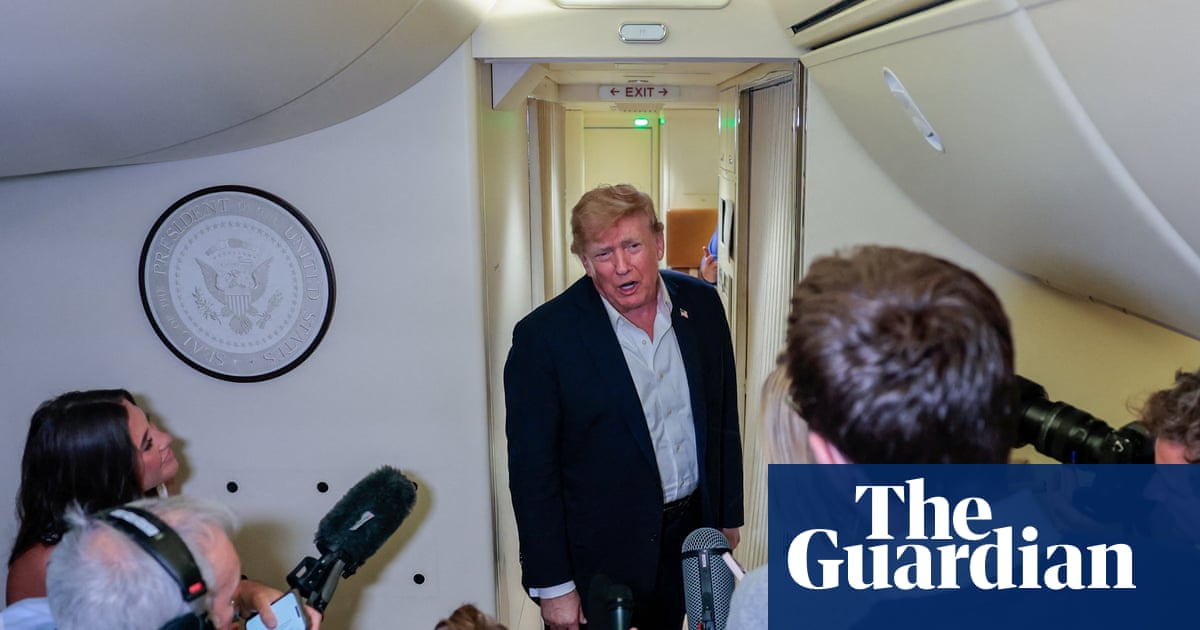
 Amid the wave of ongoing panic surrounding AI, President Donald Trump posted on Truth Social Monday morning that the only "guardrails" AI needs are "a STRONG AND SMART (High IQ!) PRESIDENT, and the U.S.A. has that, in spades!"
"The Trump Administration has stopped AI 'people' from doing bad, or potentially bad, 'things' like Dario (Anthropic!), who is now pretending to be a 'perfect little angel' - and we will continue to do so!" the president wrote. "We already have tremendous CRIMINAL and REGULATORY power over these companies! There is a SICK conspiracy theory going on against AI and Data Centers, and the only one that is happy about it is China. WHOEVER WINS AI, WINS!"
Like this article? Keep independent journalism alive. Support HuffPost.
Trump was pushing back against recent calls by Anthropic CEO Dario Amodei, who published a 3,800-word essay on Saturday that advocated for slower AI development. OpenAI's Sam Altman and Elon Musk supported and shared Amodei's statement.
"Like many technologies before it, AI brings risks, and because it is such a powerful technology, these risks are serious," Amodei wrote. "A race to the bottom, spurred by commercial incentives, can make these risks more acute." Amodei did not respond to HuffPost's request for comment as of reporting.
Buzz: Jimmy Fallon Mocks Trump Over Ludicrous AI Claim: 'Well, I Feel Better'
While aboard Air Force One on Sunday, Trump disagreed with reports that he is "downplaying" AI risks, and told reporters, "It's going to be more good than bad, by a lot." Earlier on Sunday, while at a golf tournament in Ireland, Trump said, "We're leading China in AI. We're the most sophisticated country in the world, and frankly, I want to keep it that way because whoever wins AI wins."
The White House did not respond to HuffPost's request for comment as of reporting.
Since Anthropic safety researcher Jacob Coxon announced he was stepping down from his position out of fear that AI development was "gambling with our lives," the public has grown more concerned about AI superintelligence, a hypothetical level where AI agents could potentially overthrow and overpower humanity.
Are guardrails the right idea for AI?
Arvind Narayanan, a computer science professor at Princeton University and co-author of "AI as Normal Technology"and "AI Snake Oil," told HuffPost that despite having been formed years ago, AI companies are still acting like startups and don't supervise their teams well enough compared to more mature tech companies.
Politics: Trump Is Losing His Mind Over Calls To Regulate AI
"Controls and guardrails are much needed," he said. "A slowdown in capabilities could be useful, but only if companies use it to change course — and fix the organizational failures that led to the recent hacking incidents."
Emily M. Bender, a computational linguistics professor at the University of Washington, went further and told HuffPost that the idea of AI guardrails is "misguided."
"When we talk about guardrails for so-called AI systems, we're basically shifting accountability away from the people in corporations and onto software systems, which are not the kind of thing that can take accountability," Bender said. "It's like additional layers of training to adjust the probabilities away from certain kinds of outputs, and that is never going to succeed in preventing systems from outputting harmful information. People are always going to find ways around it."
Is the U.S. beating China in some AI race?
AI experts also rejected the idea that there's a race to be won at all.
Tech: Airports Changed Forever After 9/11 — Here's What They Were Like Before
"AI's impact on economic growth will be largely determined by the decades-long process of responsibly and reliably integrating AI into companies, governments, institutions and workflows," Narayanan said. "That's why there is no tension between AI control and economic benefit. The two go hand in hand."
Bender argued that this race narrative is a useful fiction to drive the industry.
"The framing of an AI race suggests that there is a clear, well-defined destination and a clear, well-defined path to get there, and it's just a question of who gets there first and whoever gets there first somehow wins not just bragging rights, but some sort of material advantage," Bender said. "None of that is true."
She added that the fantasy of the U.S. beating China has been used to slow down regulation on issues like data center expansion and privacy rights against massive data collection, despite there being no competition.
Tech: What Privacy And Legal Experts Wish Everybody Knew About Apple's New 'Live Rewind' Feature
"The goal, such as it is, is ill-defined, and this idea of artificial general intelligence or artificial superintelligence, there's no solid definitions of those anywhere," Bender said.
"Any discussion, any statements pro or con that are predicated on the idea that we are building a so-called super intelligent system, all sort of feed each other and help each other," she continued. "The idea that this is really dangerous means it's really powerful. And Trump's comments on Truth Social seem predicated on the same idea that, well, that was very powerful and we're going to build the biggest one."
The federal government has some control over AI, but the Trump administration doesn't seem that interested.
Suresh Venkatasubramanian, a computer science professor at Brown University and co-author of the Biden-era Blueprint for an AI Bill of Rights, told HuffPost that Trump isn't entirely wrong that the government has regulatory power over AI companies — but that's what undercuts the president's framing.
Venkatasubramanian pointed to a 2023 joint statement from the Department of Justice, Federal Trade Commission, Consumer Financial Protection Bureau, and the Equal Employment Opportunity Commission, in which the agencies affirmed that the existing law applies fully to AI and pledged to investigate misuse.
Politics: Trump Refuses To Tell Reporter How He Uses AI In *** Exchange
"It's correct to say that the government already has some relevant powers to investigate use and misuse of AI tools," Venkatasubramanian said. "However, this administration has shown much less interest in investigating the problematic use of AI."
A Senate committee has begun investigating the OpenAI-Hugging Face hack, but the White House has not commented on the situation or shown much interest.












Comments