
 German (DE)
  English (US)
  Spanish (ES)
  French (FR)
  Hindi (IN)
  Italian (IT)
  Russian (RU)
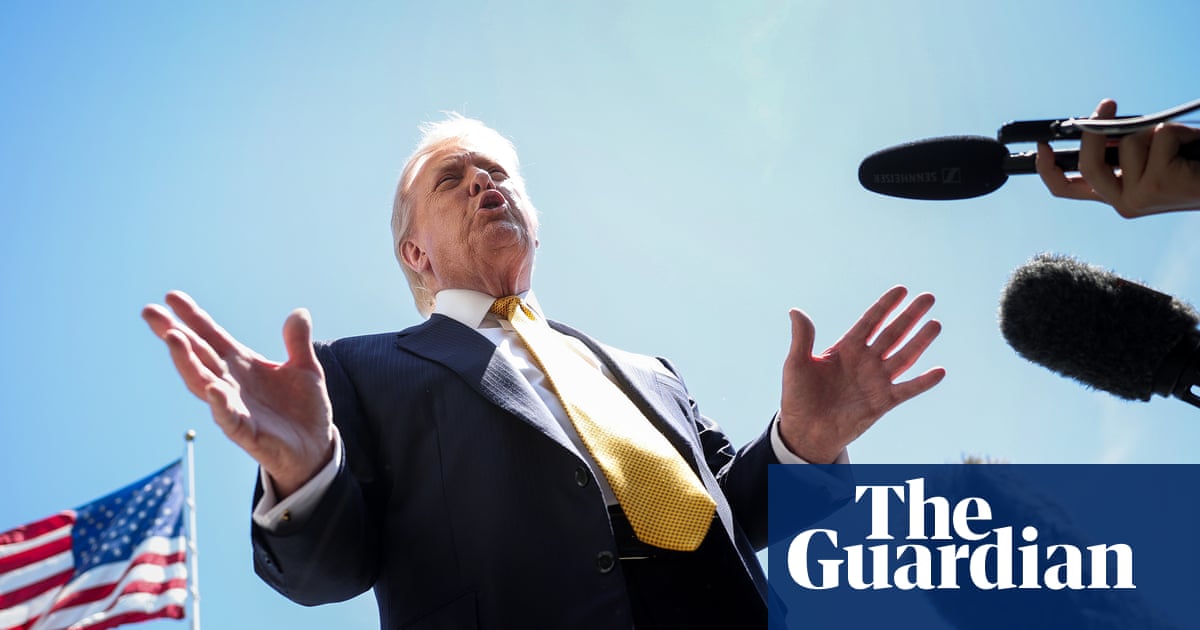
President Donald Trump, speaking to reporters last July, was bullish about picking up GOP seats by redrawing congressional lines. Now, his redistricting push seems to have backfired on his party. via Associated Press
Nine months after President Donald Trump and Republicans launched an unprecedented effort to redraw the lines of congressional districts mid-decade and tilt them in their favor, Democrats appear more likely to benefit from the effort.
Following a Tuesday vote in Virginia in which voters approved a new map that would likely eliminate four of five Republican districts in November, Democrats are now set to gain up to 10 seats nationally. Republicans will consider themselves lucky to flip eight.
Politics: Iran Fires On 3 Ships In The Strait Of Hormuz As U.S. Maintains Blockade And Diplomacy Stalls
While an attempt to draw new maps in Florida next week could alter the equation, it’s clear Democratic leaders — egged on by furious grassroots efforts — responded to Trump with a form of ruthlessness many inside and outside the party thought they were incapable of.
“What we’re not going to do is unilaterally disarm,” House Minority Leader Hakeem Jeffries (N.Y.), who played a major role in funding the Virginia referendum, told reporters Wednesday morning at Democratic National Committee headquarters. “Apparently, that’s what Donald Trump believed that we would do.”
It’s enough for some Republicans to experience quiet regret, even if they remain reluctant to point fingers at the president who started it all.
“Not for me to decide that,” National Republican Congressional Committee Chair Richard Hudson (R-N.C.) told reporters when asked if the mid-decade redistricting fight was worth it. “Wasn’t my decision.”
Politics: Judge Tosses Kash Patel's Lawsuit Over TV Analyst’s 'Nightclubs' Claims
Appearing Wednesday on CNN, former White House political director James Blair was defiant about the outcome of the redistricting wars, insisting the GOP would still come out ahead.
“What I expect is that when all of this redistricting sort of continues this cycle, is that there will be a narrow advantage for Republicans,” said Blair, one of the architects of the redistricting push.
Trump bullied initially reluctant Texas Republicans to call a July 2025 special session to pass new maps to wipe out Democratic districts. Standing in front of Marine One last summer, he was optimistic when talking to reporters: “Texas will be the biggest one. And that’ll be five.”
In a subsequent Truth Social post, Trump went even further. If Republicans drew new lines and eliminated mail-in voting, he predicted, “we will pick up 100 more seats, and the CROOKED game of politics is over.”
Politics: Marjorie Taylor Greene Says Trump 'Flat Out' Told Bondi: 'Do Not Release The Epstein Files'
At the time, the nearly universal assumption was that Democrats would struggle to retaliate. Some of their biggest states, including California, had independent redistricting commissions written into their constitutions. In others, elected officials initially expressed skepticism about drawing new lines.
But those assumptions missed a fundamental dynamic: The GOP redistricting efforts were being driven by Trump and a small coterie of advisers who struggled to effectively apply pressure to local officials. Indiana Republicans rejected their efforts in a dramatic December vote, with Kansas and Nebraska also declining to take action. New Hampshire Gov. Kelly Ayotte shrugged off an absurd threat that the White House would recruit scandal-plagued Trump adviser Corey Lewandowski to challenge her.
Democrats, meanwhile, were pushed into action by a Trump-loathing base. California Gov. Gavin Newsom, with the help of former Speaker Nancy Pelosi, wrangled Democrats there to agree to a new map counteracting Texas, and then pushed through a $138 million referendum to get voters to approve the plan. It passed by a landslide margin last November.
Jeffries, meanwhile, worked with Virginia’s legislative leaders, Louise Lucas and Don Scott, to put the 10-1 gerrymander on the ballot in Virginia. Even with a more steadfast GOP opposition, Democrats were on track to win Tuesday’s vote by at least 3 points.
Politics: Lawrence O’Donnell Spots Why Tucker Carlson’s Apology Is A ‘Very, Very Bad’ Sign For Trump
“We were led by pressure from the ground in a way the Republicans certainly did not have,” John Bisognano, the president of the National Democratic Redistricting Commission, told HuffPost. “You think about the California election, it’s insane for 8 million people to show up for an election they couldn’t have predicted the existence of three months before.”
Those victories in California and Virginia, along with a court ruling in Utah, have provided Democrats with clear gains.
Like this article? Keep independent journalism alive. Support HuffPost.

House Minority Leader Hakeem Jeffries, who played a major role in passing a Virginia referendum eliminating four GOP-held congressional districts in the state, held a celebratory press conference Wednesday at the Democratic National Committee headquarters. via Associated Press
The Republican picture is more complicated. They appear on track to successfully eliminate single Democratic-held seats in both Missouri and North Carolina. They also made two districts in Ohio held by Democratic incumbents more Republican, though neither is considered a slam-dunk GOP pickup opportunity.
They drew three new seats in Texas intended for Republicans but relied heavily on Latino voters who shifted toward Trump in 2024 to do so. Those voters, angry at Trump’s handling of the economy and immigration, have now turned against him en masse, and Democrats are now seen as having a puncher’s chance in one of the three seats. Republicans also made districts represented by a pair of Latino Democrats in south Texas much more red, but both incumbents are now seen as having a good chance to win reelection.
Politics: Joe Rogan Spills On Mysterious Exchange With Trump At UFC Fight: ‘This Is The Truth’
The concern with Latino voters causing problems in Texas, however, is complicating things in Florida, where the party has also experienced recent special election losses. Both Florida lawmakers and members of the House are skeptical of Gov. Ron DeSantis’ efforts to eliminate as many as five Democratic-held seats.
The GOP’s poor position is leading to backbiting, some of it aimed at the president and his political team.
“Just so you get the truth and not the partisan spin here, Republicans came up with the idea of the mid-decade redistricting fight and started in Texas,” conservative radio host Erick Erickson wrote on social media. “Then, in Virginia, the RNC spent $0.00 to fight. Now, as drawn, the Democrats have an advantage from the redistricting fight.”
(The RNC did not directly fund the “no” effort but has filed legal challenges to the new map and the process used to create it and helped fund the Republican Party of Virginia’s field and voter integrity operations.)
Another GOP strategist, requesting anonymity to speak frankly, similarly blamed Trump’s closest advisers: “You shouldn’t start fights you can’t win, and a decade into this, you have to know Donald Trump thinks he can win every fight. It’s your job to think of the downside risks, and they clearly didn’t do that in the West Wing.”
Marc Short, a longtime top aide to former Vice President Mike Pence, pointed out on CNN that Trump-allied super PACs are spending millions against Indiana state senators who prevented Republicans from picking up a single seat in Indiana but did nothing to help Republicans fight the referendum in Virginia.
“It’s incredible political malpractice by the political team in the White House,” Short said.

Rep. Nick LaLota (R-N.Y.) was a rare Republican who openly said he regretted the push to redraw lines midway through the decade and wants to back legislation limiting gerrymandering. Bill Clark via Getty Images
In a statement, the Republican National Committee condemned the Virginia map and said it could still be struck down by the Virginia Supreme Court.
Forty-six percent “of Virginians voted Republican in the last federal election, yet Democrats are rigging the system to cling to power and silence voters they can’t win over. This map is an unconstitutional partisan power grab designed to disenfranchise millions of voters and tilt the playing field,” said RNC spokesperson Kiersten Pels. “The RNC will continue this fight in court to protect Virginia voters and ensure fair representation across the Commonwealth.”
In his CNN appearance, Blair insisted Trump did not start the redistricting fight and was simply responding to previous unfair lawsuits aimed at Republican-held seats and to undercounting during the 2020 census.
He also downplayed the idea that additional funding would’ve helped the “no” side in Virginia: “I think there was a pretty well-funded ‘no’ effort.”
Many members of Congress appear to share Blair’s denial. Rep. Tom Emmer (Minn.) held out hope the courts would strike down the new Virginia maps. Rep. John McGuire (Va.), one of the Republicans who is likely to lose his seat, blamed New York’s post-census redistricting for kicking off the fight. Rep. Derrick Van Orden (Wis.) similarly claimed Democrats would have redistricted Virginia even if Trump hadn’t urged Texas to redraw its maps.
“This is radical leftists trying to take over the House of Representatives,” Van Orden told HuffPost. “It has nothing to do with Donald Trump, other than the fact that they want Donald Trump out of power.”
Rep. Suhas Subramanyam (D-Va.) said he understood if his colleagues in the Virginia delegation were upset.
“I would say that I understand their anger, but they should have talked to the president and told him to back off of Texas, because that’s what prompted all of us and what led the General Assembly in Virginia to draw new maps,” Subramanyam told HuffPost.
The fight may not be over even after Florida. Democrats in New York, Wisconsin, Colorado and Washington state have all suggested they could redraw their maps ahead of the 2028 election. Bisognano said Illinois, which has thus far resisted national Democratic entreaties to draw new lines, could act if Republicans eliminate Democratic-held seats in the South following a Supreme Court ruling expected later this year.
“If there’s one thing folks should take away from the force with which we’ve pushed back so far, it’s that we will not stop if they continue to do this after Callais,” Bisognano said, referring to the court ruling that is expected to gut a portion of the Voting Rights Act.
But, Bisognano noted, there’s also a way to end this.
“I am still 100% in favor of banning partisan gerrymandering,” he said. “The Republicans control all three branches of government. If they choose, they could pass a bill that will end partisan gerrymandering tomorrow.”
There may be some takers among the GOP. Rep. Nick LaLota (R-N.Y.) said he would back legislation to eliminate mid-decade redistricting and ensure compact legislative districts.
“I wish we could put the redistricting genie back in the bottle,” he told HuffPost, adding: “Congress really needs to look to the next decade to set some guidelines on redistricting, gerrymandering.”










Comments