
 German (DE)
  English (US)
  Spanish (ES)
  French (FR)
  Hindi (IN)
  Italian (IT)
  Russian (RU)
  3 weeks ago
Iran accused the US of violating the agreement aimed at ending the war between the two countries and Donald Trump said he thought the ceasefire was over, after the US military launched strikes around the strait of Hormuz and revoked a temporary sanctions waiver for Tehran to export oil.
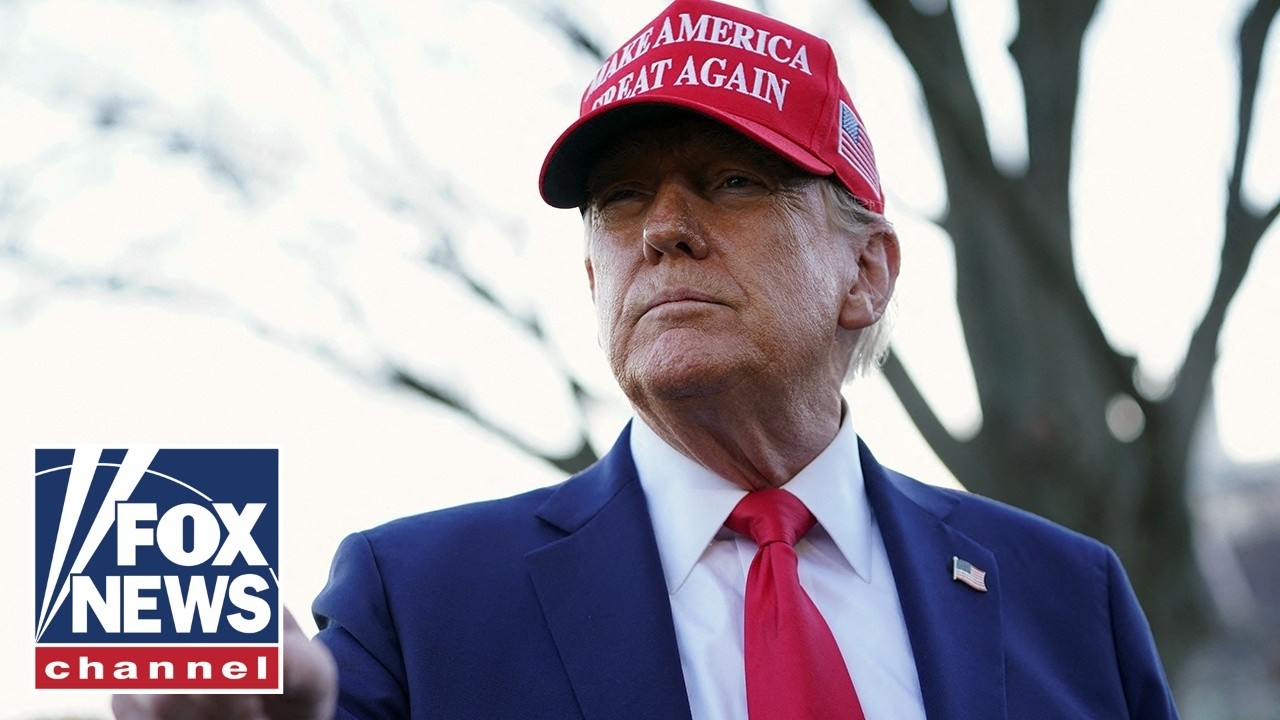
Speaking at the Nato summit in Turkey, Trump said: “They can talk, but I think they’re wasting their time.” He added: “They’re a bunch of liars … They’re liars, they’re cheaters, they’re sick people.”
The US president said Tehran tried to have him killed. “I’m on every single one of their lists,” he said. “And so far, I think I’ve been a little lucky, but maybe that luck won’t last long. Because that’s how things go, but we have some wonderful people. But these are evil, sick people, and we have to root out their cancer. The cancer has to be taken out of the body early.”
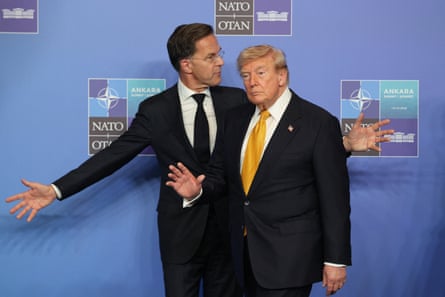
Trump added: “We attacked those very dangerous people affiliated with Iran last night, with great force … There’s something wrong with them. We say: ‘Go have your funeral.’ But instead they started firing missiles at ships yesterday. So we hit them very hard last night.”
His remarks underline how close the ceasefire agreement between Iran and the US is to unraveling after Washington’s decision to launch strikes and revoke its oil-export sanctions waiver. Iran hit back at US bases in Bahrain and Kuwait. Each side accused the another of reneging on the ceasefire agreement spelt out in the memorandum of understanding (MOU) signed on 17 June.
US central command said the 80 targets had been struck in the early hours of Wednesday in response to Iranian attacks on three commercial vessels that were transiting through the strait of Hormuz on Tuesday.
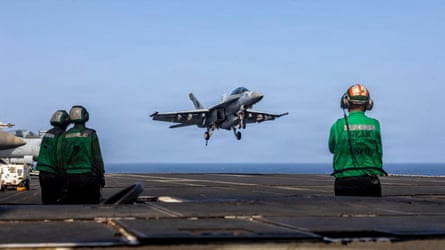
“Iran’s demonstrated aggression was unwarranted, dangerous, and a clear violation of the ceasefire,” US central command said, referring to the three tankers, including a Qatari liquefied natural gas (LNG) vessel, that were struck within hours in the strait.
Iran responded by launching attacks on US military sites in Bahrain and Kuwait. The Islamic Revolutionary Guard Corps (IRGC) said 85 facilities were targeted. Air raid sirens were heard three times in Bahrain and twice in Kuwait.
The extent of any damage caused was not clear.
Wednesday’s attacks were the latest in a string of ceasefire violations between the two sides, despite a truce that came into effect in April and the MOU signed last month. The memorandum was supposed to trigger at least 60 days of phased negotiations that were to end in an agreement on Iran’s nuclear programme, and a permanent end to hostilities, including a ceasefire in Lebanon.
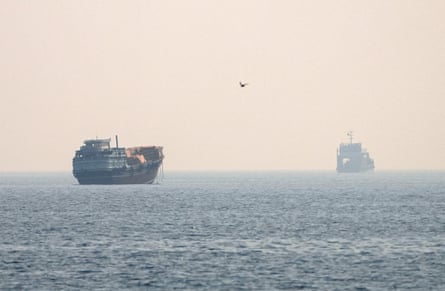
An agreement on the long-term future management of the Strait – including whether to impose fees on commercial shipping – and on the lifting of US sanctions was proposed.
US officials said the attacks on Wednesday struck air defence systems, command and control networks, anti-ship missile capabilities and more than 60 IRGC small boats in and near the strait of Hormuz. The attacks, the US said, were intended to degrade Iran’s ability to intimidate international commerce flowing through the international trade corridor. One IRGC naval officer was killed by a US drone in Bandar Mahshahr, Iran announced. Iranian state media reported a series of explosions on the Iranian island of Qeshm in the strait of Hormuz, and in the cities of Sirik and Bandar Abbas.
The US said it had acted after Iran struck three commercial vessels transiting the strait, including the Marshallese-flagged al Rekayyat, the Saudi-flagged Wedyan, and Liberian-flagged Cyprus Prosperity. The attack on al Rekayyat was particularly serious since the tanker was carrying Qatari liquid gas. Qatar has been acting as a mediator in the Iran-US talks and summoned the deputy Iranian ambassador in Doha to demand an explanation.
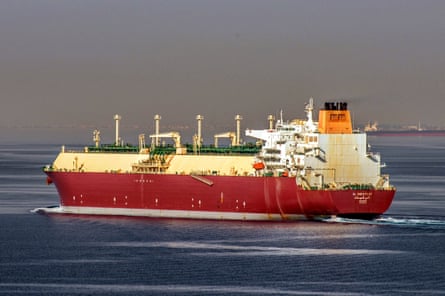
The attacks, the US said, were a flagrant violation of the ceasefire, a threat to freedom of navigation, and required it to end the waiver issued a fortnight ago that lifted sanctions on Iranian oil exports, which was one of the first tangible benefits Tehran could claim from agreeing to lift its blockade of the strait.
Iranian foreign ministry officials at a press briefing in Tehran had said the strikes on liquid gas and oil tankers in the strait were a reassertion of Iranian control of the waterway, the chokepoint for as much as 20% of the world’s oil and gas trade flows.
The Iranian officials said the memorandum’s terms clearly put Iran in control of the strait for a minimum of 30 days from the document’s signing. They said the US was violating its terms by trying to open new sea lanes without seeking Iranian permissions. “Responsibility for the dangerous consequences of this escalation lies with the deceitful US regime”,” the foreign ministry said.
Announcing the attacks on Bahrain, Iran’s central command, Khatam al-Anbiya, reiterated its statement that “the only safe route for the passage of commercial ships and oil tankers in the strait is the route determined by the Islamic Republic of Iran”.
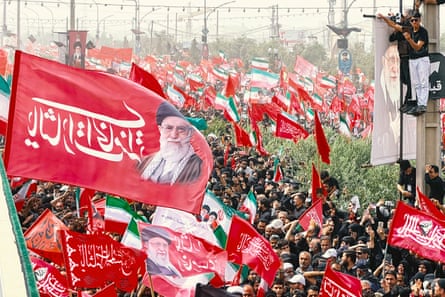
The military exchanges came as the funeral for the assassinated Iranian supreme leader Ali Khamenei was reaching its climax with his body being flown from a shrine in Iraq to Mashhad, Iran, to be laid to rest. Vast crowds, many demanding revenge, attended the funeral in Iraq as Shia Muslims thronged the streets to bid farewell to one of their most important religious leaders.
Trump signed off on the strikes while attending the Nato summit in Turkey. Speaking on Wednesday morning, Nato’s secretary general, Mark Rutte, backed the US attacks, pinning responsibility for the breaches of the ceasefire entirely on Iran, an interpretation that requires a narrow reading of the MOU. Rutte said: “When you have a ceasefire and Iran is basically violating the ceasefire, I think it is totally crucial that the US forcefully react.”
The controversy in part stems from the US decision to open a southern route through the strait of Hormuz close to Oman. Tehran says this breaches a clause in the MOU that left Iran in control, though under an obligation to use its best endeavours to restore shipping traffic to prewar levels within 30 days, including by de-mining the strait.
All three tankers struck on Tuesday were close to Oman. Iran has said it wants to charge fees in return for providing security for all commercial ships using the strait, a proposal dismissed as a protection racket and in clear breach of the law of the sea. The proposal is certain to be rejected by Oman. Trying to find a way to marry the Iranian and Omani plans is critical to a diplomatic solution.














Comments