
 German (DE)
  English (US)
  Spanish (ES)
  French (FR)
  Hindi (IN)
  Italian (IT)
  Russian (RU)
  3 weeks ago
In preparation for the new year, Andry Hernández Romero, his best friend and his family are building an año viejo: a human-sized doll made of scrap wood and rags, styled with old clothes and stuffed with fireworks.
On New Year’s Eve, when the clock strikes midnight, they’ll set it ablaze.
Hernández Romero – who was released from a notorious Salvadorian mega-prison five months ago – is especially excited about the annual tradition this year. “This is our way of welcoming the new year with joy,” he said. It also means purging the old one with a cleansing fire.
The 32-year-old makeup artist was one of 252 Venezuelan men who were accused by Donald Trump and his administration of being members of the transnational Tren de Aragua gang. Without due process or any forewarning, the men – many of them asylum seekers, most without criminal records – were rounded up from around the US and sent to the notorious Terrorism Confinement Center (Cecot) in El Salvador.
For four months, the men were routinely beaten, abused and, in some cases, sexually assaulted, enduring treatment that human rights groups have characterized as “systemic torture”. Human Rights Watch and the Central American human rights group Cristosal concluded that the men were “subjected to serious physical and psychological abuse on a near-daily basis, throughout their entire time in detention”.
Then, in July, they were abruptly released as part of a diplomatic deal between Venezuela and the US. The Guardian kept in touch with Hernández Romero and three other men who were incarcerated at Cecot as they returned home to Venezuela, and picked up the lives they had left behind.
“There were so many mixed feelings on the way home,” Hernández Romero said. “There was the joy of seeing my father’s face, of hugging my brother, hugging my best friend, eating my mother’s food.” And there was the sinking realization that everything had changed. “I would like to reintegrate into society and pretend that my life is completely normal,” he said. “But it wouldn’t be true.”
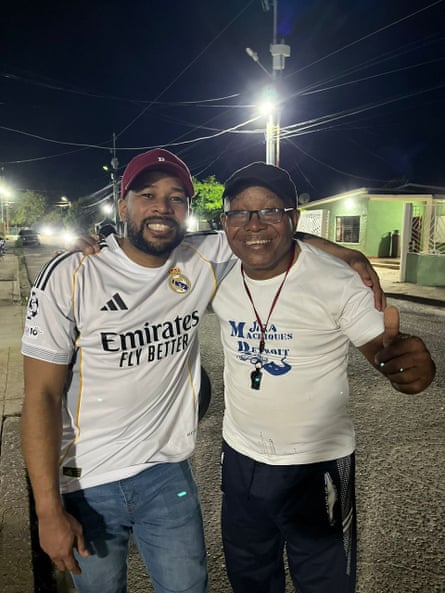
Jerce Reyes Barrios, 36 – another of the 252 men released that day – didn’t know how to put words to the feeling. “It was such a mixture of – happiness? Sadness?” he said.
José Manuel Ramos Bastidas, 31, said it felt surreal. “I never thought I would get out,” he said. “Like, I can’t believe it. I got out of that place.”
For the first several weeks after his return, 29-year-old Edicson David Quintero Chacón said, he savored every moment – going to the pool with his kids, re-downloading his TikTok and other social media accounts and putting on the new clothes his sister brought him. He took a two-hour motorcycle ride to a nearby city where he met up with a friend and got lunch. “I passed by some horses and I watched them by the river,” he said. “And I told my friend just how beautiful freedom felt. How freedom is the most beautiful thing in life.”
But as time passed, he said, the images and memories of his time inside the prison kept returning, like flashbacks. “It’s like a movie that keeps playing in my head,” he said. “It’s an experience that remains engraved in the mind. Like a tape that is never erased.”
There were many, many beatings, Quintero said: “If we talked, they would beat us.” At one point, he recalled, he developed an agonizing headache after a beating. The doctor he saw told him it was his fault, that he had probably drunk too much water. “I felt crazy,” he said. After that, he knew it was fruitless to even try to get medical care. He felt a toothache so intense he wanted to rip his molars out himself, he said: “But what was the point of asking for a pill that was not there?”
Routinely, the guards isolated detainees in a dark room known as “La Isla”, he recalled. At one point, Hernandéz Romero has said, he was dragged there and sexually abused. Hernandéz Romero no longer wishes to recount the details of the alleged abuse, but said he hopes he will one day see justice for what happened: “If not earthly justice, then a divine justice, from Father God.”
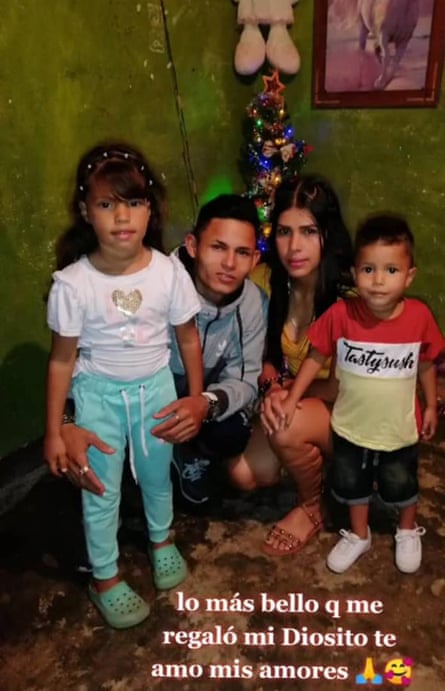
Out of desperation, Ramos said, a group of the detainees staged hunger strikes, refusing their rations for days and demanding that the guards explain to them what was happening, and when they could leave. He witnessed a man cutting himself, in what Ramos understood to be a “blood protest”.
“We fought for our lives, for our freedom or for them to kill us so we could stop suffering so much, because every day it was blow after blow for no reason,” he said.
But the guards told them they would never leave. That no one on the outside was looking for them.
Ramos said he has struggled to spend any time alone since his return home. “I used to like spending time alone,” he said. “But now when I am alone, I feel like I’m both there and not there at the same time.”
As the weeks wear on, Ramos said, the men are being reminded why they left Venezuela in the first place. Some had fled Venezuela seeking political asylum in the US. Others had left in search of work.
Ramos left in January 2024, hoping to earn more money to pay for the medical treatment of his newborn son, who was born with severe respiratory issues. His meager wages as a mechanic and car washer weren’t enough to pay the mounting hospital bills. “Now I spend my day-to-day just walking around, looking for something to do – to repair a motorcycle, to fix an appliance … seeking to earn something,” he said.
Quintero – a carpenter and a fisher – had been working since he was 12 to support his family, and had come to the US in April 2024. He sold his motorcycle and saved for weeks so he could afford to pay his way to the north, wagering that once he made it out of Venezuela, he’d be able to earn more, enough to build a small house for his family and enough to support his mother.
When he arrived at the US southern border, immigration officials fitted him with an ankle monitor and gave him paperwork with instructions to routinely check in with Immigration and Customs Enforcement (ICE). In June, Quintero was detained while checking in.
He spent more than a year in detention – first in the US, mainly at the Stewart detention center in Georgia, and then at Cecot. “I was gone for so long, and it was hard on my mother, because it fell on her to support the children, buying all their school supplies and things,” he said. “Now it’s my turn to support her.”
But he quickly realized that, back at home, it was nearly impossible to earn enough money.
The economic worries have blended in with post-traumatic aftershocks, said Reyes, a 36-year-old soccer player and coach from Machiques, a small, rural city close to the border with Colombia. “I can’t sleep for eight hours straight. At most I get three or four at night,” he said. “Sometimes I wake up talking to myself.”
“I want to stop these effects,” he added. “Because I cannot neglect my family. My daughters depend on me … It’s a lot of stress.”
They are living in a paradox, said Hernández Romero. While they were locked away, he and the 251 others became an international news story.
Their families and communities rallied to support them. New articles and TV segments featured their life stories – their young children, their doting parents, their budding careers as sports stars. “We became almost famous,” he said. “At what cost?”
The Human Rights Campaign held a rally demanding Hernández Romero’s release during Pride month in Washington DC. The New Queens Pride parade in New York made him the honorary grand marshal. Even now, Hernández Romero said, he is moved each time he receives a message from queer supporters in other Latin American countries, or in the US. “They tell me how brave I am, how they identify with me, how they are praying for me,” he said.
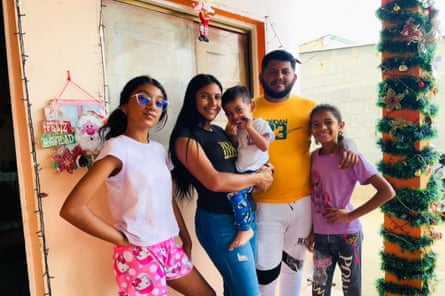
After his release, a woman messaged him and asked to send him a new makeup kit and other supplies that had been confiscated from him when US authorities arrested and detained him. “She is an angel,” he said. “There is a little place in heaven for her.”
Some day, he said, he hopes to pay it forward by creating a foundation to empower LGBTQ+ people, and people living with HIV.
“But being known is also complicated,” he said. He is aware that he and the 251 other men were used – as political props or pawns.
The Trump administration called them “ruthless terrorist gang members”. When Kristi Noem, the US homeland security secretary, toured the Salvadorian mega-prison in late March, she posed in front of a cell packed with incarcerated men and warned any immigrants thinking of coming to the US: “If you come to our country illegally, this is one of the consequences you could face.”
The Salvadorian president, Nayib Bukele, posted a video that spliced together images of the US deportees being frog-marched into the prison and having their hair buzzed – all set to a pounding, ominous soundtrack, promoting his “ joint military operation with our allies from the United States”.
Now that he’s back home, Hernández Romero says, those characterizations have been hard to shake – despite evidence from his lawyers that he had no gang affiliation or criminal history and despite numerous news articles explaining that the only reason that US authorities had accused him of gang activity was based on his two small tattoos: a crown on each wrist with the words “Mom” and “Dad” etched underneath.
“No hair salons in Venezuela want to give me a job because they think I’m a member of Tren de Aragua,” he said. “Even at this point, there are still people who think that because an American president said it, it must be true.”
Others back home who oppose Venezuela’s autocratic leader, Nicolás Maduro, wonder whether Hernández Romero is instead working with the Maduro regime, which helped get him and the others released from Cecot as part of a prisoner swap with the US. He had to resign from his local theatre troupe, he said, because some members kept harassing him.
In fact, Hernández Romero had initially fled Venezuela after facing persecution for his sexuality and political views, according to his lawyers. Now that he’s back, he has avoided openly discussing anything political. “I simply have to go out day by day to see how I work, to see how I earn the three bolivars I need to eat,” he said.
The only other people who can truly understand his experience, he said, are the 251 other men who were imprisoned with him at Cecot. “We entered 252 strangers and we left 252 brothers,” he said. He’s still in touch with many of them – they have talked about what happened in joint therapy sessions, but also over text messages and calls.
Hernández Romero has gotten especially close with Carlos Uzcátegui, 32, who was held in a cell across from him. At first, he said, they spoke more about their trauma. But lately, they mostly exchange jokes and anecdotes.
This summer, Hernández Romero did the makeup for Uzcátegui’s bride, Gabriela Mora. The couple is expecting a baby soon, Hernández Romero said – and he’s excited to be a godfather.








Comments