
 German (DE)
  English (US)
  Spanish (ES)
  French (FR)
  Hindi (IN)
  Italian (IT)
  Russian (RU)
  2 weeks ago
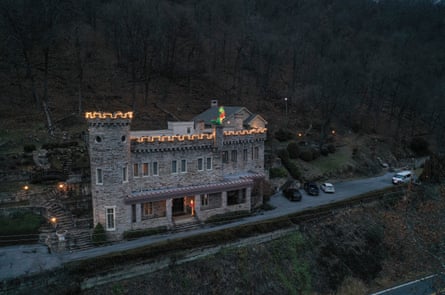
In 2020, residents of Berkeley Springs, West Virginia, learned that a mysterious couple from New York had bought a historic local building known as “the castle”, which the newcomers planned to use as a headquarters and conference space for their non-profit organization. A bitter saga followed – one that the journalist Michael Edison Hayden writes about in his new book, Strange People on the Hill: How Extremism Tore Apart a Small American Town.
The couple in question were Peter and Lydia Brimelow, whose online publication VDare was named for Virginia Dare, the first English child born in the Americas. Critics have accused the anti-immigration publication of being the genteel face of a constellation of white nationalist groups and figures that Hayden refers to simply as “the movement”. (VDare and the Brimelows dispute that characterization; Brimelow has described himself as a “civic nationalist”.) Stephen Miller, the adviser to Donald Trump, is reportedly a fan of VDare’s writing.
Some residents of Berkeley Springs were alarmed that their town might become publicly associated with the far right, and they invited Hayden, then a researcher for the Southern Poverty Law Center (SPLC), to come speak to them and report on what was happening. He befriended residents and documented what became a multiyear unraveling – of the town, where neighbor turned against neighbor; of VDare, whose existence came under increasing financial and legal pressure; and of the SPLC, where internal divisions about strategy and labor practices were boiling over. In the course of what became this book, Hayden also suffered a mental health crisis compounded by the strain of years of reporting on the far right.
VDare’s arrival was flame to tinder in a town already navigating disagreements about the pandemic and the Black Lives Matter and Pride movements. Residents were divided over how, if at all, to react to the prospect of their town becoming an organizational nexus of the far right. Neighbors stopped speaking to neighbors, business partnerships fell apart, and people attacked each other on Facebook.
I spoke to Hayden about how the peaceful town of Berkeley Springs became a microcosm of the tensions defining an age of bitter polarization and an ascendant far right. This interview has been edited and condensed for clarity.
What is VDare, and how does it relate to what you call “the movement”?
There have always been very determined activists and groups – the kinds that my previous employer, the SPLC, would have labeled white nationalist or neo-Nazi – working to bring the “great replacement” theory into the mainstream.
VDare has probably been most influential at spreading the idea. From its founding in 1999, Peter Brimelow did almost everything he could to draw attention to what people used to call “white genocide” – the idea that whites are being deliberately undermined by non-white immigration.
And he succeeded. At the Republican National Convention in 2024, people were holding signs calling for mass deportation. That is in part Brimelow’s legacy.
Brimelow, who was born in Britain, doesn’t fit what the average American thinks of when they think of the far right. He’s not a hooded Klansman, or a neo-Nazi, or a militia man running around in the woods, right?
Brimelow has gone through a lot of different stages in his life. He was a financial journalist, writing for publications like Forbes, before he became the person that we know.
Over time he became relentless in his push to restrict immigration. In 1995, he published the book Alien Nation, which suggests that non-white immigration coming into the United States has a negative impact economically, among other things. He received support from John Tanton, the father of the anti-immigrant movement in the United States. Brimelow took the baton from Tanton and became himself the most important anti-immigrant figure in the US – which is interesting, given that Brimelow is an immigrant from the UK.
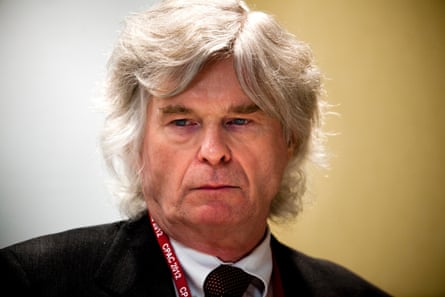
When Brimelow founded VDare, he was still a socially acceptable bad boy of conservatism – this guy who says some stuff that you’re not supposed to say, but there’s a place for him. Then people woke up to the amount of racism in his rhetoric – he has argued, for example, that Robert E Lee is more worthy of celebration than Martin Luther King – and he became taboo.
Over time, he became influential in the white nationalist movement. And when that movement became the “alt-right” movement – a slightly more socially acceptable version of white supremacy – around Trump’s first election, Brimelow returned to a point of attention in conservatism.
This book is partly about VDare, partly about you, and partly about Berkeley Springs. You made an interesting decision to weave those together.
In bringing those storylines together I wanted to capture this political moment that we’re in – how everybody in the US feels this incredible tension at all times.
I remember back in the beginning of the Obama days, hearing: “Oh, we’re so polarized.” Obama himself had his first big star turn, at the 2004 Democratic convention, with a speech about red states and blue states and how the country is too divided. It almost feels quaint now, because we live in what VDare itself has called “a cold civil war”.
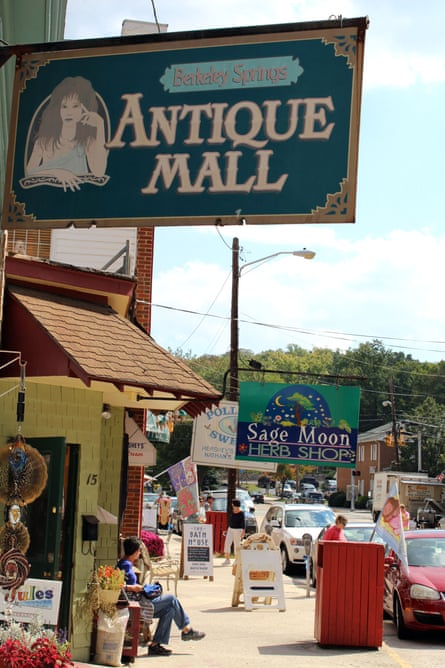
I wanted to show what this atmosphere is doing to people: it’s impacting a journalist from New York, it’s impacting these well-to-do white nationalists, it’s impacting people who sell crafts in a store in West Virginia.
When people feel like their neighbors could turn on them at anytime, it takes a tremendous toll on everyone’s mental health.
You had a mental health crisis yourself, which you describe in honest terms.
I began to have really intense suicidal ideation. I think it’s impossible to say, “Oh, this one thing is what made that happen” – there’s such a confluence of factors. But I have been covering the movement for over 10 years, and it’s not just, like, sitting and researching and being subjected to occasional swastikas. There’s a moment in the book where I took my eight-year-old son to a batting cage and the FBI called about someone who wanted to assassinate me.
Dealing with that for years really caught up with me. And I think, in a less acute form, people are feeling that all over the country. We don’t really even have a conversation about what a decade of Trump is doing to our mental health. Yeah, Biden was briefly president, but it really feels like we’ve had three consecutive terms in which Trump was the main topic of our lives.
Last year, the attorney general of New York, where VDare is registered as a non-profit, sued VDare. The lawsuit accused the Brimelows of using the non-profit for personal gain. (The Brimelows and VDare dispute that allegation.) VDare has aggressively – and expensively – fought the suit. What’s going on?
Part of what happened is that it looked, in presentations online, as if the Brimelow family might be living in the castle they’d purchased, which would be, as far as I understand it, a violation of non-profit laws. I want to point out very strongly that VDare denies this, and that when I met the Brimelows at the castle one time, they were adamant that they don’t live in it. So it’s a question of: did the Brimelows use the donations they got to enrich themselves?
The other part of the legal fight is that they were trying to keep their writers and donors anonymous. They appear to have purchased the castle with the help of around $4.5m in donations channeled through DonorsTrust, a group that bundles money from wealthy rightwing people and helps obscure the source.
The Brimelows themselves have said the money came from primarily two people. Those donors want to be protected. People don’t want to be publicly associated with VDare or the movement. VDare’s views are, ultimately, unpopular.
We’ll see how it plays out. But financially, I think it really is the end of the road for VDare. They were hiring lawyers, one after the other, and that just became extraordinarily expensive.
What do you think will happen next for them?
I’ve been trying to figure out what potential levers the Trump administration might have to help VDare if they choose, but I’m not really sure. Would the administration even help VDare? VDare needs some kind of massive intervention, if their financial situation is as bad as it seems. Many tech companies have also said that they won’t host VDare’s content. That has put a lot of strain on VDare. They’re constantly having to move from one platform to another to stay up.
I also get the sense – and this is just my read – that the Brimelows are tired. Peter is almost 80. They have three children. And Lydia has not really known anything but this in her adult life. She met him when he was around 57 and she was around 20. When they met, he was still kind of that roguish bad boy of the conservative movement and he had a lot of money. She was very young and a student. VDare’s reputation only worsened since then. It must be tremendously stressful.
Then there’s the other question: Does the Republican party, or Trump, or any of these people, need VDare any more? They have all these online influencers, and at this point practically every Maga politician has paid lip service to the great replacement theory. No, you’re not going to create a country that is 90% white or whatever. But VDare’s mission of making immigration a hot-button issue has succeeded in a way that may make VDare obsolete.
Are younger people going to read VDare now? No. They’re watching Nick Fuentes. I’m sure before long even Fuentes will look like an older person in the eyes of some young radicals.
And there isn’t much solidarity in the Maga right. People are forgotten – or discarded – very, very quickly. They are always thinking about the next thing – the thinkers, or talkers, who can help accrue power tomorrow.
In reporting this book, what most surprised you?
Well, America is a wild place, and all things are possible. And just when you think you understand what West Virginia is – when you’ve typecast it – you meet someone like Lisa Marie. She’s one of the characters of the book.
Here is this trans woman who is living in a holler, that you can’t find with GPS, on a mushroom farm in West Virginia. She’s doing open carry in town, which is her right, and has a lot of fascinating things to say about the world. And she’s trolling Peter Brimelow on Twitter, using jokes in Appalachian dialect, to tell him he’s not a “towner” and should leave.
To me she represents that element of America that is always surprising, startling, beyond any kind of stereotyping.
You could say that living on an off-grid farm and enthusiastically embracing the second amendment is as American as it gets.
Absolutely. And for at least a brief moment, while I was hanging out with her, I was like: should I do this, too? I know I cannot. But she’s a real marvel.








Comments