
 German (DE)
 English (US)
 Spanish (ES)
 French (FR)
 Hindi (IN)
 Italian (IT)
 Russian (RU)
 56 minutes ago
The bright blue map that emerged on election night in the US was unthinkable two years ago. When Donald Trump won the 2024 presidential election, many Democratic voters curled up in bed and doomscrolled, fatigued and fearful about the direction of the country. Any desire to fight back was dampened by the enormity of the loss.
But the mood gradually shifted over the following two years, culminating in a generational shift on election day: Democrats flipped five governors’ seats and took control of the House and Senate by wide margins. Voters were angry about the rising cost of living, the war in Iran, masked immigration agents in their neighborhoods and datacenters rising in their backyards.
But anger alone didn’t boost turnout. That required years of building coalitions, developing local campaigns and expanding movement infrastructure that turned frustration into organized action – and, eventually, votes.
Now, these same organizers are determining where to go next. The goal was never about any one party or politician. To continue to build power, movements must diversify their tactics, make clear demands, put pressure on the newly elected and keep building community-based networks, movement experts said. And they must be unrelenting.
“Elections themselves don’t achieve what it is that people want,” said Keeanga-Yamahtta Taylor, an African American studies professor at Princeton University and the author of From #BlackLivesMatter to Black Liberation. “They set the table for the possibility of change.”
Engaging beyond street protests
The national No Kings protests have been some of the most visible actions in the second Trump administration. The coalition, made up of dozens of groups and partner organizations, emerged in the middle of 2025 as intentionally leaderless and decentralized, its marches designed to be a container for the variety of grievances that millions of people wanted to express, from anger over gas prices and federal workforce cuts to frustration over war.
The marches provided an entry point for people who were new to activism, and now, after the midterms, the coalition is regrouping.
“One thing is clear: the work of protecting our democracy doesn’t begin or end with this election,” said Ezra Levin, co-founder of Indivisible, which helps power No Kings.
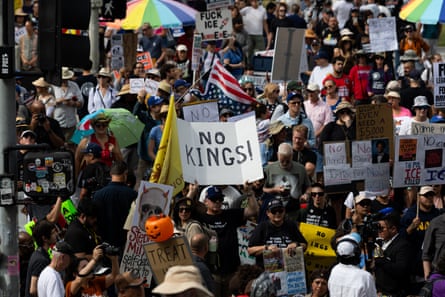
But drawing attention to injustice or sounding the alarm isn’t enough, said Jamila Raqib, executive director of the non-profit Albert Einstein Institution, which studies nonviolent action.
“People are more engaged than ever before,” said Raqib. “They’re taking action in response to the crises we face, but they’re less often achieving concrete objectives.”
Movements need to adapt tactics to keep up with authoritarian governments, she said. Many governments have learned that brutal crackdowns on nonviolent action tend to backfire, so they rely on “smart repression” – selective arrests, legal harassment, surveillance, disinformation, funding restrictions and job losses – to wait movements out. Governments simply outlast demonstrators who eventually have to return to school and work.
That’s why movements must map the “pillars of support” that any government depends on, including courts, businesses, media and religious institutions, Raqib said. They can then decide which of those pillars to win over, which to weaken and which to replace.
Activists should prepare to organize within workplaces, government agencies, businesses and congregations, where an opponent’s support actually lives, Raqib said. Mutual-aid networks, community defense groups and independent media can sustain a movement through a long fight, too. Preparing for smart repression also means treating digital security as a basic organizing skill, planning for the arrest of key leaders and training successors before a crackdown comes.
Several of those ideas showed up in Minnesota in January. A general strike, sit-ins at corporate headquarters and pressure on employers to speak out weakened Trump’s Operation Metro Surge in ways a single march could not. After federal agents killed two US citizens, Renee Good and Alex Pretti, tens of thousands of people marched in subzero cold under the banner “No Work, No School, No Shopping”. Trump ended the operation the following month.
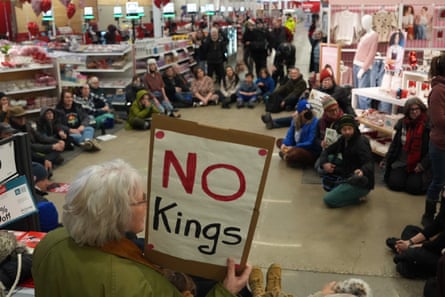
The response rested on years of labor, faith and community organizing, said Doran Schrantz, a longtime Minnesota organizer who founded the Organizing Lab. Thousands had trained as legal observers starting in January 2025 through immigrant rights groups like Unidos and the Immigrant Defense Network. Groups like Defend the 612 built an efficient rapid-response system to observe and document ICE agents, and the Ice Out Now coalition linked all groups on the ground, Schrantz said.
To resist, “not everyone has to march in the streets”, Raqib said.
Setting clear demands
The fight over datacenters has united Americans across party lines, showing what is possible when resistance is local and personal and outlines clear demands.
“There is an authentic local response to these datacenters,” said Schrantz. It was something that people felt they had agency over, she said: “It’s concrete: ‘I can stop that datacenter.’”
That clear target allowed groups that normally agree on little else to work together. The coalitions included environmental groups, farmers, retirees, school parents and “Maga moms”, Schrantz said. The tactics were simple and repeatable: residents packed council and county commission meetings, filed public records requests and gathered signatures for moratoriums and referendums. Across the country, the demands were clear enough to fit on a petition: pause construction until the impacts are studied, make developers pay the full cost of grid upgrades instead of passing it on to taxpayers, end tax breaks for the projects and give communities a vote before anything gets built.
On election day, the steady groundwork paid off. Voters weighed in on 41 datacenter measures in 10 states and sided against the industry in all but a single measure.
Another demand that people have rallied around during Trump 2.0 is “ICE out”. Executing that demand has proven more complicated. Still, organizers have remained steadfast to get justice for people killed by ICE and to pass legislative measures that would get officers off the street.
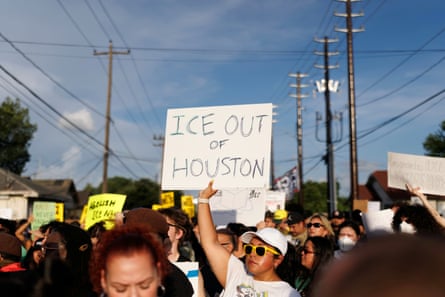
Three days after the Texas governor-elect, Gina Hinojosa, claimed victory on election day, Houston mayor John Whitmire signed an executive order barring police from contacting ICE during vehicle stops when the drivers aren’t arrested, even if they have immigration warrants.
Whitmire’s order mirrors the ordinance activists first advocated for last year. Empowered by Republican governor Greg Abbott soon leaving office, three council members have filed a measure to write it into city law, said Jasmine Khadem González, the co-chair of the Houston Democratic Socialists of America (DSA).
“We’ve been going and having meetings with city council members, telling them, teaching them about the local police collaboration with ICE,” said Khadem González.
It took months of pressure – and the fatal ICE shooting of Lorenzo Salgado Araujo, a Mexican immigrant who had lived in Houston for nearly 35 years, during a traffic stop – before city leaders publicly admitted the collaboration was happening, she said. Organizers canvassed businesses and helped them make safety plans for workplace raids, posting “employees only” and “ICE is not welcome here” signs . They met with faith leaders and held community teach-ins on how Houston police were delivering people to ICE, often through traffic stops. Now, the Harris county district attorney is taking the Salgado Araujo case to a grand jury.
“We can prosecute every single ICE agent who murdered people on our streets,” she said, “and so I’m excited to see some justice come to that family.”
Khadem González’s demands for the new Democratic majorities in the state go well beyond Houston. She wants lawmakers to repeal SB4, the state law that bans sanctuary cities, to end police collaboration with ICE across the entire state of Texas.
“Now that Democrats are in power, we have to show what good governance looks like,” she said.
Keeping pressure on electeds
This drives home the greater point: movements need to keep putting pressure on Democrats, newly elected or otherwise, to get their demands met.
Celebration can’t be the endpoint, Taylor, of Princeton, warned. “Everyone who is connected to an organizing project, to organization politics, must have a Wednesday agenda,” she said, noting the need to keep pushing after Tuesday’s election. “What are we doing now to push the political representatives who solicited our votes?”
Only sustained pressure will move anything, she said, and no elected official is off-limits.
The DSA has a slate of priorities it wants its affiliated candidates to push through when they get into office: an arms embargo on Israel; an end to foreign wars and on sanctions on Cuba, Venezuela and Iran; Medicare for All; abolishing ICE. The organization said its five nationally endorsed candidates, from Melat Kiros in Colorado to Chris Rabb in Pennsylvania, will represent the largest bloc of democratic socialist candidates in Congress in the nation’s history.
“This election is a reminder that the electorate is not fixed and that organizing and investment can transform what’s possible,” said Katrina Gamble, a political scientist turned social impact strategist at Sojourn Strategies.
For example, in Mississippi, where Democrats just flipped a Senate seat and elected the state’s first Black senator since Reconstruction, Black voters made up 3% more of the electorate than they did in 2024; nearly 21% of the state’s voters in this election didn’t vote in 2024.
But Gamble also warns that “these wins are fragile”. The work now is to keep engaging people and ensure electeds deliver on what they promised voters.
“It can’t just be that the blue wave comes and we’ve done our jobs,” Taylor said. “The blue wave is just the beginning.”













Comments