
 German (DE)
  English (US)
  Spanish (ES)
  French (FR)
  Hindi (IN)
  Italian (IT)
  Russian (RU)
  3 weeks ago
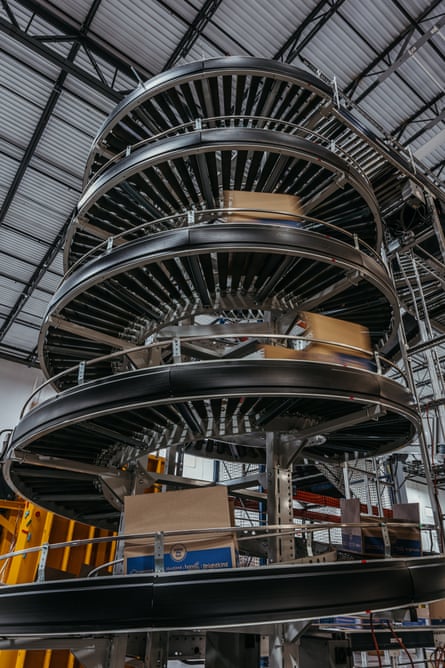
The conveyors whir in the massive warehouse, boxes gliding at fast clip, filling up with toys ready to be shipped out for holiday gifts across the country. They make their way to shipping trucks, nearly full with hundreds of boxes by the afternoon of a recent Thursday.
The 364,000 sq ft warehouse in the suburbs outside Chicago is just one of Learning Resources’ investments in the US. The company and its affiliated brands employ more than 500 people. They make about 2,000 different products, mostly educational toys such as children’s binoculars, cash registers and learning games.
And they’re suing the Trump administration in one of the biggest legal challenges the president faces to date: the company says that the tariffs he unilaterally imposed, citing authority in the International Emergency Economic Powers Act (IEEPA), are illegal.
As the US supreme court weighs the case against one of Trump’s signature policy goals, the family-owned company is trucking ahead, waiting on a ruling with many millions of dollars on the line which likely won’t come until the new year.
The company, which manufactured most of its products in China, spent about $2m on tariffs in 2024; this year, just from the new IEEPA tariffs added by Trump, the company projects it will pay about $14m, said Stephen Woldenberg, senior vice-president of sales at Learning Resources. The numbers for 2026 could be higher, if nothing changes.
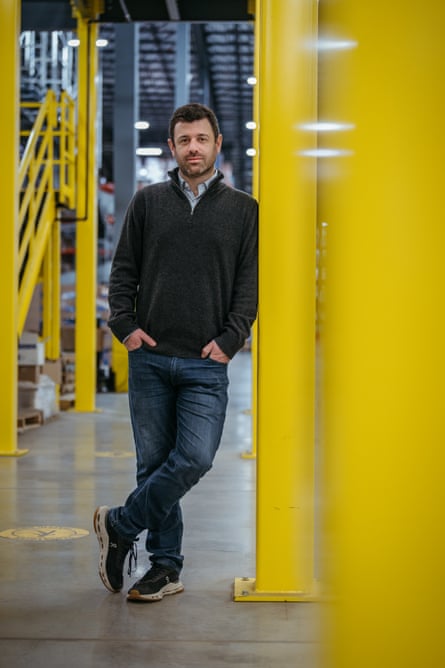
The risk of doing nothing outweighed the risk of a lawsuit, said Woldenberg, whose grandparents founded the companies. The family went to Washington earlier this year to hear oral arguments in the lawsuit that bears the company name – Learning Resource v Trump. Two other concurrent lawsuits, from Democratic attorneys general and libertarians representing other small businesses, were combined for the case before the supreme court.
“Plaintiffs have faced and survived significant challenges in the past two decades, including the Great Recession and Covid pandemic,” the company’s initial legal filing says, “but the president’s unilateral tariffs are now posing the greatest challenge of their existence.”
Small businesses have signed on to lawsuits and briefs to fight the tariffs, while large US retailers have largely sat it out, with the exception of Costco. The big-box store filed a lawsuit earlier this month arguing the tariffs are illegal and that companies that have paid them should be given refunds. Learning Resources wants to be repaid as well and hopes the court addresses refunds.
“We don’t know exactly how it will play out, but believe that if the taxes were collected illegally, then we should be paid back,” Woldenberg said.
Meanwhile, the Trump administration is trying to avoid any potential refunds, working quickly to deposit tariff payments into the US treasury, Politico reported, to make refunds more difficult to access if the court rules against the administration because they could be beyond the typical window for tariff refunds.
Learning Resources’ decision to sue has brought it new fans and detractors, but the family has said the lawsuit was not a political decision. Rick Woldenberg, Stephen’s father, runs the company, and his sister and brother also work in the business, which includes another company called hand2mind, also part of the lawsuit.
“We’re not really going to sit around and let something happen to us,” Woldenberg said. “We wanted to take action because we didn’t believe that what the administration did was legal, so we wanted to challenge the legality of it. It’s not really a political thing. It’s more a legal, technical argument.”
The supreme court is expected to rule quickly on the case, though it’s not clear when a decision will come. The justices, including conservative ones, seemed skeptical of the Trump administration’s legal assertions during the November arguments. Chief justice John Roberts, for instance, noted that the “imposition of taxes on Americans” falls under the “core power of Congress”, not the president.
In the meantime, tariffs color much of the conversation at Learning Resources headquarters. In new product development meetings, the prospect of tariffs looms – the company won’t be able to release as many new products as it normally would with such a high and unpredictable tariff bill, Woldenberg said. At one point this year, the tariff rates were changing every three days on average, Woldenberg said the company had calculated. It made planning impossible.
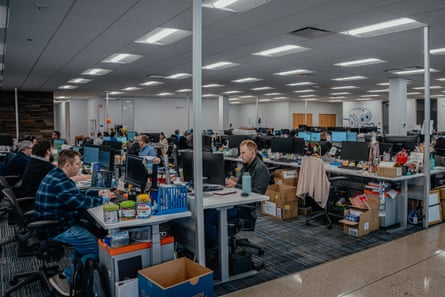
The simplest way to describe the tariffs: “disruptive”, Woldenberg said. Businesses crave certainty to make big decisions, and the tariffs have shifted the ground. The company has cut expenses, slowed hiring, scaled back the number of new products for next year. Woldenberg estimated that about a third of employees were working on supply chain-related activities rather than focusing on their day jobs.
At company headquarters, Woldenberg picks up a BubblePlush – a small yoga ball with a soft covering resembling an animal or mythical creature made for hand2mind – as a product that exemplifies the tariff problem. At the time, it was being manufactured in China. After “liberation day” in April, when tariffs on China exploded, the company moved the product’s production to India, which had lower tariff rates. The company’s representatives worked with the new supplier in India to make sure the product met its specifications.
“It was a sprint, but it worked,” he explained.
Then the product got on the water, headed for the US. En route, tariffs on India increased from 25% to 50%, exceeding the Chinese tariff, which had gone down to 30%. Items needed to arrive in the US before 17 September to avoid the 50% India tariff. The BubblePlush arrived at 6.04am on 17 September – six hours late for the 25% tariff. As a result, the company paid an additional $50,000 just to import the product, he said.
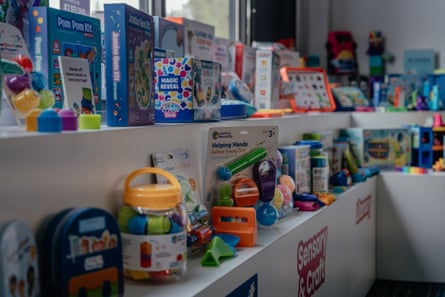
He can pick up most products in the company’s conference room – loaded with hundreds of its educational toys for kids, classrooms and animals – and show the tariff undercurrent. A game that helps kids learn to spell by assembling s’mores, for instance? Not so simple to just move the production elsewhere: the marshmallow bits are squishy, the graham cracker parts are plastic, the booklet explaining the game is paper. A factory would need to have all those capabilities.
“That’s just one item, and all these other items in the room that may sell more or less than this one item, you have all these related channels to it,” he said. “As you can see, it causes a blizzard.”
They did some pre-buying, amassing an inventory before Trump took office, anticipating he would follow through on the tariffs he promised on the campaign trail. The inventory helped soften the blow when tariffs on China hit a staggering 145% in April, which “caused a complete seizure in our business, in our manufacturing and our supply chain”, Woldenberg said.

The contention among those who support the tariffs – to move production to the US instead – would be difficult to impossible, at least at prices the American public would support. The Woldenbergs have explored the idea many times. China makes most of the toys for the world, not just for the US. Quotes from US manufacturers typically come back 10 to 20 times higher than the costs in Asia, he said. A children’s cash register – one of the most popular Learning Resources products – retails for $47.99. Made in the US, it would likely cost significantly more than $100, he said.
“We don’t think it’s possible, and frankly, if it was possible, we would see more of our competitors making products here,” Woldenberg said. “The reality is, they’re not.”
About half of the company’s products are made in China, with others made in India, Vietnam and other countries. The percentage of products made in China has gone down for Learning Resources over the course of this year. Chinese factories have an interconnected supply chain, giving them an ability to source products from inside the country, and they have been making toys for Americans for decades, Woldenberg said. Other countries are still trying to catch up.
Sales so far appear healthy this year, Woldenberg said, though the company imposed a price increase in the summer after holding off as long as it could. The company will continue to work on diversifying its supply chain. And even if the IEEPA tariffs are deemed illegal by the supreme court, that’s not the end of tariffs.
“We expect that there will be tariffs after a decision is brought down, and so there will be continued uncertainty,” he said. “And it does make it more difficult to make decisions.”
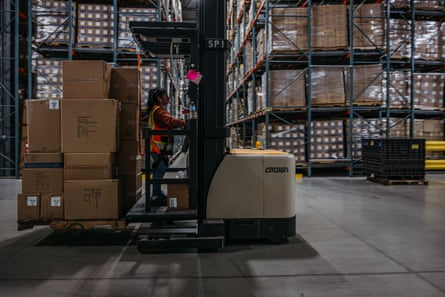
Back at the warehouse, workers wear headsets that tell them which products to put into an order based on a barcode on the box. They steadily move from shelf to conveyor, moving boxes along the route. The Woldenbergs run a family business that dates back over 100 years. That legacy, and the fate of the hundreds who work there, weighs into the decision to fight back.
“We wanted to make sure that we did everything we could to stand up for our company, the 500 employees that work here around the world, their families that depend on this company to pay mortgages, to pay college tuitions, to pay for summer camp, to pay for anything that might be going on in their their lives,” Woldenberg said. “That really was on our mind.”






Comments