
 German (DE)
  English (US)
  Spanish (ES)
  French (FR)
  Hindi (IN)
  Italian (IT)
  Russian (RU)
  2 weeks ago
39 minutes ago
Michelle Roberts,Digital health editorand Smitha Mundasad,Health reporter

 PA Media
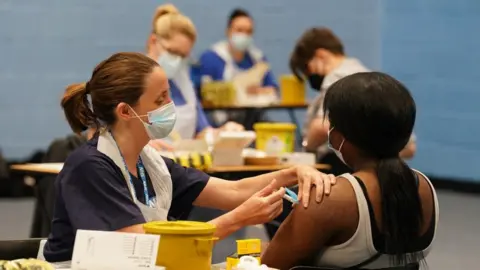
Meningitis B vaccinations were given to students at the University of Kent after an outbreak in March
A million young people will be offered a vaccine to help protect them against meningitis B, after concerns about the number of infections this year.
The two-dose vaccine will be available to pupils in their final year of secondary school, and 18- to 25-year-olds heading to university or residential further education for the first time in autumn.
UK advisers have said a widespread NHS catch-up campaign to vaccinate all teenagers against MenB is not cost-effective but will keep that decision under review.
Meningitis is an infection of the protective membranes that surround the brain and spinal cord.
There are several types, and meningitis B can be very serious.
It can affect anyone, but is most common in babies, young children, teenagers and young adults.
Babies have been offered a vaccine against MenB since 2015, which means teenagers and young adults over the age of 11 have not received this jab.
Who will be offered the MenB vaccine?
Those born between 1st September 2007 and 31st August 2008, as well as people under 25-years old starting university, will be eligible for the MenB vaccine.
The jabs will be free on the NHS. Two doses, at least four weeks apart, are needed for maximum protection.
Each nation has slightly different plans on giving the jabs, but in England community pharmacies will be asked to do so, with appointments becoming available from the end of July.
Those eligible will be contacted directly through the NHS App, by text and email.
People who are under 25 and starting university for the first time will be able to book their appointment directly with available pharmacies.
International students under 25 entering their first year of university, should receive their first dose in their home country where possible.
Experts say cases of invasive meningococcal disease tend to peak in October to November each year, which further heightens the risk for new university students.
Young people heading off to university are at higher risk of potentially catching this strain of meningitis B, which can spread when people live together in shared accommodation.
Why aren't all teens being offered the vaccine?
Government advisers the Joint Committee on Vaccination and Immunisation (JCVI), decided the MenB jab was not cost-effective to offer as a routine vaccine for all teens on the NHS.
A number of factors were involved in the decision, which will continue to be reviewed.
While the MenB vaccine is good at protecting infants, it does not work as well in young people.
And while it is called the meningitis B vaccine, it protects against the most common versions of the B strain - but not all.
The jab is not effective at preventing the transmission of bacteria between people.
Protection lasts for several years but it is not considered lifelong, experts say.
All teenagers are currently offered a separate meningitis vaccine - the MenACWY vaccine - which protects against some other strains, but not MenB.
How does meningitis spread?
Close personal contact is necessary for spread to happen.
Some people carry the bacteria in their nose or throat without getting sick, but can spread it to others through the exchange of spit or saliva in coughs, sneezes and kissing, or by sharing vapes and drinks.
This year saw a big outbreak in Kent and two further "unusual" clusters of cases in Weymouth in Dorset and Reading in Berkshire.
Why does meningitis affect young people and can older people still get it?
One reason why students are most at risk from meningitis is because they come into close contact with lots of people they have never met before when they go to university.
They mix in large numbers at close quarters, while sharing kitchens and accommodation.
Older adults can still be affected by meningitis, particularly if they have weakened immune systems.
But the most at-risk groups are young people and babies.
Should I pay for a meningitis vaccine?
Vaccination is a personal choice.
High street pharmacies offer a full course of two doses for around £220, although both Boots and Superdrug have reported a surge in demand since the Kent outbreak began.
The charity Meningitis Now says MenB jabs should be available "at a fair price". It has been calling for this vaccine to be offered more widely to protect teenagers and young people.
Following the recent outbreaks, some parents have been buying the jab privately for their children.








Comments