
 German (DE)
  English (US)
  Spanish (ES)
  French (FR)
  Hindi (IN)
  Italian (IT)
  Russian (RU)
  3 weeks ago
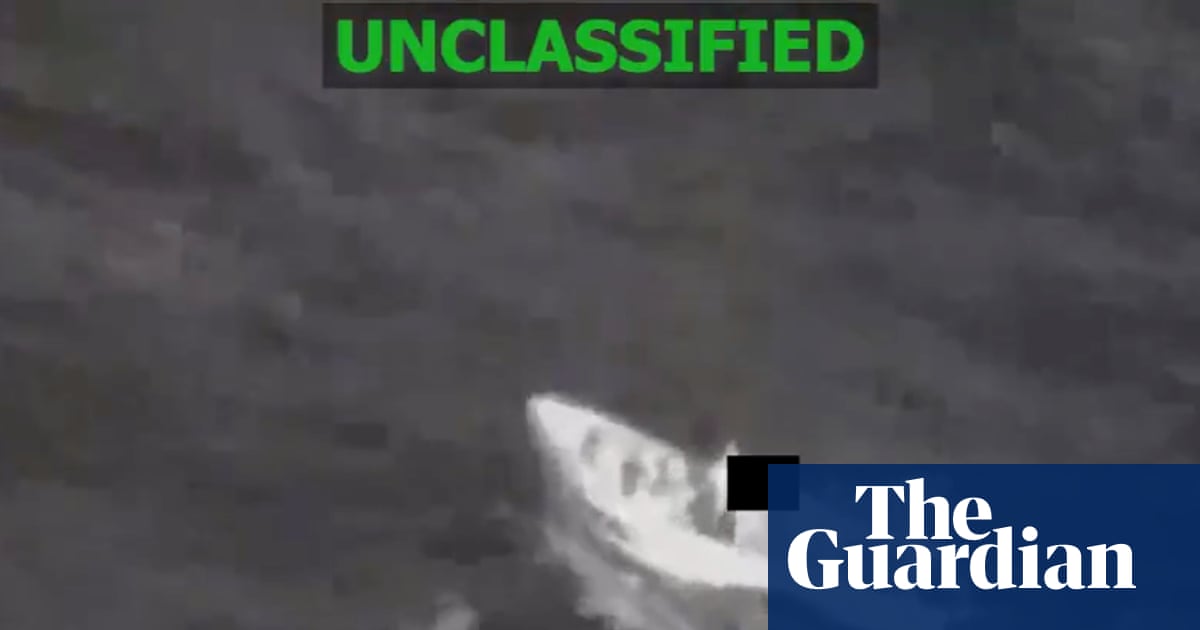
The US has seized an oil tanker off the coast of Venezuela, a ship that was previously sanctioned by the US in 2022 while sailing under another name, in a dramatic operation that further ratchets up tensions between the Trump administration and the government of Venezuela’s president, Nicolás Maduro.
Over recent months the US has built up the largest military presence in the region in decades, which includes the USS Gerald R Ford, the world’s newest and largest aircraft carrier. It has more than 4,000 sailors, plus fighter jets and accompanying warships.
At the same time, the Trump administration has launched a series of deadly strikes on alleged drug-smuggling boats in the Caribbean Sea and eastern Pacific Ocean, which have faced scrutiny in Congress. Some organisations have described the operations as extrajudicial executions.
Donald Trump’s goal remains opaque, but experts largely agree that the overthrow of Maduro’s authoritarian government is the ultimate aim.
Karoline Leavitt, the White House press secretary, said at a briefing on Thursday that the tanker was seized under a judicial warrant because it was a “sanctioned shadow vessel known for carrying black-market sanctioned oil” to the Iranian national guard (IRGC) and would be taken to a US port.
Leavitt added that the US does intend to seize the tanker’s oil, she says, but added that it’s subject to a legal process.
“The vessel is currently undergoing a forfeiter process,” she said, noting that the vessel was being searched and the crew interviewed. “The US does intend to seize that oil, however there is a legal process for its seizure and that legal process will be followed.”
Asked to clarify the Trump administration’s strategic purpose of Operation Southern Spear, Leavitt pointed to stopping the flow of illegal drugs in the US and “effectuating this administration’s sanction policy”.
What do we know about the vessel seized?
The tanker, identified as Skipper by maritime analysts Vanguard, was a very large crude carrier (VLCC) and is thought to have been carrying about 1.1m barrels of oil, loaded in Venezuela’s main oil port last week.
The tanker was falsely flying Guyana’s flag, the country’s maritime authority has said. The flag of a ship indicates where it has been registered and, under international law, ships must comply with the maritime law of that country when out at sea. However, in recent years, there has been a growth in vessels sailing under false flags, allowing them to circumvent safety regulations and international sanctions.
Tracking data shows that Skipper was previously sanctioned by the US in 2022 while sailing under another name, Adisa. It was accused of belonging to the so-called shadow fleet, which smuggles oil on behalf of Iran in order to avoid US sanctions.
It also made multiple trips to Venezuela and Iran in recent years, according to Marine Traffic, which provides real-time tracking of ships.
Public records show that the vessel is owned by Triton Navigation Corp, which was sanctioned by the US in 2022 for its involvement in transporting oil for Iran.
“Skipper has transported nearly 13 million barrels of Iranian and Venezuelan oil since joining the global dark fleet of tankers in 2021,” Samir Madani, the co-founder of TankerTrackers.com, told the New York Times.
Triton did not immediately respond to a request for comment.
What was the vessel doing when it was seized?
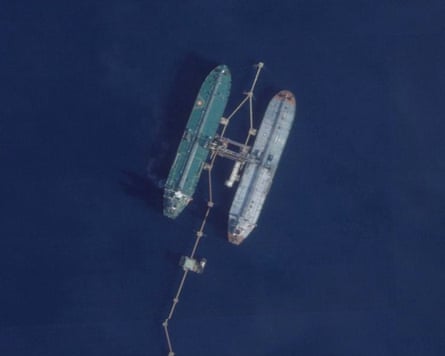
According to Marine Traffic, the vessel had been transmitting a “false” position, a well-recorded tactic among shadow tankers that transport sanctioned Russian, Venezuelan and Iranian oil. Despite location data putting the vessel closer to the coast of Guyana, satellite imagery shows that it was in fact in the Venezuelan port of Jose for weeks. Images supplied to the Guardian by TankerTrackers.com showed Skipper docked at Jose’s oil terminal as recently as 18 November.
The ship departed Venezuela last week, with roughly half of its cargo of oil belonging to a Cuban state-run oil importer, according to documents from Venezuela’s state-owned oil company seen by the Associated Press.
Venezuela’s government has said the seizure “constitutes a blatant theft and an act of international piracy”.
Why has the US seized this tanker?
The US government has sanctioned more than 170 vessels it accuses of moving illicit oil, while the number sanctioned by other governments and organisations likely numbers more than 1,000.
Experts are in disagreement over why the Skipper was singled out and seized on Wednesday, and how it plays into the wider operation in Latin America.
In its statement, the government of Maduro claimed the seizure revealed the Trump administration’s true motives: “It has always been about our natural resources, our oil, our energy, the resources that belong exclusively to the Venezuelan people.”
However, analysts have suggested that as the US is the world’s largest oil producer, there are likely other motives behind the campaign of aggression against Venezuela.
Although the US has seized sanctioned oil tankers before, Wednesday’s action is notable for the dramatic nature of the operation. The images of the US Coast Guard swinging down from helicopters on to the deck of the Skipper have been amplified across social media by the Trump administration. In one video, shared by the Department of Homeland Security, the video is soundtracked by the LL Cool J song Mama Said Knock You Out.
The dissemination of such videos will probably be chalked up as a propaganda win by the Trump administration, while continuing to pile pressure on Maduro.
Other experts have suggested that the seizure of the Skipper will act as a further brake on Venezuela’s oil industry by driving up the costs of exporting. Venezuela has already had to deeply discount its crude oil exports to its main buyer, China, due to growing competition with sanctioned oil from Russia and Iran.
The real and present threat of US operations against sanctioned oil tankers – as demonstrated on Wednesday – will force shadow tanker owners to demand higher costs for freighting Venezuelan oil, as an insurance against seizures.










Comments