
 German (DE)
  English (US)
  Spanish (ES)
  French (FR)
  Hindi (IN)
  Italian (IT)
  Russian (RU)
  3 weeks ago
Since Kamala Harris’s defeat to Donald Trump in 2024, Democrats have chased candidates who exude an ever-elusive “authenticity”. For many on the left, the answer was Graham Platner, a military veteran turned oyster farmer with a gravelly voice and deep hostility toward the political establishment.
Even as controversy after controversy emerged – racist, sexist, homophobic online posts; a tattoo widely recognized as a Nazi symbol, which he later covered up; sexually explicit messages sent to other women while he was married; and allegations from former partners of toxic and threatening behavior, which he denied – Platner’s momentum didn’t slow. It was only after a woman accused Platner of rape – which he denies – that his political support collapsed.
In the wake of his withdrawal, Democrats are asking themselves many questions, chief among them, who will replace him as their party’s nominee in the marquee Senate race? But the saga has also revived a deeper debate over whose flaws are forgivable – and whose are disqualifying.
“White men get to fail,” said Amanda Litman, co-founder of Run for Something, which recruits young, progressive candidates to run for office. “Women do not get to make mistakes. People of color do not get to make mistakes.”
Litman said the argument was not that serious allegations should be treated differently because of a candidate’s identity, but that Platner had been granted an unusual degree of latitude to recover from earlier controversies that a female candidate or a candidate of color would probably not have been afforded.
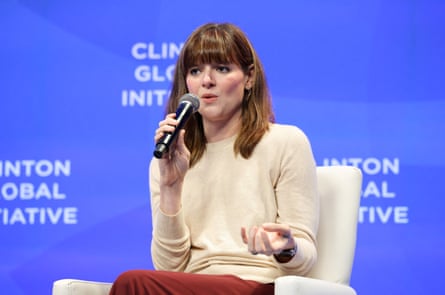
Litman said Platner was the “political equivalent of the Fyre fest guy or Adam Neuman” – high-profile men who continued to receive support for new ventures after spectacular failure. “It’s like there is inherent trust and faith in capabilities that they don’t have to prove,” she added.
Run for Something vets political candidates before offering their endorsement. As part of its endorsement application, Litman’s organization asks candidates to disclose what a background check might turn up, and what the opposition will find, Litman said.
After going through the vetting process, women and people of color are more likely to “self-censor” or decide they would rather not run at all, Litman said, adding: “The thing that I keep coming back to is, who has permission to be authentic?”
The result, according to candidates, strategists and scholars, is a political environment that often penalizes women and people of color more harshly than their white, male counterparts.
“Folks who have been identified as hardscrabble, populist, left-of-center white guys get far more leeway than folks like me, Black progressives,” Chris Rabb, who won a closely watched Democratic primary in a deep-blue Pennsylvania House district, said last month on the Breaking Points podcast. “And that’s a double standard that is largely based on race.”
Despite a record of contemptible behavior, Platner continued to raise large sums of money from grassroots donors, pushed a sitting governor out of the primary and cruised to the Democratic nomination.
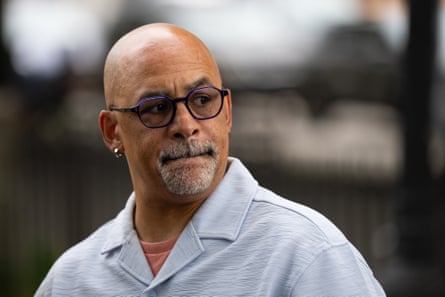
“If I had some problematic tattoo that related to white folk, I don’t think I would be viable even in a majority-Black district,” Rabb added, “because I think the money would not be there to run the campaign I needed.”
When his campaign reached its ignominious end earlier this month, several Democratic women asked how a candidate with a record of contemptible behavior had gotten so far.
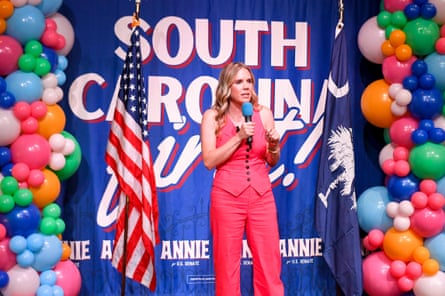
“I’m just a girl, running for the US Senate, with a medical degree, a record of service, and a non-problematic past,” Annie Andrews, the Democratic Senate nominee in South Carolina, wrote on X.
Andrews is a long shot in the Republican stronghold, thrown into its own turmoil after the death of Senator Lindsey Graham. But her tongue-in-cheek post captured a view widely shared among other women candidates: why him?
“Time after time, we have to watch strong women candidates get dismissed and treated like a backup plan, while some disastrous men take up all the oxygen – and ultimately make it harder to win the seats we need to take back our country,” Michelle White, the executive director of Emily’s List, said in a video, urging support for “qualified, inspiring Democratic women candidates”.
In Texas, the Democratic nominee for a state house seat, Sara McGee, divulged what she called her “deepest, darkest secrets”, among them a drunk-driving offense when she was a teenager, a divorce from a violent partner and “old debts that ended up in court when I was a single mom and couldn’t pay”.
“I was legitimately worried about these things tanking my chances of representing my community,” she wrote on X, expressing disbelief that some Democrats were willing to “accept the disqualifying characteristics of our own candidates because MAGA ‘did it worse’”.
When running for office, women, and particularly women of color, often start from a deficit, needing to prove not only that they are qualified but that they fit voters’ expectations of what leadership looks like, said Kelly Dittmar, a scholar at the Center for American Women in Politics at the Eagleton Institute of Politics at Rutgers University. “Who can best run authentically on all of their many identities are those whose identities are privileged across the board,” she said.
Dittmar pointed to research on how women decide whether to run in the first place. A 2008 survey of state legislators found women described their decision as “relationally embedded” – weighing how a campaign would affect their families, communities and careers – while men were more likely to run simply because they wanted the job.
Research has found that when women do run for office, they are more likely to face scrutiny over their personal lives. Women are held to a higher moral and ethical standard – a phenomenon the Barbara Lee Family Foundation called the “character pedestal”, in which voters expect women to be more honest and trustworthy than men. When women are accused of wrongdoing, “the fall from the pedestal is longer and harder”, Dittmar said, referencing the work of the Democratic pollster Celinda Lake.
As more women run for office, some see signs that political gender norms are changing, particularly since the 2016 presidential election, when the controversy over Hillary Clinton’s use of a private email server became a defining issue of her campaign – immortalized by the “but her emails” political meme – even as Trump faced a long record of controversies, including multiple accusations of sexual misconduct.
On the left, voters are bucking convention and embracing a new crop of unabashedly progressive – and decidedly aggressive – candidates. Darializa Avila Chevalier, a democratic socialist and the daughter of immigrants from the Dominican Republic, succeeded in toppling a senior Democratic incumbent in a New York congressional primary despite scrutiny over social media posts she had deleted, but had been archived. In the posts, she frequently and profanely disparaged the Democratic party and its leaders, including Kamala Harris, questioned the origins of Covid-19 and criticized interracial relationships.
As a first-time political candidate, Kat Abughazaleh spent months worrying that someone would unearth her “middle school livejournal fanfic account”.
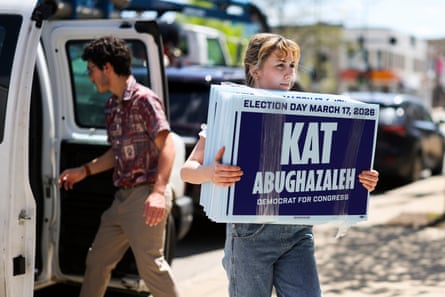
“I’m still amazed it didn’t happen,” Abughazaleh, who lost the Democratic primary for an Illinois house seat earlier this year, wrote on Bluesky.
In an interview, Abughazaleh recalled her decision to reveal that she has narcolepsy, a disorder that disrupts sleep cycles and can lead to extreme daytime sleepiness. She faced several days of articles and comments online, including people who called it a “TikTok illness”.
“This is a serious, debilitating illness that I try to be transparent about because we have shitty disability rights in this country,” she said. “But I don’t have a fucking Nazi tattoo. I can promise you, I’ve never raped anyone.”
As Democrats search for candidates they hope can lead the party back to power in November, Abughazaleh hopes the combustible end of Platner’s campaign will prompt the party to widen its hunt for “authentic” candidates.
“God damn,” she said. “Can we please have people besides just white guys running for office?”










Comments