
 German (DE)
  English (US)
  Spanish (ES)
  French (FR)
  Hindi (IN)
  Italian (IT)
  Russian (RU)
  2 weeks ago
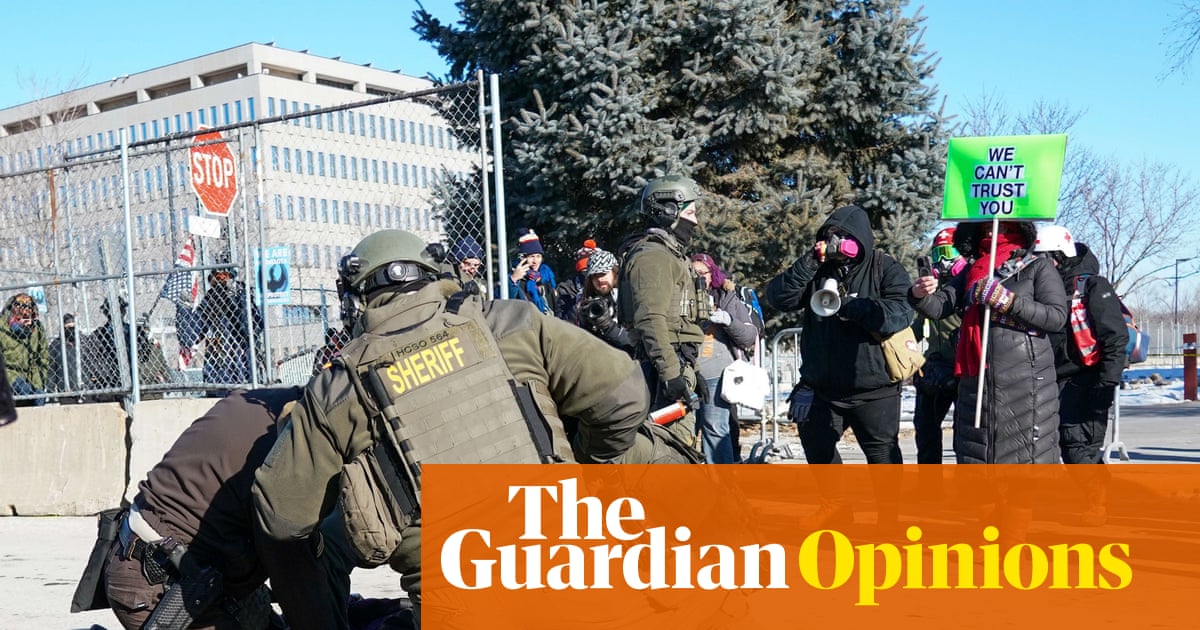
When the Trump administration ordered a surge of armed federal immigration enforcement personnel on to the streets of Minneapolis, the Department of Homeland Security declared it the largest operation in its history and the liberal midwestern city became Donald Trump’s latest chosen hotspot.
Such escalations mark the US president’s agenda of mass arrests and deportations from the US interior. The highest-profile efforts involve officers from multiple agencies rushing to prominent Democratic-led US cities, against local leaders’ wishes. But coast to coast, federal officers have been raiding homes, businesses, commercial parking lots – even schools, hospitals and courthouses. The efforts have delighted the president’s hardcore Make America Great Again voter base, but are also tearing families apart and spreading fear and even death on the streets and in detention.
Immigration and Customs Enforcement is the biggest cog in the machine and ICE has become an internationally recognized acronym, a growing force and Trump’s most visible anti-immigration operator. This despite officers often wearing masks and refusing to identify themselves. Border patrol is increasingly involved in the crackdown and a variety of other federal agencies have also been drafted into the efforts. The bewildering array of labels, tactical gear and clothing accessories begs scrutiny, even though it is sometimes not possible to identify which agency an individual works for.
Who’s who on the frontline of enforcement
Department of Homeland Security (DHS)
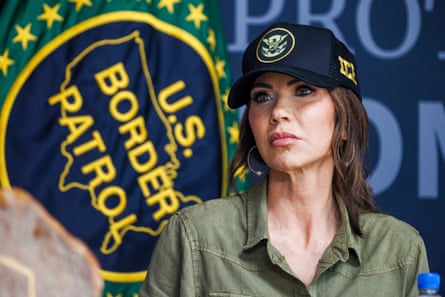
ICE and border patrol are agencies under the umbrella of the Department of Homeland Security, which is headed by homeland security secretary Kristi Noem. DHS is the third-largest federal agency, after the Pentagon and Veterans Affairs. It has a plethora of functions unrelated to immigration enforcement, including the Secret Service and the Federal Emergency Management Agency (Fema), among others. But Noem has become the face of the anti-immigration push.
She makes frequent media appearances, joining ICE on raids while wearing various items of gear and insignia, with cameras in tow. She notably posed for pictures while cheerleading the removal, without due process, of 200-plus Venezuelans from the US to a notorious prison in El Salvador last year.
Immigration and Customs Enforcement (ICE)
The Homeland Security Act of 2002 transformed modern immigration enforcement, conflating it with national security after the 11 September 2001 attacks. That legislation created DHS and ICE. ICE is divided into two major enforcement branches: enforcement and removal operations (ERO) and homeland security investigations (HSI). And then administrative functions such as the office of the principal legal advisor, which houses the lawyers who argue the government’s legal cases.
The One Big Beautiful Bill Act passed last year nearly tripled ICE’s budget to $28.7bn. ICE officers and agents more than doubled in total from roughly 10,000 to 22,000 in 2025, according to DHS.
Enforcement and Removal Operations (ERO)
When most people think of ICE, they’re thinking of the deportation officers in ERO. Historically, much of their work on the ground had consisted of hand-offs in jails from local police who had arrested unauthorized immigrants for other reasons. That often landed people with longstanding ties to the US and only minor criminal charges, such as marijuana infractions or driving without a license, in deportation proceedings.
The Obama administration took steps to limit such consequences and local Democratic-led jurisdictions increasingly restricted cooperation with ICE, limiting ERO’s easy arrests in many large cities.
But under this Trump administration, ERO has ramped up arrests of people in public places and at job sites to an unprecedented degree, which is why deportation officers have become so visible. The White House demanded a ratcheting up of arrests and deportations, putting those already living within the US in the crosshairs instead of people who recently crossed the US-Mexico border without documentation – as those numbers have plummeted.
Homeland Security Investigations (HSI)
HSI is the investigative branch of ICE. Its agents hold the same federal classification as FBI agents and the job typically demands much higher qualifications for entry and more extensive and expert training than ERO officers. HSI agents traditionally focus on complex criminal cases, especially international crimes involving sex traffickers, child abuse rings and drug cartels.
But since Trump’s return to the White House, HSI agents have been increasingly re-assigned to support the deportation operations handled by ERO and are seen at raids and out on the streets.
Customs and Border Protection (CBP)
CBP officers traditionally staff the legal ports of entry to the United States. The agency has not traditionally played a significant role in interior immigration enforcement, though under this Trump administration, some CBP officers have begun to play support roles at ERO field offices away from the border. CBP is the parent agency of the US border patrol.
Border patrol
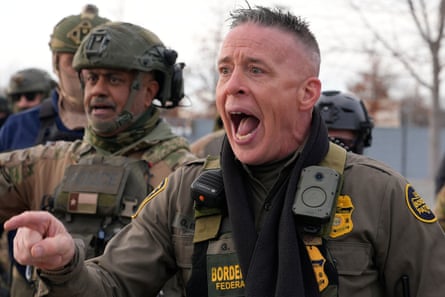
Border patrol officers have become heavily involved in anti-immigration operations in US cities. The agency is acquiring a reputation for some aggressive tactics while conducting urban immigration enforcement or confronting protesters, which has not been its traditional role. Officers have less specialist enforcement authority if further than 100 miles (160km) from a border, coastline or maritime boundary.
Border patrol has previously been best known for apprehending immigrants crossing the US-Mexico border without authorization, either those illegally trying to evade law enforcement or those turning themselves in to ask for asylum or assistance. Trump shut down many legal avenues of entry early in his second administration as he took action to choke off asylum processes, drawing ongoing legal challenges. Border patrol officers have played a prominent role in unprecedented apprehensions at immigration court, and patrol commander Greg Bovino has kept a high profile on the streets of Minneapolis and before that New Orleans, Charlotte, Chicago and Los Angeles.
Other federal agencies
The Trump administration has drafted into his mass deportation agenda law enforcement agencies that typically have little to do with frontline immigration enforcement. This includes personnel from the Federal Bureau of Investigation (FBI), Drug Enforcement Agency (DEA), the Alcohol, Tobacco, Firearms and Explosives (ATF) agency, the US Marshals Service and the Diplomatic Security Service.
Local police
Local police departments and sheriffs’ offices have been drawn in to the issue - whether they like it or not. Some jurisdictions, especially in Republican-led states and cities, choose to work closely with federal immigration authorities, assisting removal efforts under ICE supervision. Official partnerships between local and federal agencies are called 287(g) agreements and have been on the rise.
But in many places, especially where Democrats dominate, local law enforcement limits cooperation with federal immigration enforcement. This is especially true in places that have elected to label themselves “sanctuary cities” or jurisdictions, explicitly curbing such cooperation and attempting to obstruct removals by declining to cooperate with ICE requests to hold and transfer to the feds people arrested locally on charges unrelated to immigration who may be violating immigration laws.
José Olivares and Joanna Walters contributed additional reporting














Comments